Vintage Technology
Recent Articles
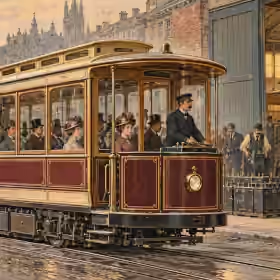
Victorian Battery
Powered Trams
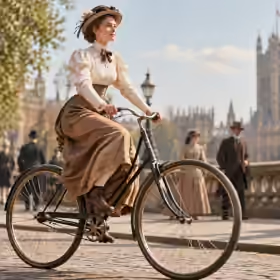
The Safety Bicycle
Invention
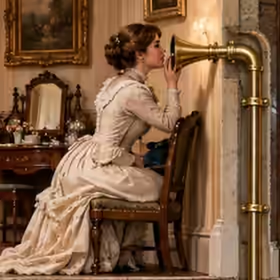
How Speaking
Tubes Work
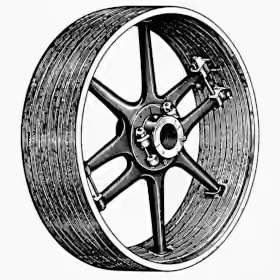
What is a
Wood Split Pulley?

How Hygiene built
modern medicine
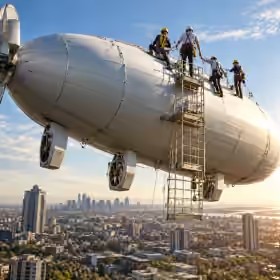
Design and Construction of Airships
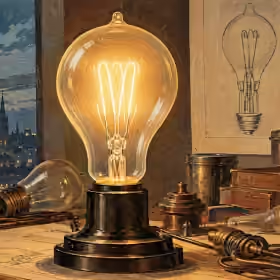
How Incandescent Lightbulbs Work
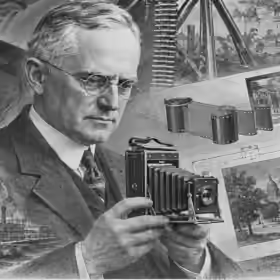
5 Inventors Who Turned Patents Into Fortunes
Curated Journals
These curated journals organise material by theme, assembling articles and artefacts into coherent groupings. They invite the reader to move beyond individual pages and observe how ideas, forms, and practices connect across the collection.

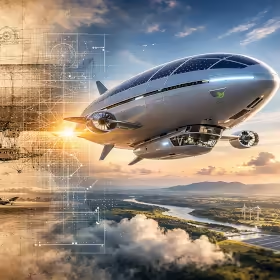
Amilcar - Vintage Motor Vehicles
The Amilcar articles explore a more refined side of vintage technology, where engineering meets style, branding, and motion. They look at interwar sports cars not just as machines, but as cultural objects shaped by design, aspiration, and changing ideas of modern travel.
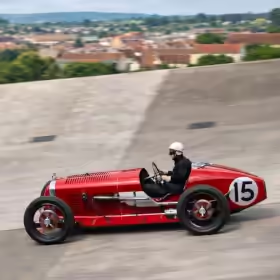
Amilcar Course 6
Sports Car (1927)
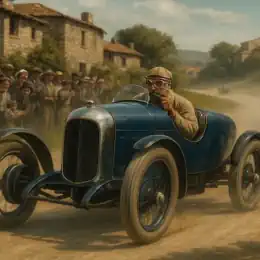
Amilcar's 1927
Sports Cars
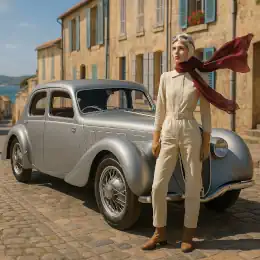
Amilcar Pégase 1936
Art of Motion
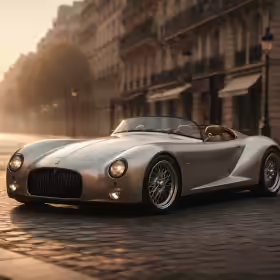
Amilcar as a Modern
Sports Car Brand
Storyboard
This group gathers broader technology features and speculative pieces, from electric trams and lightbulbs to patents, outer space, and lost futures. Together they show how vintage technology can be read both as historical reality and as a theatre of expectation.
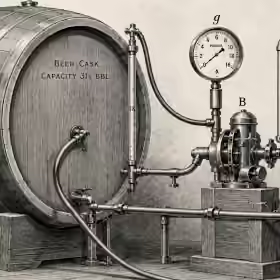
Invention That Could Change Beer Forever
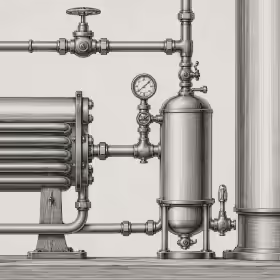
How to Read a
Victorian Era Patent
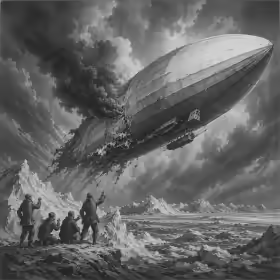
5 Arctic Airship
Expeditions

Should We Ignore Decorative Panels?
From Patent to Product: A Journey
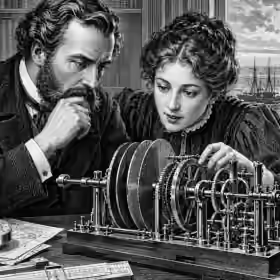
7 Victorian Era
Analog Computers
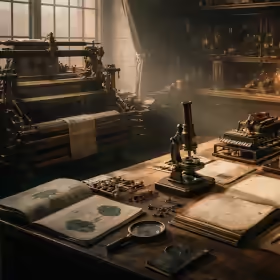
The GRIN Machine That Came Early

Victorian
Vacuum Brooms

1920's visions of
life beyond Earth
5 Inventors Who Turned Patents Into Fortunes

Our Love Affair
with Outer Space

Lost Visions
of Tomorrow

Dawn of
Electric Trams
How Incandescent Lightbulbs Work
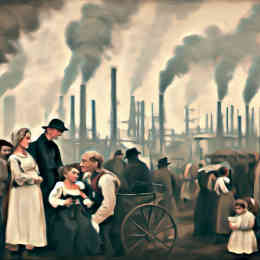
Public Health in
the Victorian Era
Looking Back, Looking Forward
Vintage era technology, whether from the Victorian workshop, the interwar motor age, or the early electrical decades of the 1950s, reflects a period of confident experimentation. Engineers, inventors, and writers were not only solving immediate problems. They were projecting futures, often with a clarity and optimism that feels distinct from the present.
To study these artefacts is not simply to catalogue what once existed. It is to revisit pathways that were imagined, tested, and sometimes abandoned. Airships, mechanical systems, analogue computation, and early transport networks all represent directions that might have developed further under different conditions.
This section continues to build as a curated record of those directions. Through technical articles, editorial reflections, and selected historical material, it aims to capture a world that no longer exists in full, yet still informs the shape of what may come next.
Looking back, in this context, is not an exercise in nostalgia. It is a method of seeing forward with greater depth.