Amilcar’s 1927 Sports Cars – For the Discerning Gentleman
·Revised

Introduction: A Gentleman's Invitation
Step with me onto the showroom floor and you will see, at a glance, that Amilcar's range is not a jumble of curiosities but a disciplined progression—from pure sporting intent, through refined open motoring, to dignified enclosed travel. The brochure presents a family of small, agile French machines offered in distinct characters,
each body style tuned to a particular kind of gentleman and a particular kind of day on the road. This overview concerns itself with character and intent rather than exhaustive technical specification, which is addressed elsewhere.
Touring the Showroom: 1927 Lineup Overview
Broadly, the lineup divides into three temperaments:
Sporting two-seaters for the enthusiast,
cabriolets for stylish open-air motoring with a measure of comfort,
and four-place tourers and saloons for those who require space, decorum, and practical elegance.
Rather than chasing excess size, Amilcar’s appeal here is proportion—lightness, responsiveness, and a carefully judged sense of luxe
in finish and presentation.
- The Sporting Two-Seaters (2 places): At the sharp end of the display are the purposeful machines built for a man who drives by instinct as much as by etiquette. The Course 6 Cylindres announces itself as the thoroughbred—long in bonnet, low in stance, and clearly intended to satisfy a sporting appetite. Alongside it, the 7CV Grand Sport reads as the balanced performer: still a true two-seater sporting car, yet presented with the poise and finish that suits both brisk country work and club-land arrival.
- The Cabriolets (open, refined): The cabriolet offerings trade a measure of raw intent for boulevard-ready elegance. The 8CV Cabriolet (3 places, Luxe) is positioned as the sociable choice—open motoring with an extra seat and a more “dress” presentation. The 6CV Cabriolet (2 places, Luxe) is the lighter companion: still intimate and sporting in spirit, but framed as a charming, accessible entrée into Amilcar ownership for the gentleman who values nimbleness and style in equal measure.
- The Four-Place Cars (touring and dignity): For those who travel with company—or simply prefer space and composure—Amilcar offers two distinct four-seat experiences. The 8CV Torpédo (4 places, Luxe) is the classic open tourer: social, airy, and ideal for scenic motoring where the journey is part of one’s public life. By contrast, the 8CV Conduite Intérieure (4 places, 4 portes, Luxe) presents the enclosed alternative: a proper “inside drive” with four doors, suited to cooler weather, formal calls, and the gentleman who appreciates discretion as much as comfort.
Taken together, the showroom tells a coherent story. Amilcar is offering not “one car in many guises,” but a considered ladder: begin with the sporting two-seaters if your pleasure is speed and precision; choose a cabriolet if your motoring is social and stylish; step up to the four-place torpédo or conduite intérieure if your day demands passengers, ceremony, or greater reserve. It is, in short, a range designed to match temperament—each model a different expression of the same French ideals: lightness, control, and elegance in motion.
The Sporting Lineup
Course 6 Cylindres – The Thoroughbred
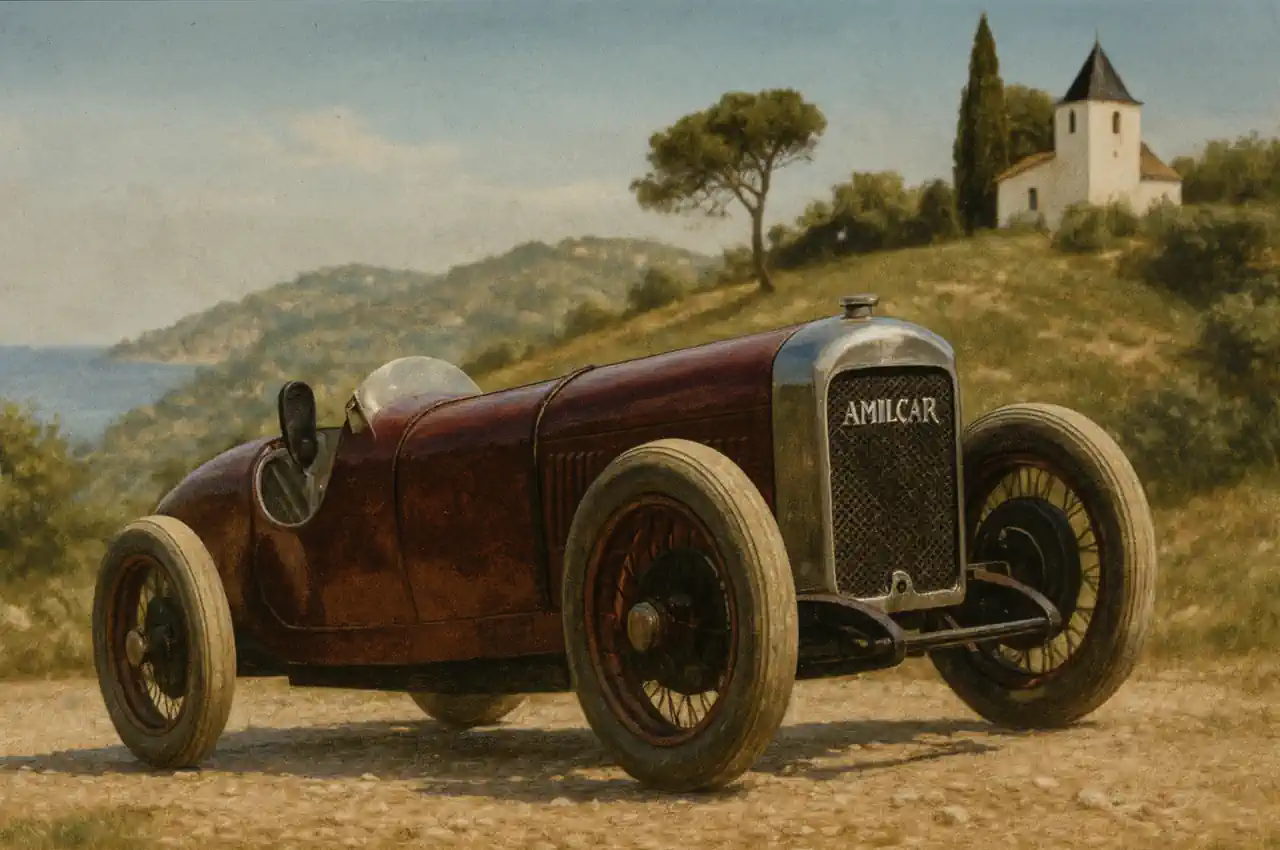
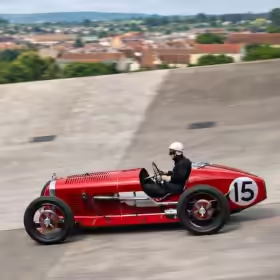
Here, sir, is the machine for the gentleman who does not merely arrive, but prefers to advance—quickly, cleanly, and with a certain mechanical nobility. The Course 6 Cylindres is presented as a true competition-bred Amilcar: low, lean, and shaped with the clear intention of reducing resistance to the wind. In the brochure it is explicitly described as a torpédo 2 places body, “specially studied” to offer the least possible drag, and Amilcar was sufficiently confident in the design to cite a contemporary competition record in its promotion.1
7CV Grand Sport – The Balanced Performer
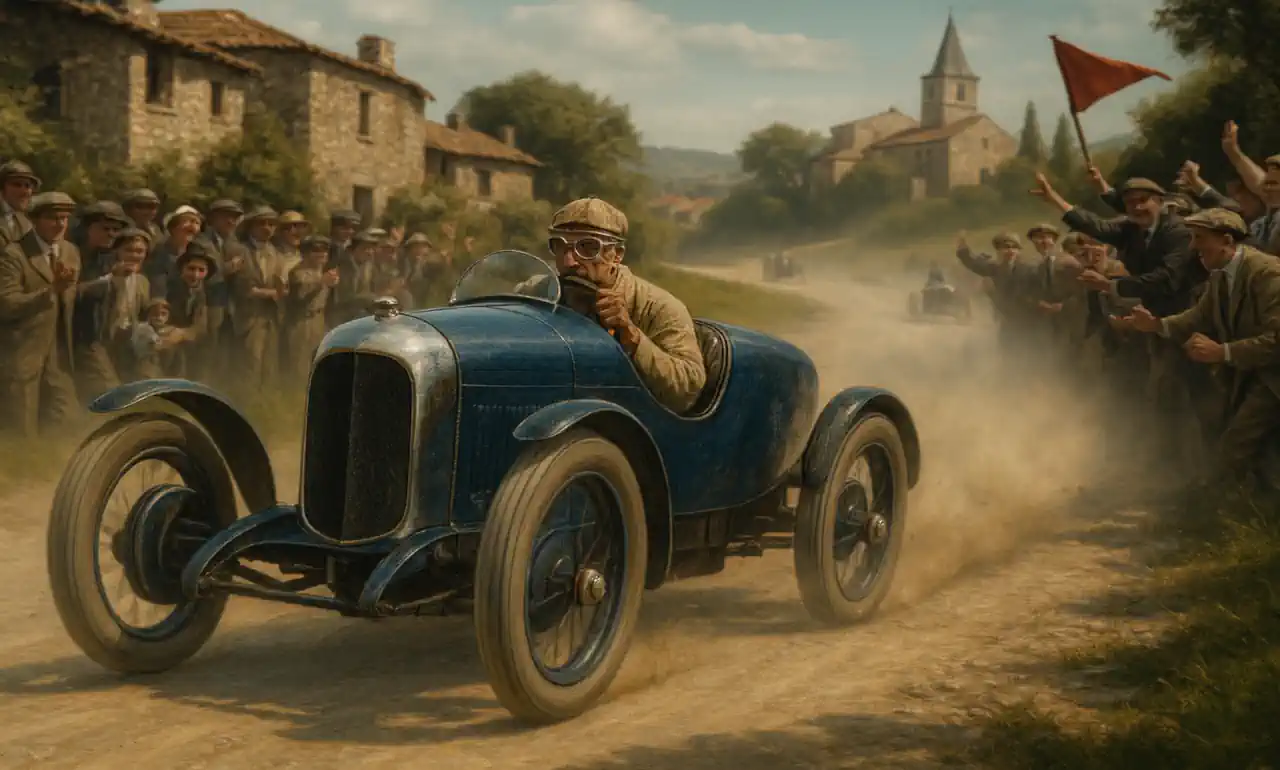
If the Course 6 Cylindres is a thoroughbred that longs for the timing-flag, the 7CV Grand Sport (2 places) is the gentleman’s choice for everyday sporting motoring: poised, purposeful, and remarkably well-judged. In the brochure it is presented not as a temperamental racer, but as a fast road car with a civilised manner—long enough in wheelbase to feel composed, yet light and compact enough to remain lively on a twisting country route. It is, in short, the model for the discerning driver who wants speed he can use, and refinement he can live with.
6CV Cabriolet Luxe – The Sporting Companion
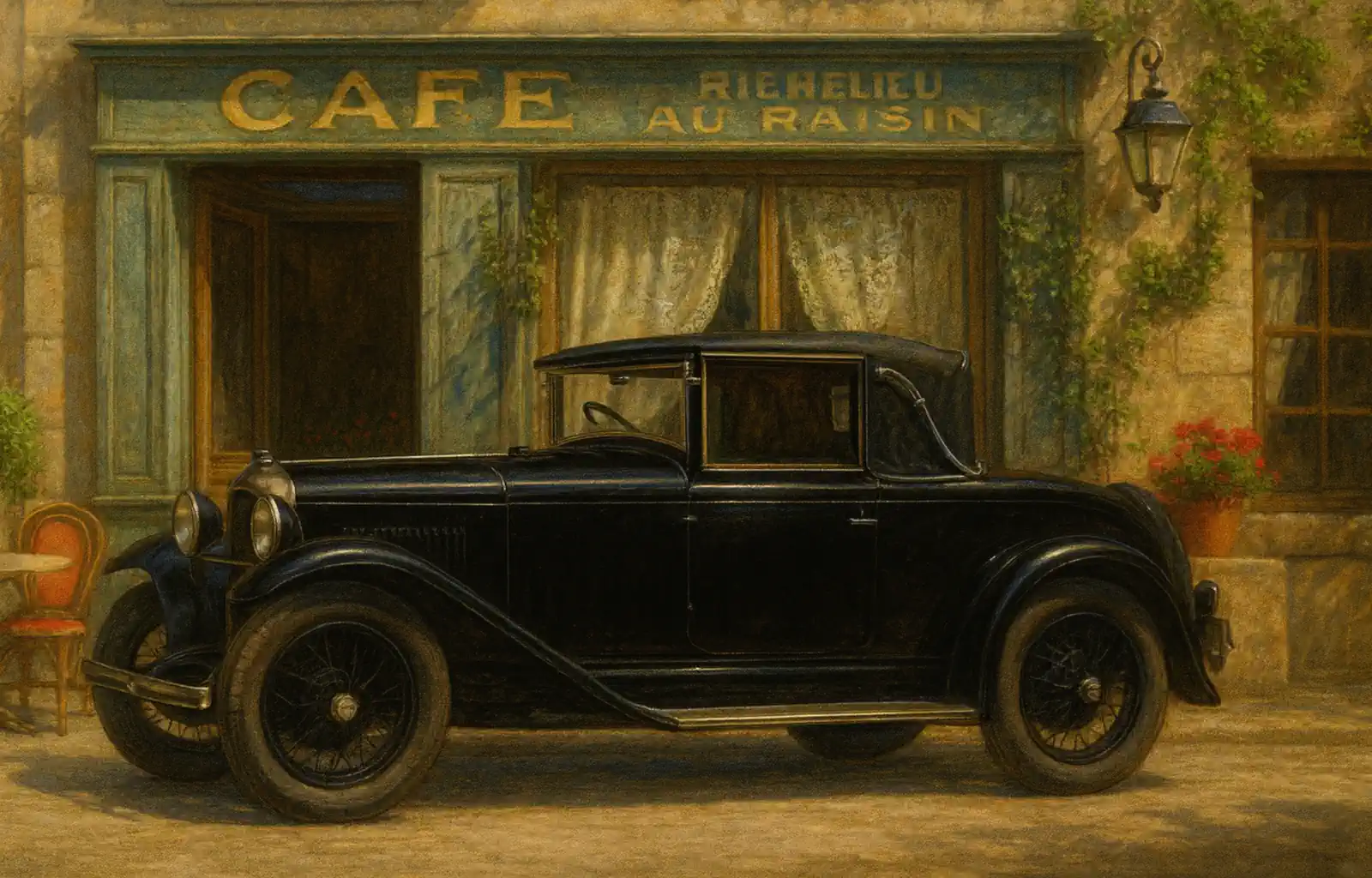
The 6CV Cabriolet Luxe (2 places) is the quiet surprise of the sporting lineup: lighter, simpler, and more approachable than its stablemates, yet no less faithful to the Amilcar character. In the brochure it is framed as a luxe cabriolet, but its true appeal lies in agility and intimacy rather than ornament. With its compact proportions, open bodywork, and modest mechanical demands, it encourages frequent use—early morning runs, unhurried country lanes, and social motoring where charm counts as much as speed. For the younger sporting gentleman, or for the experienced driver who values responsiveness over outright performance, the 6CV Cabriolet offers a form of motoring pleasure that is direct, light on its feet, and refreshingly unpretentious. It may not be the fastest Amilcar on the floor, but it is likely to be the one most often driven.
Choosing Your Sporting Amilcar
With the sporting Amilcars of 1927 set before you, the decision is less about superiority than about temperament. Each machine is cut from the same cloth—light, responsive, and unmistakably French—yet each speaks to a different style of motoring life. The choice, then, is not which is best, but which is most faithfully aligned with the way you intend to drive.
The Course 6 Cylindres belongs to the gentleman whose ambitions lean toward competition and record-making, a man who values mechanical drama and is prepared to accept focus and purpose in return for outright performance. The 7CV Grand Sport is the natural selection for those who seek balance: quick enough to thrill, refined enough for regular use, and engineered with the care expected by a driver who appreciates detail as much as pace. The 6CV Cabriolet Luxe, meanwhile, rewards a lighter touch—ideal for the sporting companion who values agility, elegance, and frequent use over numerical advantage.
Whichever path you take, the essential promise remains the same. An Amilcar chosen wisely is not merely transport, but a partner in motion—responsive to the road, respectful of its driver, and capable of delivering that most satisfying of pleasures: speed exercised with discretion.
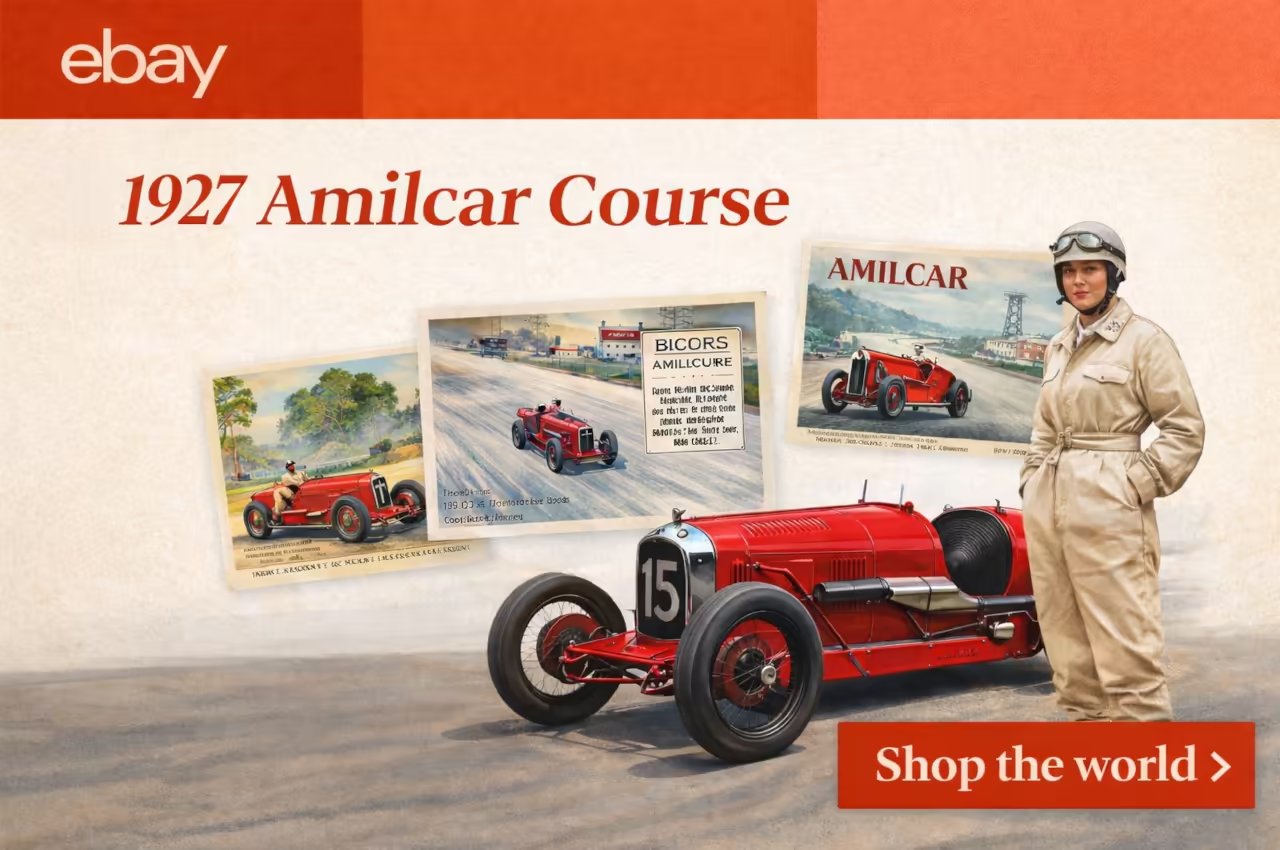
Collector market snapshot: Original Amilcar material surfaces across a surprisingly broad range of artefacts, from period brochures and factory literature to enamel badges, model cars, and surviving mechanical components. Pre-war publications—particularly showroom catalogues and coachbuilder references—remain the most desirable, offering direct insight into how these machines were presented to their original clientele. Smaller items such as grille badges and scale models appear more frequently, providing accessible entry points for enthusiasts. Complete vehicles and major parts are rarer and tend to circulate within specialist circles, where provenance and condition significantly influence value. For most collectors, printed material and memorabilia offer the clearest and most attainable connection to the Amilcar legacy.
Notes & Memoranda
Glossary
- CV (chevaux fiscaux)
- In this article, CV refers to the French fiscal horsepower rating used in the 1920s to determine vehicle taxation and registration classes. It is a bureaucratic calculation based on engine dimensions and cylinder count, and does not correspond directly to a car’s actual mechanical horsepower or performance.
- Course
- As used by Amilcar, course denotes a competition or racing specification rather than a merely sporting style. In the context of the Course 6 Cylindres, the term signals a machine designed with record-setting and aerodynamic efficiency in mind, reflecting contemporary French usage of voiture de course for racing cars.
- Torpédo
- torpédo refers to an open-bodied touring or sporting car with minimal weather protection, common in European coachbuilding of the 1910s and 1920s. The term emphasises an elongated, streamlined body form rather than any military association, and was widely used in period French automotive literature.
- Conduite intérieure
- conduite intérieure describes a fully enclosed passenger body, typically with four doors, intended for year-round use and greater formality. In this article, the term distinguishes enclosed Amilcar models from open torpédo and cabriolet body styles within the same mechanical range.
- Luxe
- In the Amilcar brochure context, luxe indicates a higher level of finish, comfort, and interior appointment rather than increased mechanical performance. The designation signals refinement and social positioning, appealing to buyers seeking elegance alongside sporting character.
Mentions & Echoes
- The Phillaneum Gazette 001, Cabinet of Curiosities
Further Reading…



References
- 1927 Amilcar Brochure, Internet Archive [retrieved 2025-12-13]
- Amilcar Pégase 1936 — Parisian Coachbuilders & the Art of Motion, phillaneum.com [retrieved 2026-04-03]
- Topic: Amilcar, philreichert.org [retrieved 2025-12-13]
Disclosure
This article presents a curated interpretation of period automotive material. Some links may be affiliate references; a small commission may be received at no additional cost. Readers seeking authoritative specifications should consult primary sources and specialist archives.