Amilcar Pégase 1936 — Parisian Coachbuilders & the Art of Motion
·Revised
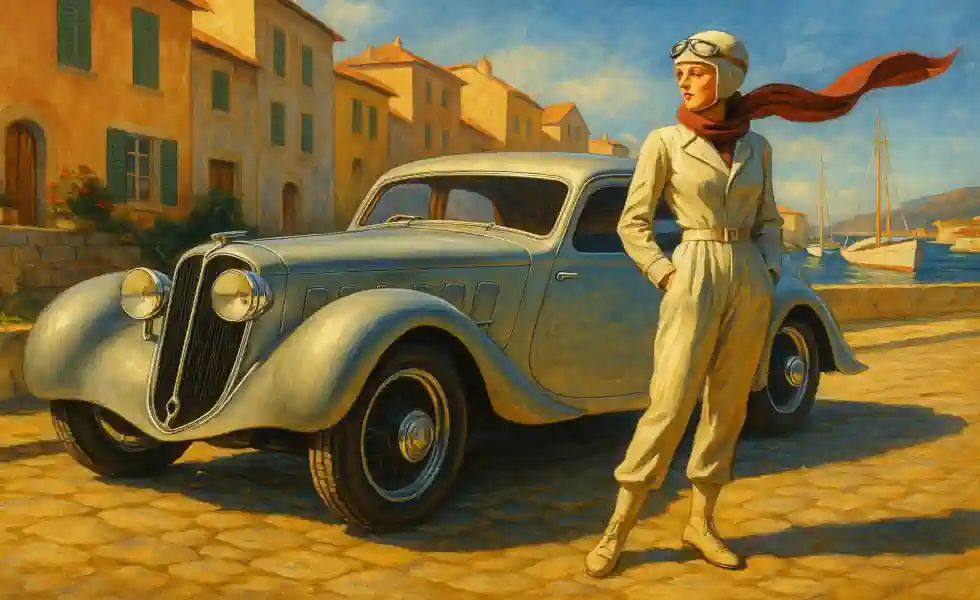
“Bonjour, monsieur. Step in from the boulevard.” The glass doors hush behind you and the soft perfume of polish and leather replaces the smell of rain on stone. My showroom is quiet; only the distant rhythm of hammers from the workshops keeps time. Before us, beneath the skylight, the newest Amilcar Pégase rests like a poised dancer. Allow me to be your guide.
Where Paris Breathes in Metal
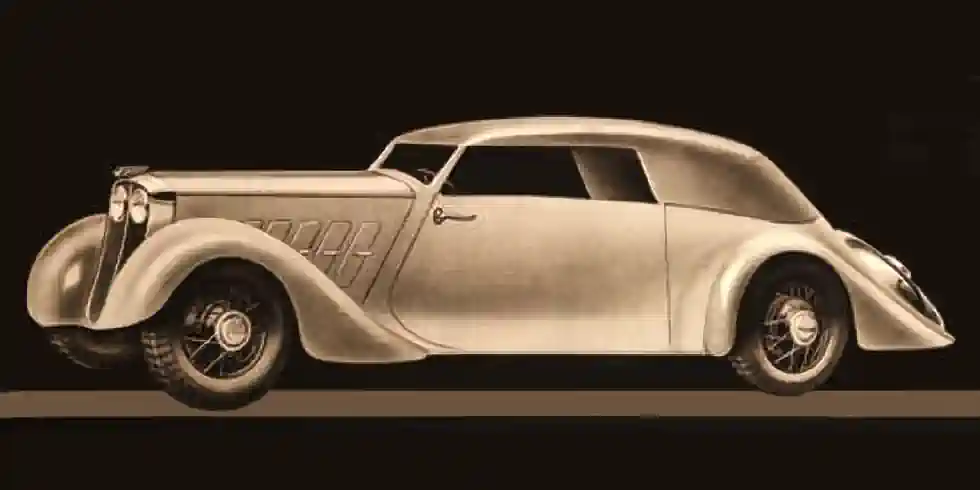
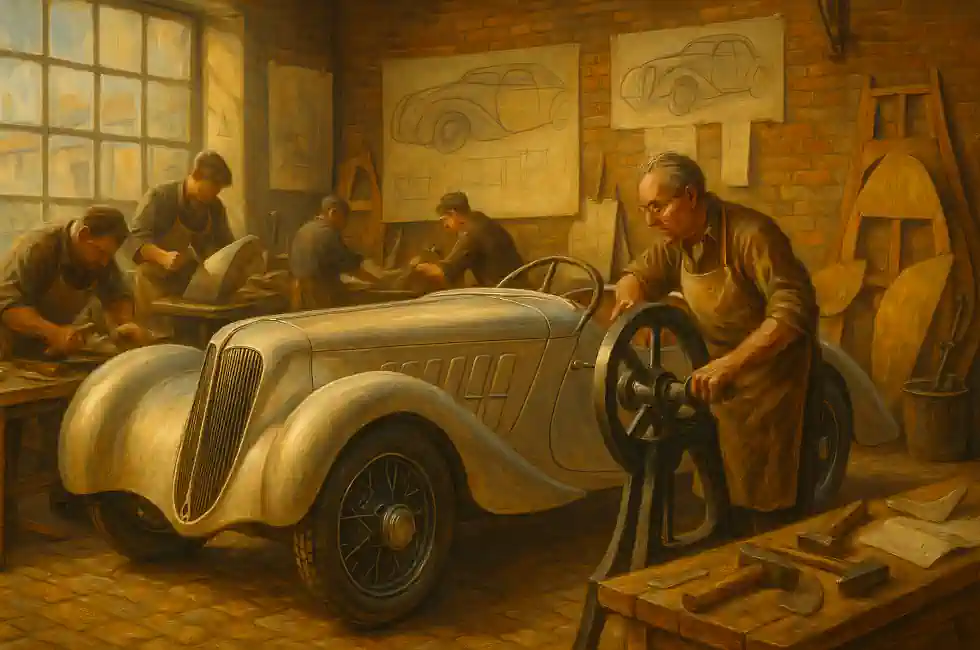
We Parisians speak many languages: couture, cuisine, music. Here we speak the language of metal shaped by hand. Our bodies are not stamped; they are persuaded. Figoni et Falaschi, Letourneur et Marchand, Pourtout—each atelier has a signature you can read with your fingertips. The panels are wheeled until they sing, planished until the light behaves. What you see is not industry; it is intimacy between tool and craftsman.
What the Hammer Teaches
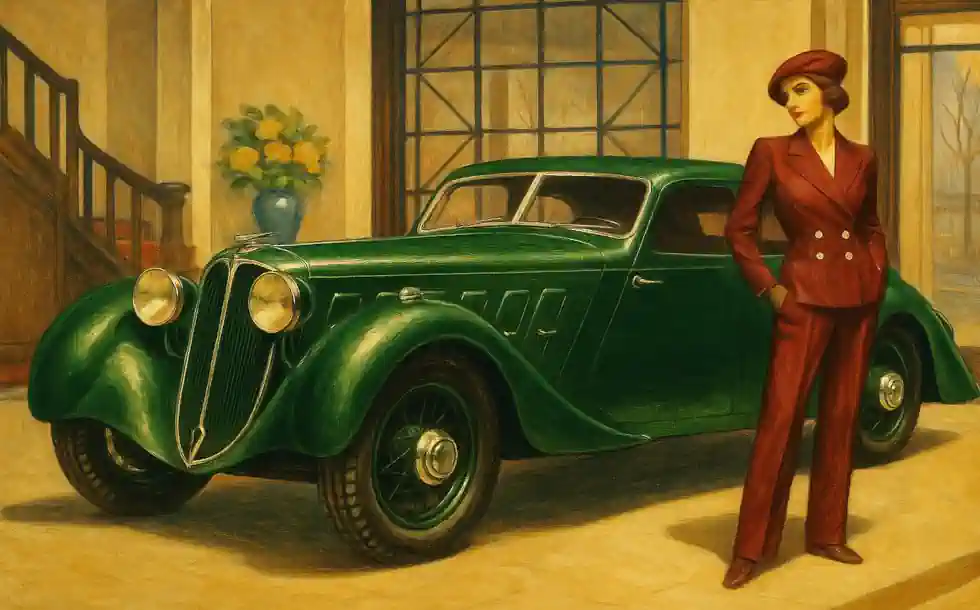
“Do you truly make it that way? By ear?” you ask. I smile and tilt my head toward the workshop door. The apprentices learn the pitch of a good curve: a higher ring as the sheet thins, a softer note as it settles. The master raises a brow, and a young man knows to soften his stroke. This is how Paris remembers. When the panel comes to the chassis, it meets not just metal but the experience of a hundred cars that preceded it.
Why Hide the Headlights?
Come closer to the grille. You notice the lamps are set within it, not perched like spectacles on the nose. We have patented this arrangement. It cleans the face, yes, but more than that it cleans the air. Benefit: at speed you hear conversation and the radio rather than wind clawing at the wings. The light itself is not compromised; the beam is set true and can be adjusted with a discreet lever within reach.
The Curve and the Calm
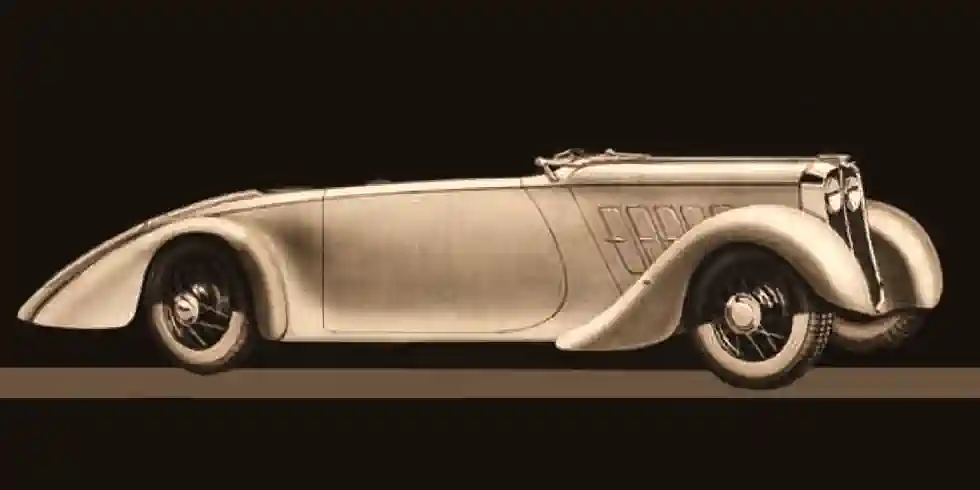
Your eye travels along the front wings. They rise and fall like a breath, then slide back to the doors without a seam. These broad, flowing fenders are not vanity. They tame the spray in wet weather and steady the car when the road is poor. Benefit: your coat remains clean, your hands relaxed on the wheel, and you arrive with your cuffs as smooth as when you left.
Lowered Stance, Higher Confidence
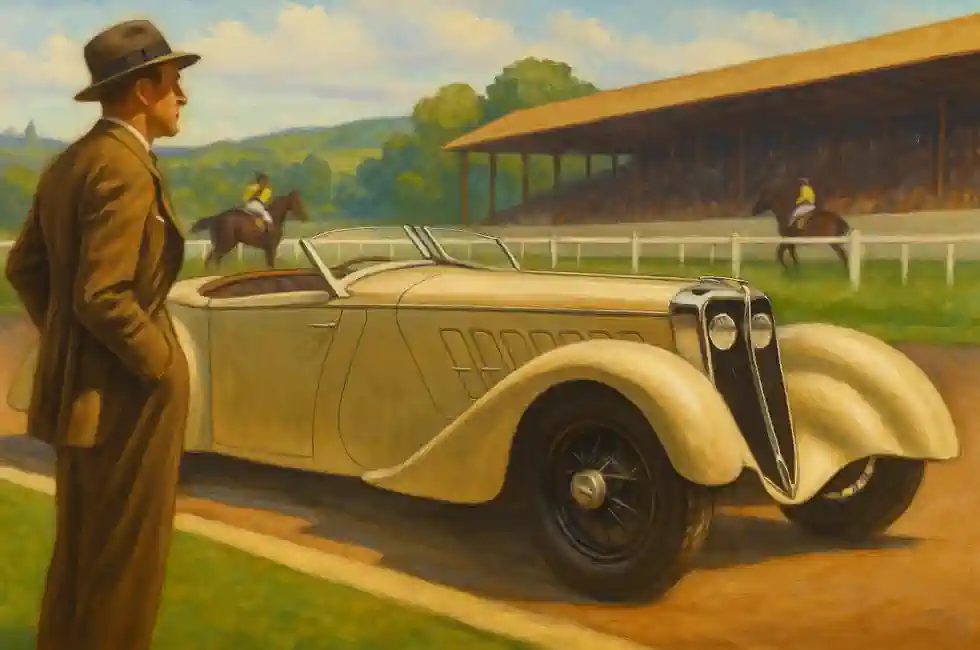
Observe the way the Pégase sits: the body dropped between the axles, the bonnet long and low. The frame is designed so the seats are nearer the floor, and the center of gravity follows. Benefit: the boulevard bends feel like a bow rather than a lurch; your passenger smiles, not clenches. The car takes a set and holds it, the way a skater inclines into a curve on the Jardin du Luxembourg lake.
Inside, a Salon for Travel
Open the door. The hinges answer with a quiet confidence, not a shout. The leather is cut clean, the threads tight, the instruments by Jaeger precise enough to time a waltz. We choose materials not only because they endure but because they age handsomely. Benefit: on a night drive home from the opera, the cabin is a small theatre of calm; you speak in a normal voice and the city glides past like a second act.
A Moment of Doubt
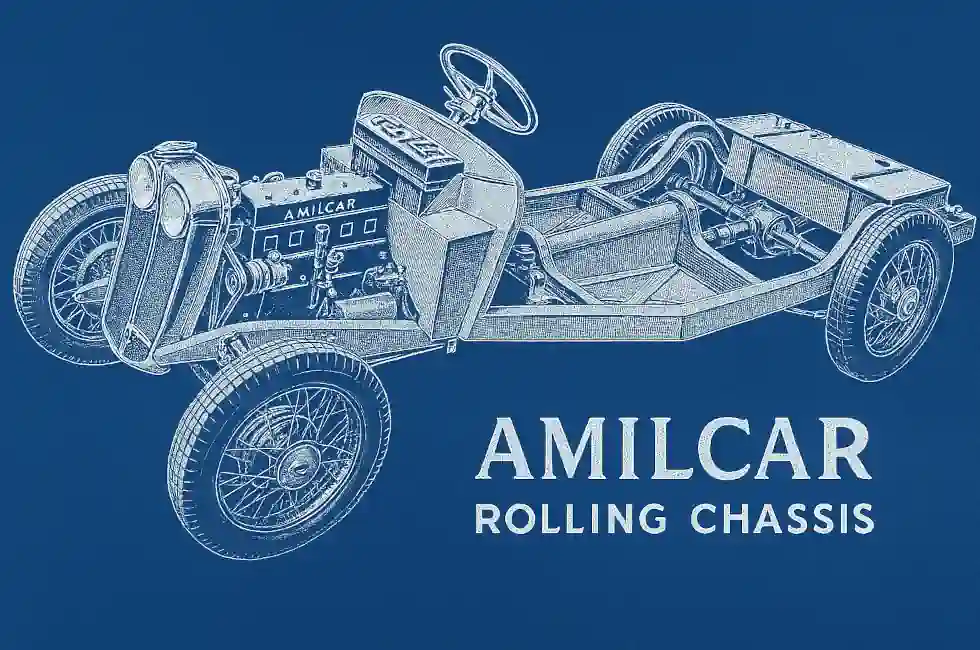
“It is beautiful,” you say at last, “but beauty is often fragile. I have seen cars with similar grace shake themselves silly over the paving near Porte Maillot.” The doubt is fair. The Pégase is not a sketch on a salon plinth; it is a traveller. The front wheels are independently sprung on a transverse member to keep the tyres in steady conversation with the road; the rear axle is robust and well braced. Benefit: instead of dancing over ridges, the car glides, and your hat remains exactly where you placed it.
A Short Demonstration
Come; the courtyard is dry. I take the key. The engine settles into a cultured hum, a 4-cylinder monobloc fed by pressure lubrication and breathing through a clean, well-tuned intake. We move off. The bonnet disappears ahead like a promenade stage; the steering speaks without shouting. At thirty, the lamps in the grille cut the air; at fifty, the wind flattens against the glass and the cabin grows quieter, not louder. We circle once more and return. You touch the door pull and laugh; the latch answers like a fine piano lid.
Colours & Character
Clients ask for midnight blue, for burgundy like the evening dress at Maxim’s, for the new metallic shades that suggest aeroplanes and speed. We can oblige. Two-tone if you wish, the separation tracing the natural line of the body. Benefit: your car does not simply occupy the street; it belongs to it, flattering light and shadow the way a well-tailored suit flatters a figure.
The Coachbuilder’s Signature
If you commission Figoni et Falaschi, expect a flourish: a line that seems to move while standing still. Letourneur et Marchand will give you poise, a carriage that looks dignified outside the embassies. Pourtout will surprise you with clean invention. Each studio keeps to sound engineering, but they all listen to the same music: Paris in motion. Benefit: whichever signature you choose, the car feels personal, and the city recognizes your taste.
The Practical Matters, Beautifully Resolved
Details matter. The bonnet opens wide enough that even a gentleman may check the oil without smudging a cuff. The spare sits where it can be reached without gymnastics. The boot will take two suitcases and a hatbox; the fuel cap is generous and well threaded. Benefit: the rituals of travel become graceful, not grimy, and your companion does not stand in the rain while you wrestle with an obstinate catch.
Why the Pégase, and Why Now?
You live in a city that prizes conversation. The Pégase continues it. It speaks softly about progress—how a headlamp can be hidden without dimming the road, how a curve can be art without sacrificing comfort, how strength can be elegant. We do not sell speed alone; we sell the way one feels when speed is civilized. Benefit: you arrive not merely sooner, but better.
A Last Word Before the Drive
We return to the skylight. The afternoon light has shifted, and the body gathers it like silk. You rest your hand on the wing. The metal is cool, the curve exact. I have shown you the craft and the reasons behind it; the city will show you the rest.
“Shall we take the river road?” I ask. Imagine the car gliding along the Seine, lamps low and steady, reflections of bridges slipping across the bonnet. Picture the boulevard corners taken in one smooth gesture, the cabin quiet enough to hear your companion’s laugh. If the Pégase does not change the way Paris moves beneath you in the first five minutes, I shall bring you back for coffee and an apology. But I suspect, monsieur, that when we reach the Place de la Concorde, you will not wish to turn around.
Take the wheel, monsieur, and carry a little of Paris with you.
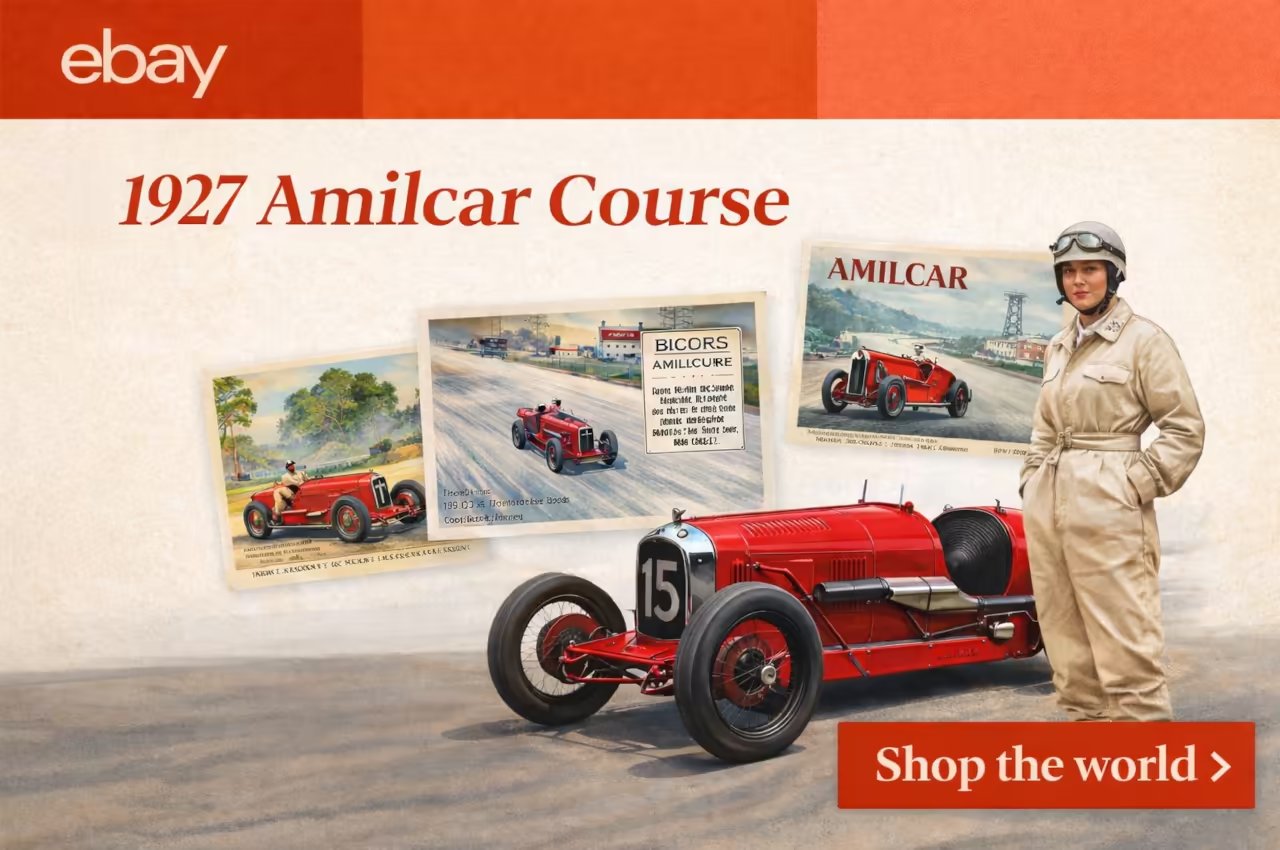
Collector market snapshot: Original Amilcar material surfaces across a surprisingly broad range of artefacts, from period brochures and factory literature to enamel badges, model cars, and surviving mechanical components. Pre-war publications—particularly showroom catalogues and coachbuilder references—remain the most desirable, offering direct insight into how these machines were presented to their original clientele. Smaller items such as grille badges and scale models appear more frequently, providing accessible entry points for enthusiasts. Complete vehicles and major parts are rarer and tend to circulate within specialist circles, where provenance and condition significantly influence value. For most collectors, printed material and memorabilia offer the clearest and most attainable connection to the Amilcar legacy.
Notes & Memoranda
Glossary
- Coachbuilder
- In this article, a coachbuilder refers to a specialist craft workshop that designed and hand-built custom car bodies on a manufacturer’s chassis. Unlike mass production, each body was shaped individually, often to a client’s specification, combining engineering with artistic design.
- Atelier (atelier)
- The term atelier is used to describe a workshop or studio where skilled artisans work. In the context of the article, it refers to Parisian coachbuilding studios where metal body panels were handcrafted with precision and artistic intent.
- Planishing
- Planishing is a metalworking technique used to smooth and refine shaped panels after initial forming. In the article, it describes how craftsmen finished body panels so that light reflects cleanly across their surfaces, giving the car its refined appearance.
- Streamline Moderne
- Streamline Moderne refers to a late Art Deco design style characterised by smooth curves, flowing lines, and an emphasis on motion and aerodynamics. In this article, it describes the visual and functional philosophy behind the Amilcar Pégase’s body design.
- Fenders
- Fenders are the curved panels that frame the wheels of a car. In the article, they are described as broad, flowing forms that not only contribute to the vehicle’s aesthetic elegance but also help manage road spray and stability.
- Monobloc Engine
- A monobloc engine refers to an engine design where the cylinders and crankcase are cast as a single unit. In the article, it highlights a more modern and robust construction method for the period, contributing to reliability and smoother operation.
- Pressure Lubrication
- Pressure lubrication is a system in which oil is actively pumped through the engine to reduce friction and wear. In the article, it indicates a higher level of engineering refinement, supporting durability and consistent performance.
- Independent Suspension
- Independent suspension refers to a system where each wheel can move separately from the others. In the article, it is used to describe the front suspension design, improving ride comfort and maintaining better contact with uneven road surfaces.
- Chassis
- The chassis is the structural framework of a vehicle upon which the body and mechanical components are mounted. In the article, it serves as the foundation that coachbuilders adapted with custom bodywork.
- Centre of Gravity
- The centre of gravity is the point where a vehicle’s mass is considered to be concentrated. In the article, lowering it improves stability and handling, making the car feel more controlled when cornering.
- Jaeger Instruments
- Jaeger instruments refer to precision automotive gauges manufactured by the French company Jaeger. In the article, they represent high-quality instrumentation used to display speed, time, and engine performance.
- Grille-Integrated Headlights
- This term describes headlights that are built into the car’s front grille rather than mounted externally. In the article, this design improves aerodynamics and creates a cleaner, more streamlined appearance.
Frequently asked questions
What exactly did a coachbuilder do, and how is that different from modern car manufacturing?
In the context of this article, a coachbuilder was a specialist workshop that designed and hand-built a car’s body on top of a separate chassis supplied by the manufacturer. This differed from modern car manufacturing, where body, structure, and mechanical systems are usually designed and produced together in large-scale factory processes. Coachbuilding allowed for far greater individuality, craftsmanship, and variation in form.
Why were car bodies built separately from the chassis in the 1930s?
In the 1930s, separate chassis construction allowed manufacturers and coachbuilders to divide labour between engineering and body design. The maker could supply the mechanical foundation, while specialist body firms created different styles for different clients or markets. This system made bespoke design practical and helped produce cars that could vary widely in character, luxury, and visual identity even when they shared the same underlying mechanical base.
How did craftsmen shape metal panels by hand without modern machinery?
Craftsmen shaped metal panels by using hand tools, formers, hammers, and finishing techniques such as wheeling and planishing. In the sense used by the article, this was a skilled process of gradually persuading sheet metal into smooth, flowing forms rather than stamping it instantly in factory presses. The result depended on trained eyes, touch, repetition, and workshop experience as much as on tools themselves.
Was Streamline Moderne purely decorative, or did it improve performance?
As used in this article, Streamline Moderne was not purely decorative. Its flowing lines, integrated elements, and smooth surfaces also reflected practical concerns such as cleaner airflow, reduced visual clutter, and a more unified body shape. While styling remained central, these design choices could also support quieter travel, improved stability, and a stronger sense that elegance and engineering refinement were working together.
Mentions & Echoes
- The Phillaneum Gazette 001, Cabinet of Curiosities
Further Reading…


References
- 1927 Amilcar Brochure, Internet Archive [retrieved 2025-12-13]
- Topic: Amilcar, philreichert.org [retrieved 2025-12-13]
Disclosure
This article presents a curated interpretation of period automotive material. Some links may be affiliate references; a small commission may be received at no additional cost. Readers seeking authoritative specifications should consult primary sources and specialist archives.