The Phillaneum Gazette 001 – Cabinet of Curiosities
The Editor's Quill
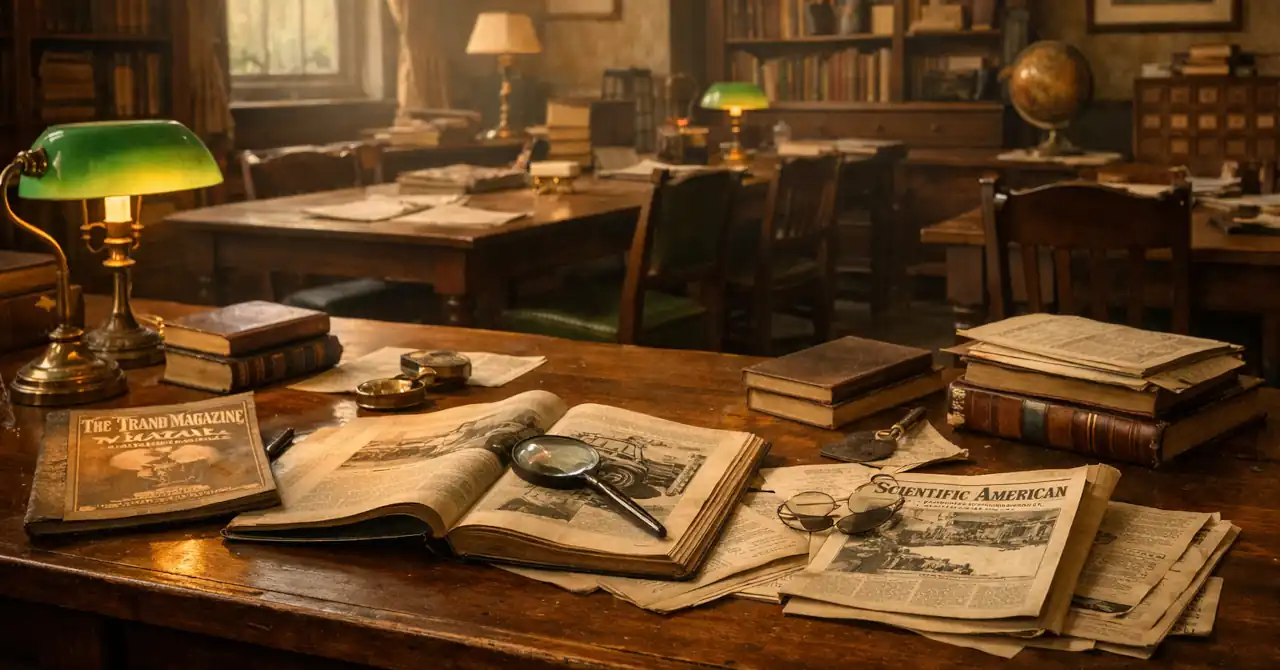
There is a particular delight found in leafing through old journals and magazines. Those quiet volumes where past voices speak with an intimacy and clarity that seem to transcend time. What was written a century ago often feels startlingly fresh; the cadence of a thoughtful mind, the turn of a well-placed phrase, the generosity of a writer who believed their work might matter to someone far beyond their moment. In these pages, I find not nostalgia but renewal.
For years, I allowed myself to be swept along by Google's insistence on brevity, recency, and algorithmic neatness. I listened to the directives of SEO and webmaster theory, and in doing so, pushed aside the very spirit that sparked this site into being. The result was predictable: a dilution of purpose, a slow erosion of joy.
The Phillaneum was always meant to be a cabinet of curiosities—a home for craftsmanship, forgotten knowledge, and the kind of writing that invites you to linger rather than skim. With this first Gazette, I am returning to that original intent. I'm restoring the long-form, the considered, the beautifully made.
I love this kind of writing. I hope, sincerely, that you find something here to love as well.
New Additions to the Collection


Changes on the Estate
Marginalia
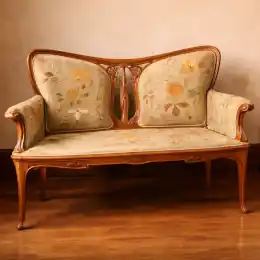
L’Art Nouveau
- Meaning
- An international style of art and design (c. 1890–1910) known for flowing lines, organic forms, and decorative craftsmanship across architecture, furniture, typography, and the applied arts.
- Pronunciation (Australian English)
- /ˌlɑː nʉːˈvoʊ/ “lar noo-VOH”
- In a sentence
- The poster’s curling stems and confident lettering feel unmistakably L’Art Nouveau.
- Why use it (rather than “Art Nouveau” or “new style”)
-
- L’Art Nouveau carries period flavour and the original French framing.
- Art Nouveau is the common modern label; plainer, but universally understood.
- “New style” loses the historical specificity and the movement’s design identity.
- Phillaneum note
- In 1902, some writers were already declaring its decline—proof that styles are living things, with lifespans, admirers, and obituaries.
Curiosities from Abroad
- Littlehampton libels – The Littlehampton libels were a series of letters sent to numerous residents of Littlehampton, in southern England, over a three-year period between 1920 and 1923 containing obscenities and baseless accusations.
- 7 Ways Microsites Can Boost Efficiency, Scalability, and Creativity - A microsite might start as a small, fun project, but quickly grows into something that requires structure, upkeep, and fresh ideas. This article discusses ways for AI (and large language models) to assist you in keeping to a consistent publishing pace.
- What Medieval Witnesses Saw Was Not Big Lunar Impact - The idea that twelfth century people saw the impact that created a lunar crater more than 10 times as wide as Meteor Crater in northern Arizona has been popular since it was first proposed 25 years ago.
- Shop the Andy Warhol Collection - Proceeds benefit the Andy Warhol Foundation. (Disclosure: eBay marketing link)
The Maker's Ledger
A few notes from the workshop: what's been fixed, improved, or learned on the road to keeping this site fast, useful, and brimming with curiosities.
- A Modern Reading Experience
- The Phillaneum has quietly stepped into a more modern era. Behind the scenes, the site's CSS and formatting frameworks have been refreshed using contemporary, standards-based techniques, replacing older layout conventions with more flexible and resilient structures. One immediate benefit is adaptive theming: many articles now automatically display in light or dark mode according to your browser or system preferences, improving readability and comfort across devices and times of day. This modernisation also lays a stronger foundation for future design refinements, accessibility improvements, and long-term maintainability of the archive.
- Articles and Records: A Clearer Editorial Path
- The Phillaneum has also sharpened the distinction between two kinds of pages. Records are curated historical artefacts—presented plainly, preserved faithfully, and offered as reference points in their own right. Articles, by contrast, are interpretive spaces: places to explore context, draw connections, and reflect on why these records matter, then and now. This clearer separation brings structure to the growing archive, helping readers understand when they are viewing a primary historical item and when they are reading considered commentary around it. Together, the two forms strengthen Phillaneum’s role as both archive and cabinet of curiosities.