About Us
Welcome to Phillaneum. Phillaneum is a curated cabinet of curiosities devoted to the material culture, ideas, and technologies of the Victorian and early industrial eras.
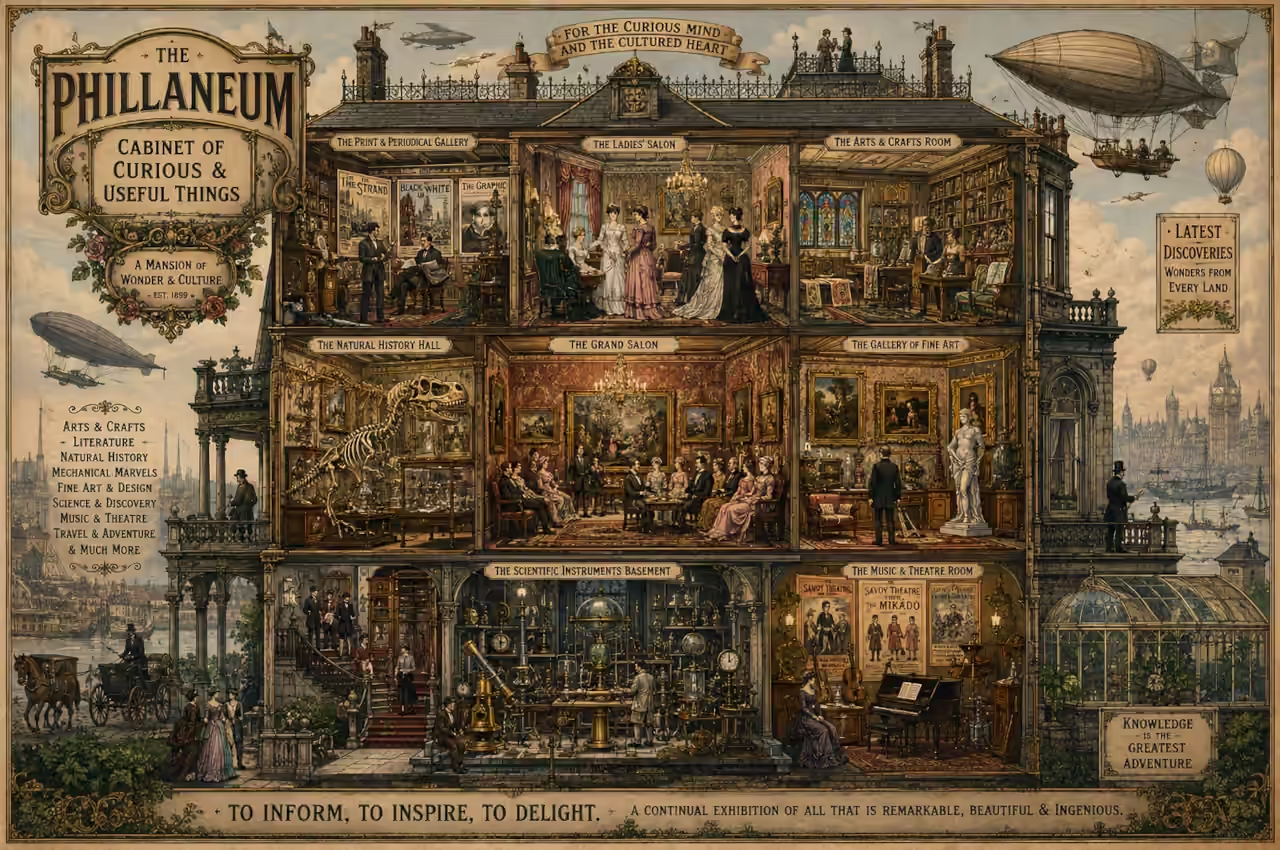
The past is not a destination; it is a workshop. Every generation leaves behind remarkable ideas, ingenious machines and forgotten ways of thinking. Some deserve to remain history. Others simply need fresh eyes. This site exists to rediscover those ideas, connect them with the present, and explore what they can still teach curious people today.
Our work combines two complementary strands. First, we present historical records, magazines, patents, notices, and ephemera, carefully transcribed, annotated, and linked to authoritative primary sources wherever possible. Second, we publish modern editorial essays that interpret these records, exploring patterns, connections, and cultural context that emerge across time.
In this way, Phillaneum follows the tradition of the modern museum: the archive provides evidence, while editorial interpretation provides meaning. Some pages exist as records; others as exhibits. Together, they form a living reference for readers interested in Victorian art, craftsmanship, technology, and the wider cultural landscape of the period.
Established in 2020, Phillaneum is undergoing a major refurbishment in 2026. This renewal reflects our ongoing commitment to clarity, accessibility, and thoughtful historical interpretation, while respecting the integrity of the original source material.
Phillaneum is The Original Cabinet of Curiosities. We invite you to explore, browse, and linger—whether you are researching a specific artefact or simply curious about how the past continues to shape the present.
What does Phillaneum mean?
Phillaneum is our neologism of a conceptual space where artistic expression, craftsmanship, the exploration of vintage technology, and the celebration of cultural convergence. It symbolizes a hub or center dedicated to these interconnected realms, fostering creativity, knowledge, and appreciation.
Our Editors
Deborah Upshaw

Deborah Upshaw
is a talented and passionate author known for her captivating storytelling
and insightful narratives. With a diverse range of interests and a vibrant personality,
she brings her unique style to the literary world. Deborah's exceptional ability to craft
compelling stories, combined with her dedication to her audience, has earned her a devoted
following of readers who eagerly anticipate her next literary adventure.
As a devoted mother and loving wife, she finds inspiration in her personal life and infuses
her writing with contemporary relevance and relatability.
Read Deborah Upshaw's profile.
Maxwell P. Lee

Maxwell P Lee
is a discerning editor at Phillaneum, bringing artistic sensitivity and meticulous
attention to detail to every project. Born in Fayetteville, North Carolina, Maxwell's
grounding in journalism and deep knowledge of vintage technology make him a steady
and analytical presence within the editorial team. As a devoted husband and
father, he balances professional discipline with thoughtful perspective.
With a naturally intuitive and standards-driven approach, Maxwell’s commitment
to clarity and craft is evident in his editorial work.
Read Maxwell P Lee's profile.
Brenda Pearce

Brenda Pearce,
our culture editor at Phillaneum, brings her unique perspective and vibrant energy to our team.
As a proud American Asian woman, Brenda's diverse background influences her keen understanding of cultural
nuances and her ability to capture the essence of various art forms.
Brenda's creativity and zest for life infuse every aspect of her role as our culture editor,
ensuring that our readers experience a rich and captivating exploration of the arts and cultural heritage.
Read Brenda Pearce's profile.
Contributing Writer
Phil Reichert

Phil Reichert,
systems engineer, approaches historical artefacts as working engineering propositions rather than static curiosities.
His background in systems thinking informs his analysis of speculative technologies, airship logistics, and factory-built architecture,
examining how unrealised designs can still offer insight into contemporary problem solving.
Through careful interpretation of patents, technical drawings, and archival records,
Phil restores technical legibility to overlooked innovation and reframes history as a laboratory for modern engineering thought.
Read Phil Reichert's profile.