Introduction
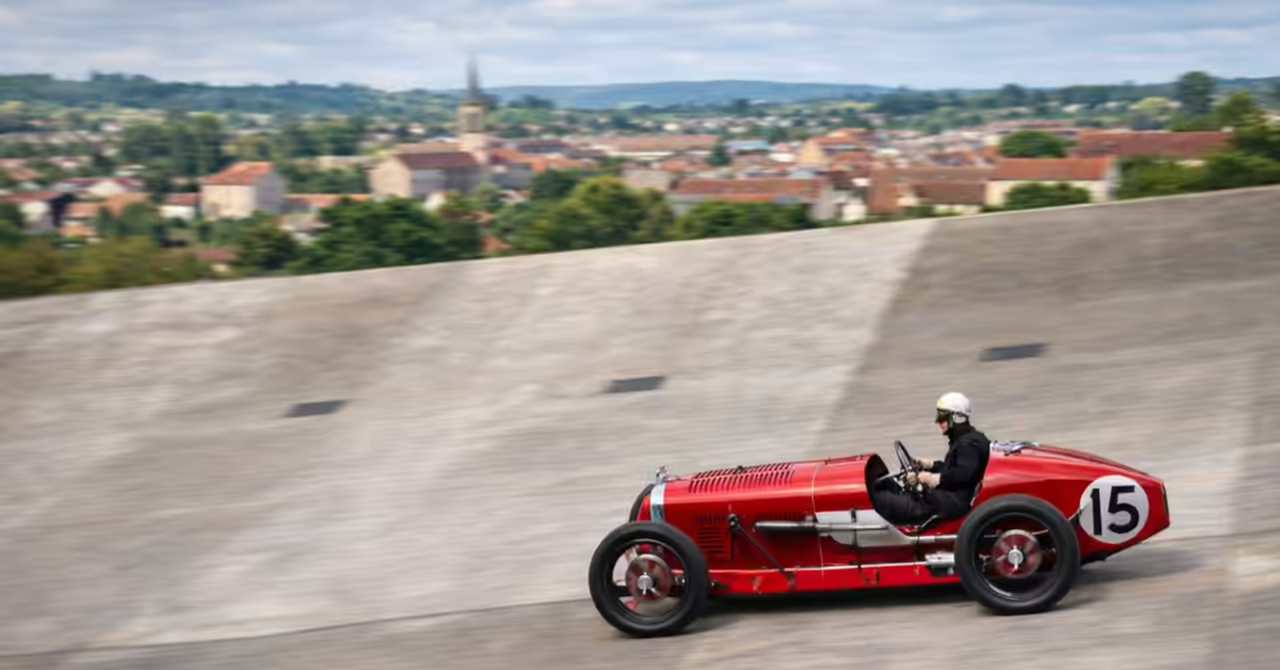
In the late 1920s, when Europe was intoxicated by speed records, aviation feats, and mechanical daring, the Amilcar Course 6 Cylindres, 2 Places (1927) emerged as a compact but formidable expression of French sporting ambition. Built not as a boulevard ornament but as a serious competition machine, it distilled advanced engineering into a light two-seat torpedo body. In an era when many small cars were mechanically modest, Amilcar offered refinement, revs, and racing pedigree in just over one litre of displacement.
The model’s credentials were not merely theoretical. A closely related six-cylinder Amilcar claimed a flying kilometre speed of 197.422 km/h at Arpajon in May 1926 — an extraordinary figure for such a small-capacity engine. This was not merely a promotional claim; it was a declaration of intent from a marque determined to punch above its weight.
Visual Description
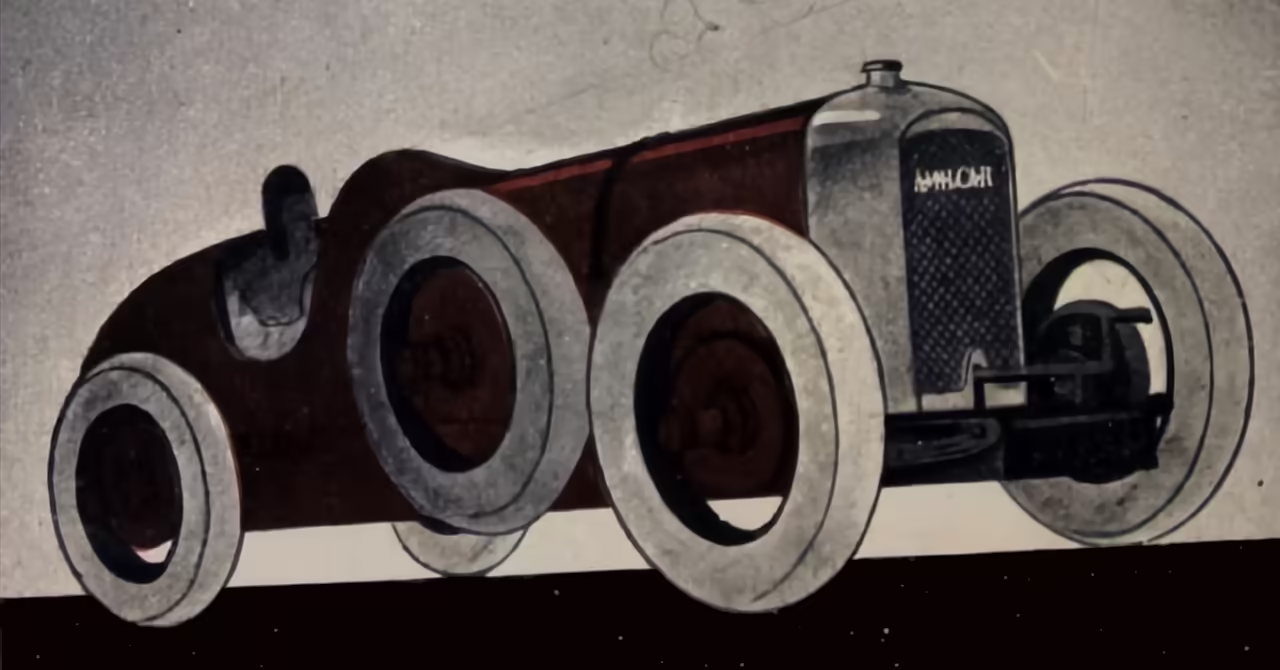
The catalogue sheet presents the car with bold, confident typography — “Course – 6 cylindres – 2 places” — set against a restrained background that allows the technical specifications to command attention. The design language is purposeful rather than decorative, reflecting the mechanical seriousness of the machine itself.
The body style is a two-seat torpedo, its long bonnet visually emphasising the six-cylinder powerplant beneath. The proportions are taut and athletic: narrow track, low stance, minimal frontal area. Exposed wire wheels (Rudge pattern), cycle-type mudguards, and a compact cockpit reinforce the impression of a machine engineered for velocity rather than comfort. Instrumentation listed in the catalogue — tachometer, oil pressure gauge, and clock — suggests a driver actively engaged with the mechanical state of the car.
Technical Details
(As specified in the original catalogue)
- Pressed steel chassis
- Wheelbase: 2.160 m
- Track: 1.090 m
- Semi-elliptic front suspension
- Cantilever rear suspension
- Hartford shock absorbers front and rear
- Six-cylinder engine type 56/74
- Capacity: 1,097 cc
- Pressure lubrication by twin pump
- Overhead camshaft with valves in head
- Ferodo clutch
- Four-speed gearbox with reverse
- Transmission by single Hardy disc
- Pressed steel rear axle
- Brakes on all four wheels
- Available with or without compressor (supercharger)
- Rudge wheels
- Instruments: rev counter, oil pressure gauge, clock
Notably, four-wheel braking and overhead camshaft valve gear placed the car at the more sophisticated end of the small-displacement sporting market. The optional supercharger further underscores its competition intent.
Conclusion
The Amilcar Course 6 Cylindres deserves its place within Phillaneum not merely as an antique motorcar, but as an artefact of the interwar obsession with speed, precision, and mechanical artistry. It represents a moment when engineering ambition was compressed into small, highly strung machines — vehicles that required skill, courage, and mechanical sympathy from their drivers.
In scale it is modest; in spirit it is immense. The car stands at the intersection of aviation-era optimism and motor-racing audacity, embodying the belief that elegance and performance could coexist within a finely engineered chassis. As such, it is a fitting exhibit in a Cabinet of Curiosities devoted to the machines that shaped modernity.