The Gulgong Advertiser's Printing Plant Upgrade of 1900
A FEW WORDS UPON PRINTING
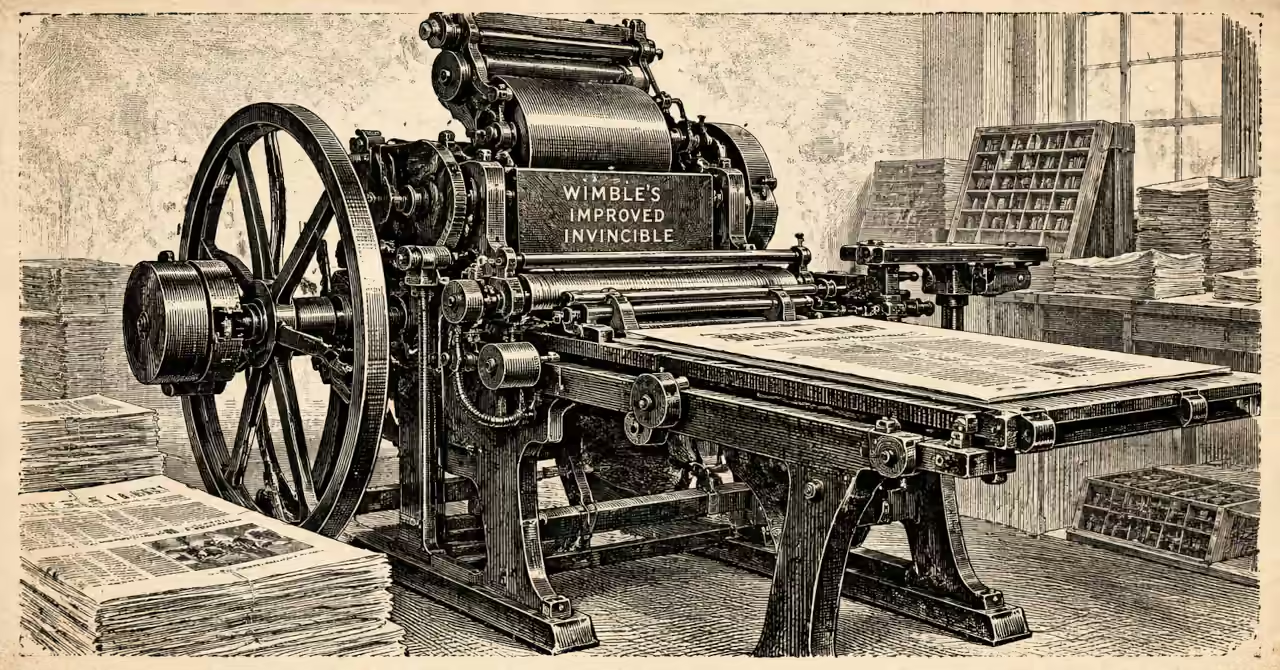
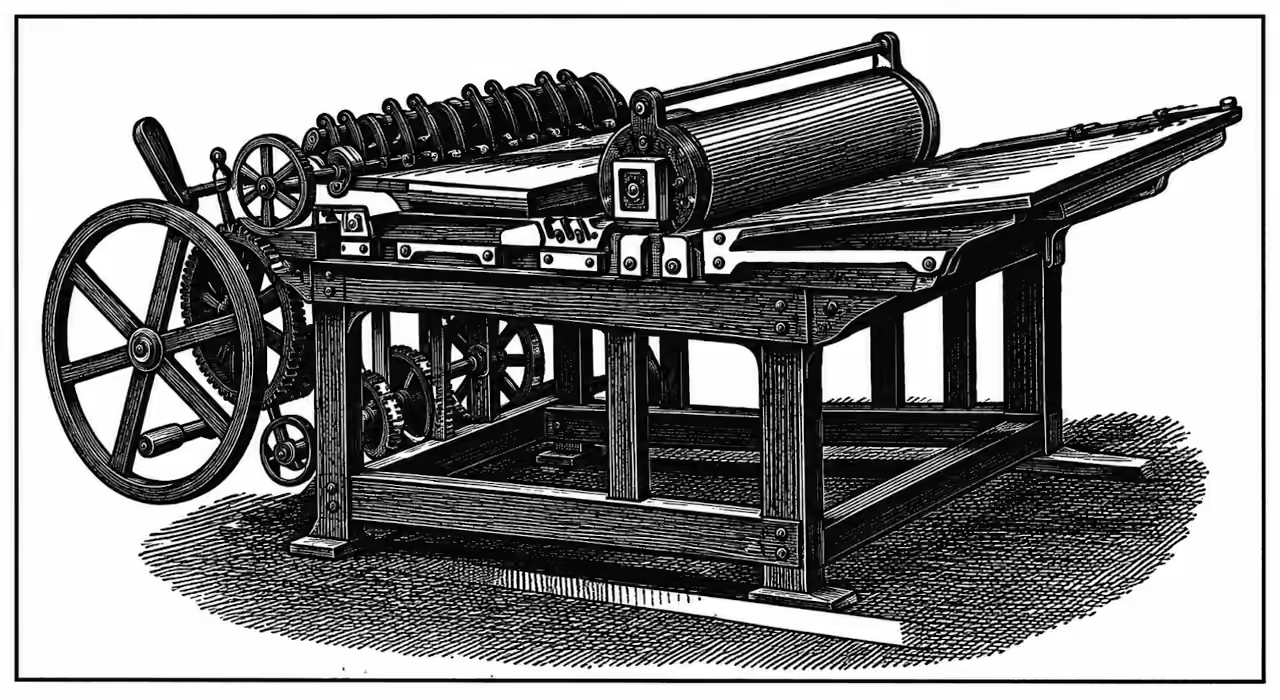
Of late the proprietor of the ADVERTISER, in order to keep ahead of the demands of the progress of the district, has purchased a new and complete printing plant of the most modern description. No expense has been spared. The first cut is one of a double royal newspaper machine, capable of printing 1500 4-page newspapers per hour. Not only is the machine a light one (2½ tons) but is also strong and easy running, and is capable of turning out the very best work.
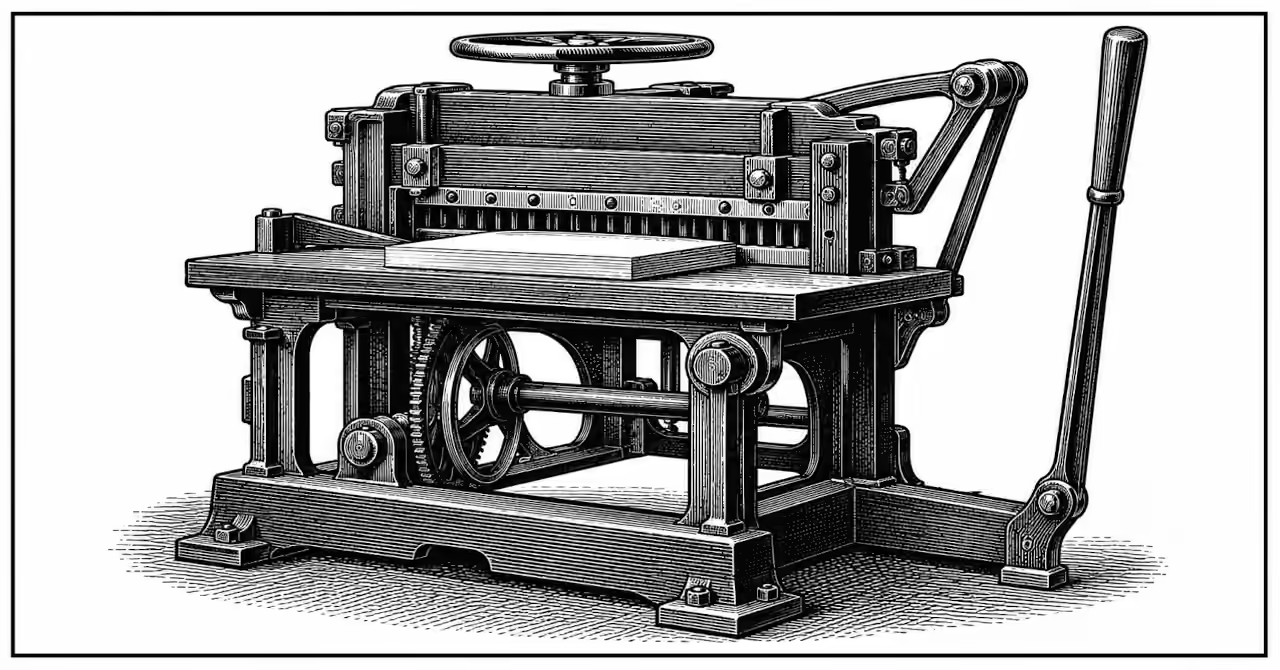
The second illustration is of a cutting machine which was imported from America for this office. It will cut a mass of paper or a book 25 inch long, 25 inches wide, and 3½ inches thick at one stroke of the lever. It is a handsome machine as well as a useful one, and is complete with the most modern conveniences. Its uses are in trimming the edges of books and papers. The iron table of this machine has been planed, and half inch sections cut therein. For 37 inches the table is stamped for measuring purposes, each inch being divided into sixteenths.
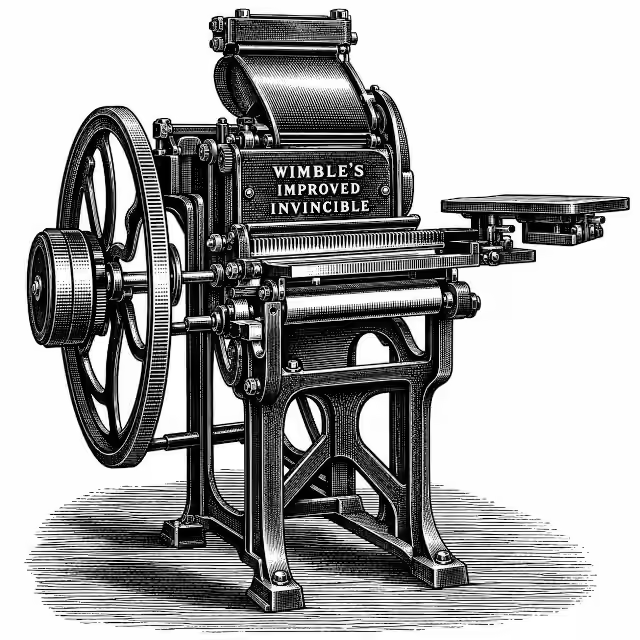
For many years the printing of small jobs was a slow and cumbersome work. The invention of the platen printing machine reduced the time, labor, and cost of such work to a minimum. The illustration shows a platen ready for work. The machine of this description in this office is capable of printing a sheet 12 inches by 18 inches, the only limit to speed being the agility of the operator. Two thousand impressions per hour is about the top speed. The platen turns out the highest class of work, and may be worked all day long by a boy.
In addition to these machines the office has also been supplied with 5cwt. of new type. It will thus be seen that the ADVERTISER office is capable of turning out the whole of the printing of the district. We trust that our readers will bear this in mind, and send for quotations—in fact, we advise them to cut this out and paste it in their hats.
Exhibit Notes
On 5 January 1900, The Gulgong Advertiser announced a significant investment in new printing machinery, reflecting the proprietor's confidence in the growth of the district. The upgraded equipment included a newspaper printing machine capable of producing 1,500 four-page newspapers per hour, an American-imported paper cutter, a platen printing press and five hundredweight of new printing type. This was more than a replacement of ageing equipment. It was an expansion of the newspaper's production capabilities and its ability to undertake commercial printing work.
The Gulgong Advertiser served Gulgong and the surrounding districts of New South Wales, including communities connected through the region's mining, agricultural and commercial activities. Country newspapers were important local institutions, reporting community affairs, carrying advertisements and connecting residents with events beyond their immediate surroundings. By investing in modern printing machinery, the proprietor was positioning the newspaper to participate in the district's continued development.
Country newspaper offices were often more than publishers of news. Their equipment, typesetting facilities and skilled workforce also supported commercial work, commonly known as job printing. Local businesses, organisations and residents could commission printed notices, advertising circulars, letterheads, invoices, programmes and other materials. The Advertiser's invitation for quotations reveals its ambition to compete for this business, establishing the printing office as a commercial service provider for the wider district.
The announcement illustrates the changing economics of printing at the beginning of the twentieth century. Mechanised presses reduced the time and labour required for production, while specialised cutting equipment improved the speed and consistency of finishing work. The advertised production figures represented the machines' claimed capabilities rather than the newspaper's actual circulation or sales. Nevertheless, they demonstrate how investment in industrial machinery could increase the productive capacity of a regional enterprise.
The proprietor concluded with a spirited appeal, advising readers to cut out the announcement and paste it in their hats. More than a notice about new machinery, the article captures a country newspaper promoting its modernisation, commercial capabilities and confidence in the future of the district.
The Newspaper Press: Printing at Scale
The Advertiser's new double royal newspaper press was designed for high-volume production, reportedly capable of printing 1,500 four-page newspapers per hour. Weighing approximately 2½ tons, the machine represented a substantial investment in publishing capacity. Its ability to accommodate large sheets and print multiple newspaper pages efficiently offered advantages over smaller presses, particularly when producing a complete edition within a limited printing window. The capacity also provided scope for increased circulation without requiring a proportional increase in printing time.
The Paper Cutter: Trimming and Finishing
Imported from America, the new paper-cutting machine brought precision and efficiency to the finishing process. According to the announcement, it could cut a stack of paper measuring 25 inches long, 25 inches wide and 3½ inches thick with a single movement of its operating lever. Its planed iron table incorporated measurement markings divided into sixteenths of an inch, helping operators achieve consistent dimensions. Such machinery was particularly useful for preparing paper stock and trimming books, stationery and other commercial printing jobs.
The Platen Press: Commercial Job Printing
The platen press expanded the printing office's ability to undertake smaller commercial jobs, including notices, business stationery, invitations and advertising materials. The announcement described a machine capable of handling sheets measuring 12 by 18 inches and producing approximately 2,000 impressions per hour, depending on the operator's speed. By pressing a flat platen against inked type secured in a flat printing forme, the mechanism made smaller printing jobs faster and more economical. This versatility helped establish the Advertiser as more than a newspaper publisher, offering practical printing services to businesses and residents throughout the district.
Wimble's Improved Invincible: A Link to Australian Printing History
One of the original newspaper illustrations bears the name Wimble's Improved Invincible, connecting the printing office's equipment to F. T. Wimble & Co., an important Australian supplier of printing machinery, type and inks. Frederick Thomas Wimble established his printing supply business in Australia during the nineteenth century, developing an enterprise that connected local printers with equipment and materials from international manufacturers. Surviving platen presses bearing the Improved Invincible name identify Wimble as their Sydney agent, although the precise manufacturer of the Gulgong machine has not been established.
The illustration provides a fascinating glimpse into the industrial supply networks serving regional Australia at the beginning of the twentieth century. Machinery, metal type, inks and specialist equipment could reach country printing offices through established Australian distributors. For The Gulgong Advertiser, investment in modern printing technology offered the opportunity to increase production capacity and expand commercial services without operating in a major metropolitan centre.
From the Curator's Workshop
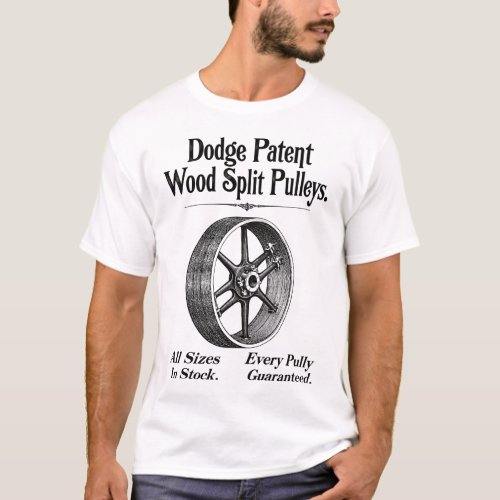
Wear a piece of Victorian engineering history! Our Dodge Patent Wood Split Pulley T-shirt features a beautifully remastered 1893 industrial advertisement, celebrating the ingenious machinery that powered an era. With authentic vintage typography and striking mechanical artwork, it's a standout design for engineers, makers and history enthusiasts. Make a statement, spark a conversation and support Phillaneum with every purchase.
Curator's Notes
Notes & Memoranda
As is often the case, the subject extends beyond the bounds of a single article. The notes and memoranda below gather together useful definitions, related observations, references, and occasional curiosities discovered along the way.
Glossary
Some of the terms used in this article have specialised, historical or technical meanings. This glossary provides additional context for selected terms and ideas.
- double royal (newspaper machine)
- A large-format press configuration that takes and prints a big parent sheet (larger than ordinary book or folio sizes) used to produce broadsheet-style newspapers; naming the press by sheet format indicated the size and number of pages obtainable when the sheet was folded, so a 'double royal' machine signalled capacity for sizeable sheets and higher per-sheet output.
- platen (platen printing machine)
- A press in which a flat plate (the platen) is forced against a flat bed of type to make an impression; platen presses are mechanically simple and well suited to small jobs and hand-fed work because they clamp and strike sheets quickly and require less setup than large rotary cylinder presses.
- impression (printing)
- A single act of printing one side of a sheet or one printed sheet coming off the press; print runs and machine speeds were commonly quoted in impressions per hour to indicate real output capacity rather than finished copies after folding, trimming or additional operations.
- cwt
- Abbreviation for hundredweight in the British/imperial system (1 cwt = 112 pounds); giving the office '5 cwt. of new type' communicates the substantial physical weight — and therefore quantity — of metal type acquired (5 cwt ≈ 560 lb or about 254 kg).
- type (movable type)
- Individual metal sorts (letters, spaces and symbols) used in letterpress printing, cast from lead-based alloys and set by hand or machine into formes; the amount of type owned determined how much composition work a shop could handle at once and was a tangible measure of a printer’s capacity to set diverse pages and jobs.
The Gulgong Advertiser Collection
Explore historical exhibits from The Gulgong Advertiser, a regional New South Wales newspaper that documented the commerce, technology and everyday life of Gulgong at the beginning of the twentieth century. From familiar household products to the machinery that produced the newspaper itself, these exhibits reveal a changing Australian community.
- Silver Dust Flour: Victorian Advertising (1900) — A period flour advertisement revealing the marketing and commercial culture of regional Australia.
- The Gulgong Advertiser's Printing Plant Upgrade of 1900 — A newspaper's investment in modern printing machinery and expanded commercial printing services.
- Batho's Baking Powder: A Forgotten Australian Brand (1900) — A striking advertisement revealing the power of branding, household familiarity and consumer culture in regional Australia.
Mentions & Echoes
- Selected for the From the Curator's Cabinet – feature exhibit on the phillaneum.com homepage, November 2026.
Further Reading…
References and Further Reading
- The Gulgong Advertiser (1900). "A Few Words Upon Printing." 5 January 1900, p. 4. National Library of Australia, Trove. View original newspaper article . Primary source for this exhibit, documenting the printing-plant upgrade, machinery specifications and commercial printing services.
- Bryans, Dennis (2014). "A Survey of Australian Typefounders' Specimens." Historical research discussing Australian typefounding and F. T. Wimble & Co. Bryans reports that Wimble's 1901 type specimen catalogue included a testimonial from The Gulgong Advertiser dated 2 February 1900. The original testimonial has not been independently examined for this exhibit. Read the historical research.
- Briar Press (2016). "Press Identity Anyone?" Discussion documenting a surviving platen press marked "Improved Invincible, sole agent FT Wimble, Sydney." Includes observations concerning its construction and possible relationship to the American Jones Lightning printing press. View press identification discussion . Identification of the original manufacturer remains uncertain.
- McQueen, Humphrey (2005). "Wimble, Frederick Thomas (1846–1936)." Australian Dictionary of Biography, National Centre of Biography, Australian National University. Biographical account of the Australian printing supplier, ink manufacturer and typefounder. Read the biography .
- The Online History of Gulgong and Surrounding Districts. "Advertiser 1898 – Searchable Text." Historical transcriptions documenting the newspaper's early publication, circulation district and printing office in Mayne Street, Gulgong. Read the historical newspaper records .
- Australian Printing Museum. "Printing in Australia Before WWI." A historical timeline of printing technology, newspaper production, machinery imports and industrial development in Australia. Explore the printing history timeline .
- Powerhouse Collection. "'Albion' Printing Press Made by Hopkinson and Cope." Collection object B1562, dating from 1879. Provides historical context for printing equipment associated with F. T. Wimble & Co. and the firm's role in the Australian printing industry. View the museum collection record .
- Old Treasury Building, Melbourne. "In Print: Hand-Setting." Historical account of traditional typesetting, compositors, printing-room practices and working conditions in nineteenth-century Australia. Read about historical typesetting .
Disclosure
This exhibit reproduces a historical announcement published in The Gulgong Advertiser on 5 January 1900, with corrected OCR transcription and contemporary curatorial notes. The machinery illustrations are AI-assisted artistic reconstructions based on the original newspaper engravings and may not reproduce every mechanical detail accurately. Some advertising links on this page are affiliate links, through which Phillaneum may earn a commission at no additional cost to the reader. Affiliate relationships do not influence the historical interpretation or editorial content.