Batho's Baking Powder: A Forgotten Australian Brand (1900)
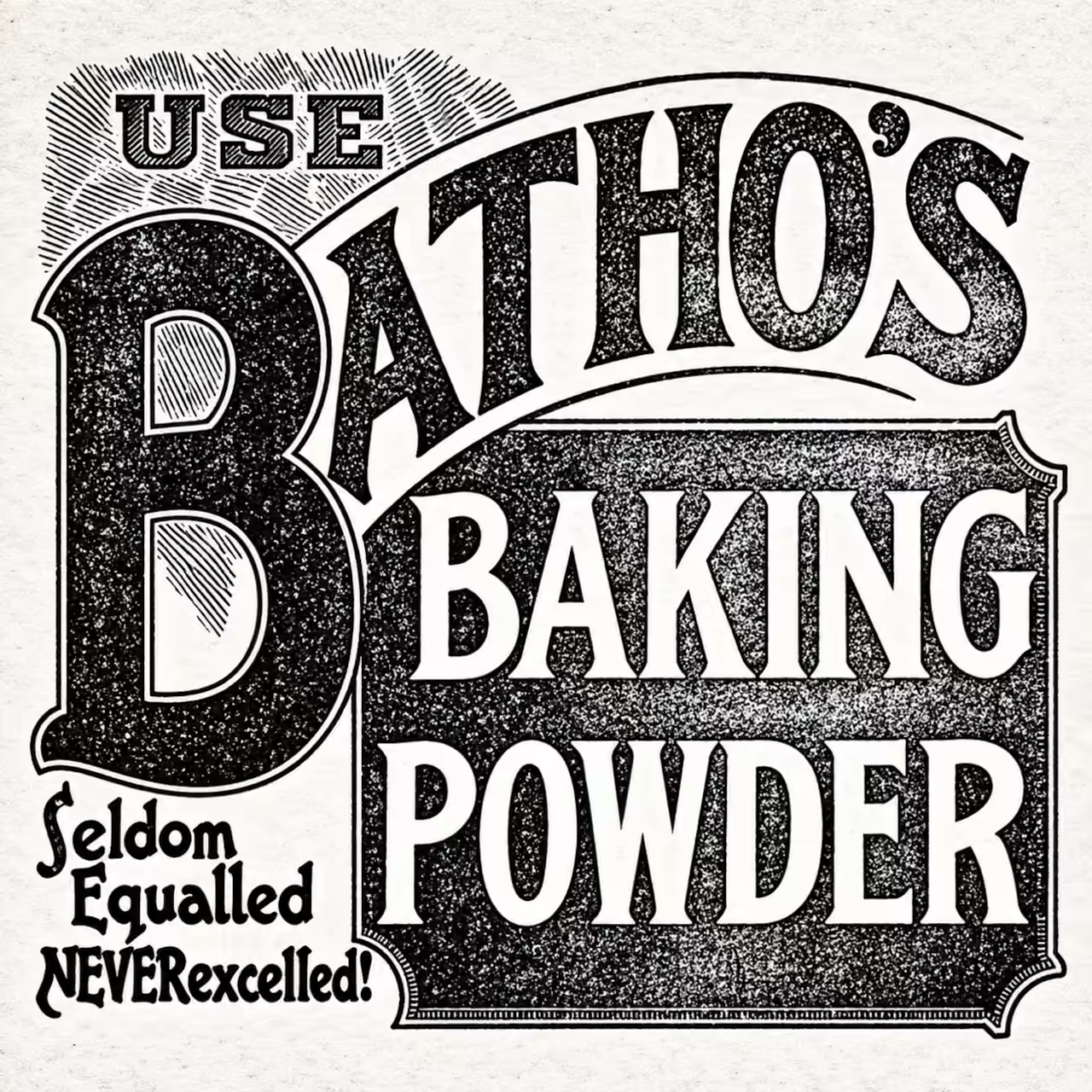
Exhibit Notes: Selling Confidence in 1900
In 1900, the household pantry was becoming a place of brand recognition and commercial persuasion. Advertisements such as this one for Batho's Baking Powder reveal how manufacturers sought to establish familiarity and trust with Australian families, including those living in regional communities such as Gulgong, New South Wales.
The advertisement makes no attempt to explain the ingredients or practical advantages of the product. Instead, it relies upon an enormous decorative letter, confident typography and the memorable declaration, "Seldom Equalled, Never Excelled!" The message is simple: Batho's is a name consumers should recognise and remember.
Baking powder was an everyday household commodity, closely associated with home cooking and the preparation of cakes, breads and other baked goods. Its advertising therefore reached into the domestic routines of ordinary Australians. In an era when household purchasing decisions were often shaped by familiarity, reputation and repeated exposure, a recognisable brand name could become a valuable commercial asset.
The appearance of this advertisement in the Gulgong Advertiser also illustrates the cultural importance of regional newspapers. Beyond reporting local events, these publications introduced readers to products, fashions and commercial messages circulating throughout Australian society.
More than a century later, Batho's advertisement remains remarkably effective as a piece of visual communication. Its exuberant lettering and emphatic slogan offer a small but revealing glimpse into the emergence of modern consumer culture, when everyday grocery products were already competing for attention through the power of branding.
From the Curator's Workshop
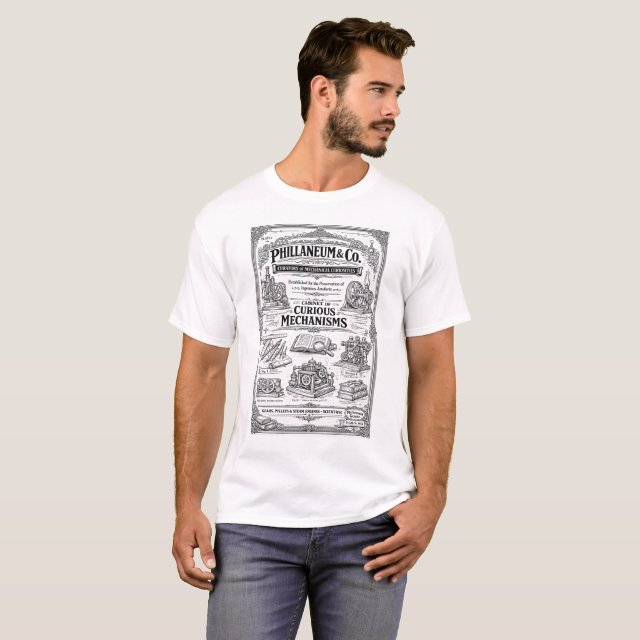
From Batho's bold newspaper lettering to the intricate illustrations of Victorian machinery, the past knew how to make the ordinary extraordinary. Phillaneum's Cabinet of Curious Vintage Mechanisms T-shirt celebrates that same exuberant spirit of invention and design, bringing a little nineteenth-century ingenuity into the modern wardrobe.
Curator's Notes
Imagine opening the Gulgong Advertiser in 1900 and finding that enormous letter B staring back at you. Batho's Baking Powder was certainly not shy about making an impression. With its sweeping lettering and wonderfully confident slogan, it gave an ordinary household ingredient the sort of grand introduction usually reserved for something far more exciting. I find that theatrical enthusiasm rather irresistible.
What makes Batho's especially intriguing is that its story continued long after this advertisement appeared. The name could still be seen on Sydney advertising signage in 1909 and appeared in commercial records decades later. Yet today, Batho's has largely vanished from Australian cultural memory. A name once considered worth advertising so extravagantly has become almost entirely unfamiliar.
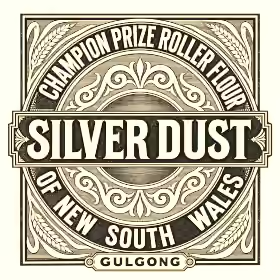
This is why I enjoy exploring the Vintage Advertising Journal. Behind the decorative lettering and ambitious promises are fragments of the lives people actually lived. Batho's joins our Silver Dust Flour exhibit, also discovered in the Gulgong newspaper of 1900, in gradually revealing the commercial world of regional Australia. What did families recognise, what products earned their loyalty, and which familiar names quietly disappeared as generations passed?
At Phillaneum, I want these advertisements to become more than attractive survivors of an earlier age. Each contributes another piece to a forgotten cultural landscape, allowing us to rediscover Australian life through the everyday products people bought, the promises they encountered, and the brands they eventually forgot.
Notes & Memoranda
As is often the case, the subject extends beyond the bounds of a single article. The notes and memoranda below gather together useful definitions, related observations, references, and occasional curiosities discovered along the way.
Glossary
Some of the terms used in this article have specialised, historical or technical meanings. This glossary provides additional context for selected terms and ideas.
- Gulgong Advertiser
- A local newspaper published for the town of Gulgong (New South Wales) and its surrounding district; in 1900 such regional papers were the primary source of community news, classified notices and paid advertising, produced on relatively small letterpress presses and often recycled as the main public noticeboard for rural towns.
- Batho’s Baking Powder
- A commercial brand name for a powdered leavening product marketed to household bakers; brands like Batho’s were promoted through ornamental print advertisements that emphasised reliability, purity and convenience at a time when branded chemical leaveners were still a relatively new household staple.
- Baking powder
- A pre‑mixed chemical leavening agent composed of an alkali (usually bicarbonate) and one or more acid salts that react when moistened and/or heated to release carbon dioxide, producing lightness in quick breads and cakes; its mid‑19th‑century development transformed home baking by replacing slower yeast fermentation for many recipes.
- Victorian typography
- A late 19th‑century decorative lettering style associated with the reign of Queen Victoria, characterised by heavy ornament, eclectic historical motifs, bold wood type, intricate borders and flourishes used to grab attention in posters and newspapers—made possible by advances in display type and printing technology such as wood type and chromolithography.
- Decorated initial (drop cap)
- An oversized, often embellished initial letter used at the start of a block of text or advertisement to attract the eye; derived from medieval illuminated initials, the device became a common advertising trope in the 19th century to establish branding and visual hierarchy on crowded newsprint pages.
Frequently Asked Questions
Behind this striking newspaper advertisement lies a forgotten chapter of Australian commercial and domestic life. These questions explore the brand, its cultural setting and the changing world of household advertising in 1900.
Who made Batho's Baking Powder?
Historical advertising material associates Batho's Baking Powder with S. Freeman & Sons, a manufacturing and importing business operating in Harris Street, Ultimo, Sydney. The advertisement's appearance in the Gulgong Advertiser illustrates how products associated with Sydney businesses reached regional Australian audiences.
Why was baking powder important to Australian households in 1900?
Baking powder provided a convenient way to make cakes, scones and other baked goods rise without relying on yeast fermentation. Its convenience suited the routines of domestic cooking, while commercially packaged products gave households an alternative to preparing their own raising mixtures. Familiar brands offered manufacturers an opportunity to promote consistency and reliability.
Why did Victorian advertisements use such extravagant lettering?
Newspaper advertisements competed for attention on pages crowded with news, announcements and commercial notices. Oversized letters, decorative type and emphatic slogans helped a product stand out. Batho's enormous initial B and sweeping brand name demonstrate how typography could make an ordinary grocery product visually memorable, even without elaborate illustrations.
What happened to the Batho's Baking Powder brand?
Batho's did not disappear immediately after this 1900 advertisement. The name appeared on advertising signage photographed in Sydney in 1909 and in later Australian commercial records. Although the brand is now largely unfamiliar, these surviving references provide evidence of its longer commercial life. Its eventual disappearance and the circumstances behind it remain subjects for further historical research.
What can regional newspaper advertisements tell us about Australian culture?
Advertisements reveal the products, aspirations and commercial messages presented to local communities. Read alongside advertisements for other household goods, such as Silver Dust Flour, Batho's Baking Powder helps reconstruct the consumer environment of Gulgong in 1900. These fragments of everyday life reveal how national and regional commerce intersected long before modern broadcasting and digital advertising.
The Gulgong Advertiser Collection
Explore historical exhibits from The Gulgong Advertiser, a regional New South Wales newspaper that documented the commerce, technology and everyday life of Gulgong at the beginning of the twentieth century. From familiar household products to the machinery that produced the newspaper itself, these exhibits reveal a changing Australian community.
- Silver Dust Flour: Victorian Advertising (1900) — A period flour advertisement revealing the marketing and commercial culture of regional Australia.
- The Gulgong Advertiser's Printing Plant Upgrade of 1900 — A newspaper's investment in modern printing machinery and expanded commercial printing services.
- Batho's Baking Powder: A Forgotten Australian Brand (1900) — A striking advertisement revealing the power of branding, household familiarity and consumer culture in regional Australia.
Further Reading…


References and Further Reading
The following sources document the original Batho's Baking Powder advertisement and provide historical context for Australian newspaper advertising, commercial branding and the preservation of regional print culture.
- The Gulgong Advertiser (1900). "Advertising", 5 January 1900, p. 5. Gulgong, New South Wales, Australia. National Library of Australia, Trove. Original newspaper advertisement reproduced as the primary source for this exhibit. View original advertisement .
- National Library of Australia. The Gulgong Advertiser (NSW: 1898–1904; 1918–1919). Digitised historical newspaper collection. Provides access to contemporary reporting, commercial notices and advertisements documenting regional Australian society. Explore Trove newspapers .
- City of Sydney Archives. Historical photographic record featuring Batho's Baking Powder advertising signage in Darlinghurst, 1909. Provides additional evidence of the brand's presence in early twentieth-century Sydney. View archival record .
- Phillaneum. Vintage Advertising Journal: The Language of Persuasion. An exploration of historical advertising, typography, commercial identity and the persuasive techniques used to promote everyday products. Read the Phillaneum journal .
Disclosure
This article presents a historical interpretation of a Batho's Baking Powder advertisement published in the Gulgong Advertiser in 1900. Commentary on branding, consumer culture and regional Australian life is based on historical evidence and editorial interpretation. The accompanying image(s) are digitally remastered from historical newspaper scans to improve clarity and presentation, and may differ in minor visual details from the originals. Original sources are acknowledged for historical reference. This page includes eBay affiliate promotions, Zazzle merchandise promotions and advertising served through Google AdSense. Phillaneum may earn a commission from qualifying purchases made through affiliate links, at no additional cost to readers. Commercial promotions are separate from the historical interpretation and do not influence editorial conclusions.