What Was Victorian Life Really Like? An Eight-Stop Journey
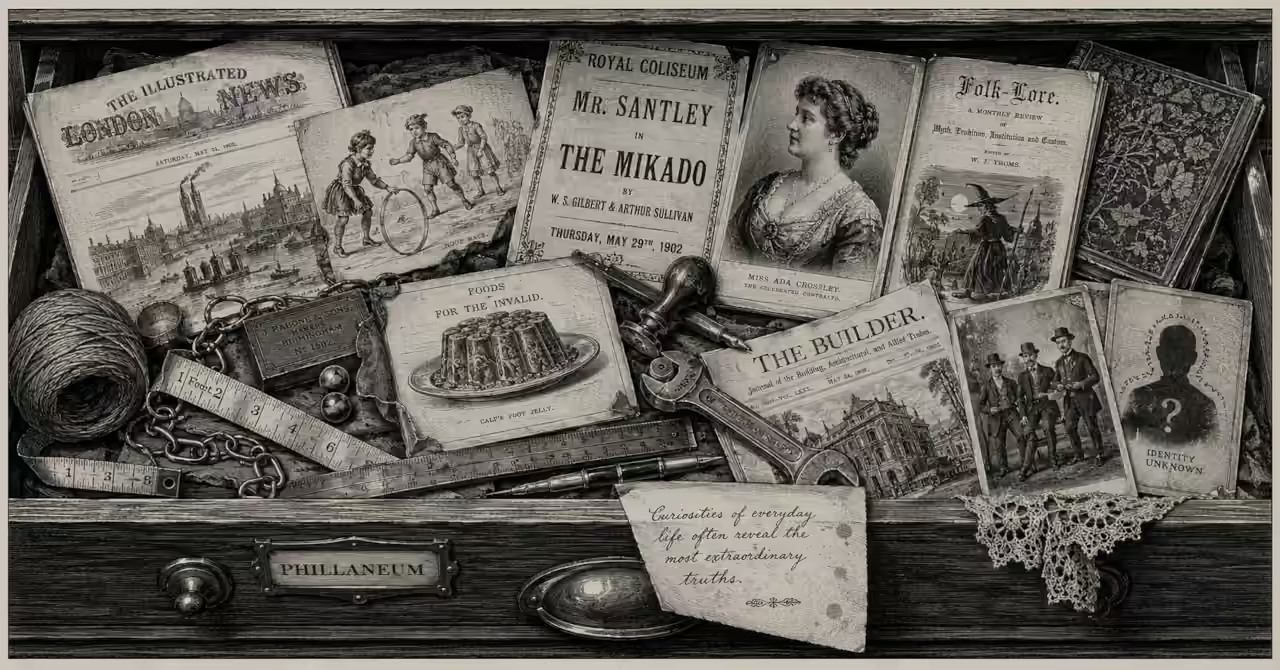
Forget the drawing rooms. Let's go exploring.
You know the Victorians: top hats, corsets, Queen Victoria, steam trains and extremely serious photographs.
Or do you?
Step beyond the familiar image and Victorian life becomes considerably stranger. Children played games we'd barely recognise. People measured things in units we've forgotten. Folklore remained full of witches and superstition. Dinner could become alarming. Entire occupations have vanished, and some of the greatest voices of the age disappeared before anyone thought to record them.
No eight stops could encompass the lives of millions of people across an entire century. But together, these curiosities reveal something important: Victorian life was at once practical, inventive, communal, superstitious and considerably stranger than the familiar stereotypes suggest.
We've picked eight stops through that stranger side of Victorian life.
8 curiosities · about 40 minutes · start anywhere
Short on time? Take the first three. You'll get the idea.
01 — FIRST, GET A JOB
You think your occupation is unusual?
Victorian Britain needed people to perform jobs that industrialisation, technology and changing social expectations have since made obsolete.
Some sound quaint.
Others raise considerably more questions.
→ DISCOVER 7 UNUSUAL VICTORIAN OCCUPATIONS
About 5 minutes
Journey: ● ○ ○ ○ ○ ○ ○ ○
02 — NOW LET'S RUIN DINNER
Hungry?
Good.
Because we've found four Victorian dishes that may rapidly cure that problem.
Historical cookery wasn't uniformly dreadful. Far from it. But changing ingredients, tastes and attitudes have left some dishes stranded firmly on the other side of history.
→ SEE 4 VICTORIAN DISHES WE WOULD NEVER EAT TODAY
About 5 minutes · culinary courage optional
Journey: ● ● ○ ○ ○ ○ ○ ○
03 — SEND THE CHILDREN OUTSIDE
No screens. No batteries. No Wi-Fi.
So what did Victorian children actually do?
Grab a hoop, find some friends and prepare to discover a world of games passed from child to child long before entertainment came with an instruction manual.
→ PLAY 6 COMMON VICTORIAN CHILDREN'S GAMES
About 5 minutes
Journey: ● ● ● ○ ○ ○ ○ ○
YOU'RE THREE STOPS IN.
You have eaten questionable food, acquired an obsolete profession and survived a Victorian playground.
So far, the Victorians may seem unfamiliar but recognisable. They worked, ate and played much as we do, even if the details were rather different.
Things now get stranger.
04 — HOW FAR IS A FURLONG, ANYWAY?
Quick: measure something in chains.
Victorians inhabited a world filled with measurements that once seemed perfectly ordinary.
Some survive in specialist corners.
Others have almost completely vanished.
And several make metric look positively luxurious.
→ TRY 7 VICTORIAN MEASUREMENTS RARELY USED TODAY
About 4 minutes · no conversion tables required
Journey: ● ● ● ● ○ ○ ○ ○
05 — TURN DOWN THE LAMPS
The rational Victorian age wasn't entirely rational.
This was the century of railways, telegraphs, scientific societies and enormous technological confidence.
It was also a world where old beliefs stubbornly refused to leave.
Bad luck, death, marriage and household rituals could all become territory for superstition.
→ UNCOVER 5 FORGOTTEN VICTORIAN SUPERSTITIONS
About 5 minutes
Journey: ● ● ● ● ● ○ ○ ○
06 — AND ABOUT THOSE WITCHES...
You thought we'd finished with the supernatural?
Not remotely.
The Victorian imagination inherited a surprisingly complicated world of witchcraft and folklore, and the word witch could describe rather different figures depending upon where you looked.
→ MEET 5 TYPES OF WITCHES IN VICTORIAN FOLKLORE
About 5 minutes
Journey: ● ● ● ● ● ● ○ ○
SIX DOWN. TWO TO GO.
We've seen how Victorians worked, ate, played, measured and believed.
These were parts of ordinary life that history can still describe reasonably well.
Now comes something different.
Two parts of the Victorian world that history can describe, but can never completely give back to us.
07 — THE OBJECTS THAT VANISHED
They existed. We have the evidence.
But nobody knows where they are now.
Some nineteenth-century artefacts survived only in descriptions, photographs and tantalising references. Their physical stories simply stop.
Perhaps they were destroyed.
Perhaps they're sitting unidentified somewhere.
Perhaps one is waiting to be rediscovered.
→ HUNT FOR 5 FAMOUS ARTEFACTS LOST FOREVER
About 5 minutes · disappearance guaranteed, “forever” not necessarily
Journey: ● ● ● ● ● ● ● ○
FINAL STOP
08 — THE VICTORIANS YOU CAN SEE...
...but can never hear.
They filled theatres.
Audiences adored them.
Critics described their voices.
Their names appeared on bills and in newspapers.
And then something extraordinary happened:
recorded sound arrived just slightly too late.
We know these people were famous singers.
We may even know what contemporaries thought they sounded like.
But their actual voices are gone.
Forever.
→ MEET 10 FAMOUS VICTORIAN SINGERS WE CAN NEVER HEAR
About 6 minutes
Journey: ● ● ● ● ● ● ● ●
YOU MADE IT BACK.
Eight stops. One very peculiar century.
You have encountered obsolete occupations, questionable dinners, playground games, forgotten measurements, superstition, witches, missing treasures and silent superstars.
So, what was Victorian life really like?
There isn't one answer. It depended upon where you lived, what you did, how much money you had, the community around you and countless other circumstances.
But this journey does reveal something the familiar portraits often conceal. The Victorian world was not simply formal, gloomy or old-fashioned. It was practical and imaginative, rational and superstitious, technologically ambitious and deeply traditional, all at the same time.
Most importantly, it was inhabited by people trying to work, eat, play, understand their world and make sense of uncertainty, much as we still do today.
The details changed enormously.
The human curiosity underneath them did not.
Where will you wander next?
The Phillaneum is built for exactly this sort of wandering. Follow another curiosity, open a different part of the collection, or return to the Curator's Table to see what is being prepared next.
→ OPEN ANOTHER DRAWER IN THE PHILLANEUM
From the Curator's Workshop
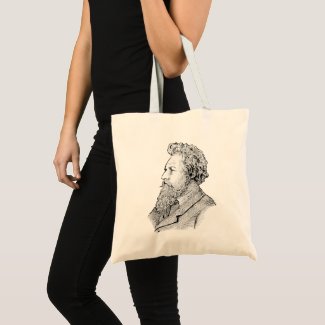
For those who would rather carry a little Victoriana than merely admire it, our William Morris Portrait Tote Bag brings one of the great figures of the Arts & Crafts movement into everyday life. Designed for books, journals, museum finds and the occasional curious treasure, it is a practical nod to Morris’s belief that useful things need not surrender their beauty. A small piece of the Phillaneum for your next visit to the library, gallery, bookshop—or wherever curiosity happens to lead you.
Author's Notes
Notes & Memoranda
As is often the case, the subject extends beyond the bounds of a single article. The notes and memoranda below gather together useful definitions, related observations, references, and occasional curiosities discovered along the way.
Further Reading…
A note about this journey
This Journey Map is a curated route through existing Phillaneum articles rather than a single continuous work. Each stop was written to stand on its own, so you can begin anywhere, follow the journey in order, skip ahead, or wander off whenever something else catches your curiosity.