5 Forgotten Victorian Beliefs and Superstitions
·Revised
Introduction
Would you allow your photograph to be taken if you believed the camera might steal part of your soul? During the Victorian era, many ordinary people lived in a world where astonishing scientific progress existed alongside ancient folklore and deeply held superstitions. Railways connected distant cities, electric lighting transformed the night, and photography captured lifelike images for the first time. Yet many Victorians still looked for signs of good or bad fortune in everyday events, interpreting mysterious sounds, unexpected visitors and household customs as warnings or promises of what lay ahead.
These beliefs were not simply the product of ignorance. Victorian society stood at the crossroads of old and new. Scientific discoveries were changing how people understood the world, but generations of inherited folklore continued to shape daily life. In an age when illness was common, death often came unexpectedly and new inventions seemed almost magical, superstitions offered explanations, comfort and a sense of control over an uncertain future.
This article explores five forgotten Victorian beliefs and cultural myths that fascinated, comforted or frightened ordinary people. Some have disappeared almost entirely, while others still influence our behaviour today without us realising their origins. By examining these enduring superstitions, we gain a glimpse into the hopes, fears and imagination of Victorian society—and perhaps discover that our own modern world is not quite as different as we might like to believe.
Myth 1: Photographs Could Capture Part of the Soul
Every generation experiences a technology that feels almost magical when it first appears. Victorian society marvelled at photography just as people today debate artificial intelligence, deepfakes and facial recognition. History reminds us that excitement and uncertainty often arrive together whenever a revolutionary invention changes the way we see the world.
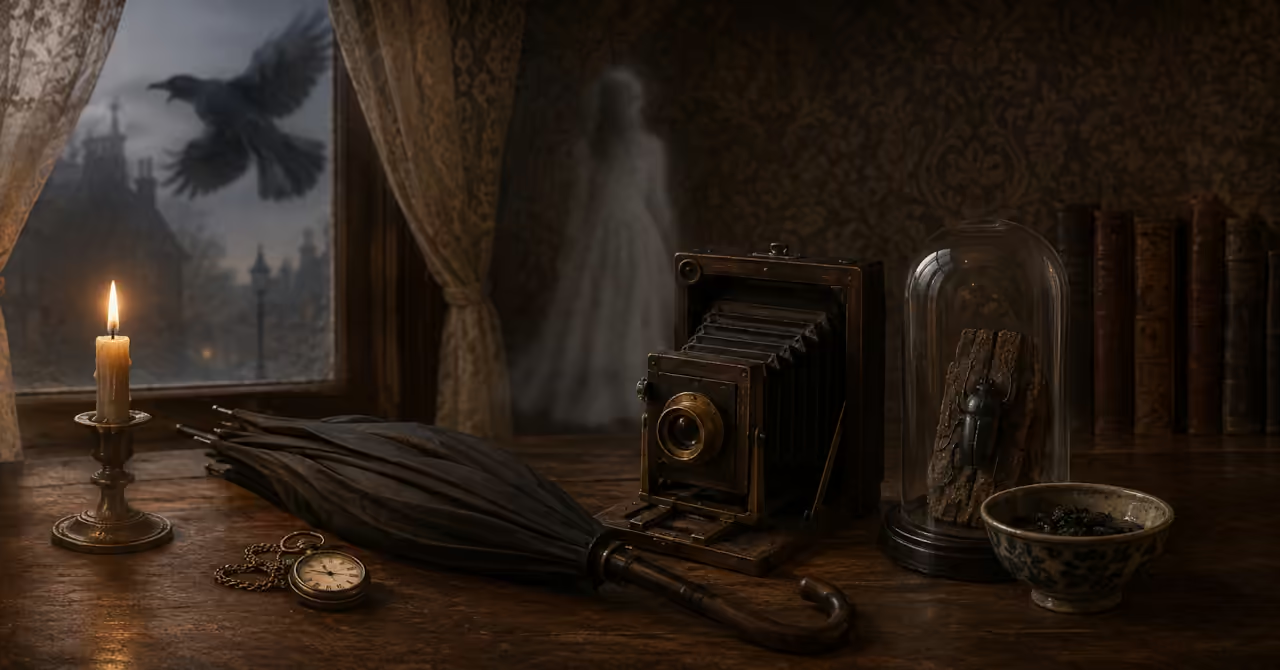
When photography first appeared during the Victorian era, many people regarded the new invention with awe and suspicion. Cameras seemed almost magical, and stories spread that a photograph could capture more than a person's appearance—perhaps even part of their soul. Whether believed literally or repeated as folklore, the idea reflected how mysterious this remarkable new technology appeared to nineteenth-century society.
Photography was one of the greatest technological marvels of the nineteenth century. Before the invention of the daguerreotype in 1839 and the rapid development of photographic processes that followed, preserving a person's likeness required an artist with considerable skill and many hours of work. Suddenly, a machine could produce an astonishingly accurate image within minutes. To people who had never encountered such technology before, the camera seemed almost miraculous. It is perhaps unsurprising that some regarded it with caution as well as wonder.
The Victorian era also witnessed a remarkable fascination with spiritualism. Séances, mediums and investigations into communication with the dead became fashionable among sections of society, particularly after periods of personal loss. Spirit photography, in which photographs appeared to show ghostly figures standing beside the living, convinced many believers that cameras could reveal a hidden world invisible to the naked eye. While these mysterious images were later exposed as clever double exposures and other photographic tricks, they reinforced the idea that the camera possessed unusual powers.
Stories that photographs might capture part of a person's soul also circulated beyond Britain, particularly through Victorian accounts describing traditional beliefs in other parts of the world. Whether repeated as cautionary tales, misunderstood cultural traditions or genuine fears, such stories added to the aura of mystery surrounding early photography. At a time when science was advancing rapidly but remained poorly understood by many people, the camera represented both progress and the unknown.
Today we understand that a photograph captures only light reflected from a scene onto a light-sensitive surface or digital sensor. Yet the emotional power of photography remains remarkably strong. Portraits preserve memories, commemorate loved ones and allow moments to survive long after they have passed. Although cameras cannot capture the soul, they can preserve something almost as valuable—our connection to people, places and moments that would otherwise be lost.
Myth 2: A Bird Flying into the House Foretold Death
Humans are remarkably good at finding patterns, especially during times of uncertainty. When something unusual happens shortly before a significant event, our minds naturally connect the two. It is one reason superstitions can survive for centuries, even after science offers simpler explanations.
For many Victorians, an unexpected bird flying through an open window was far more than an unusual event—it could be a terrifying warning that death was approaching. Across Britain, generations of folklore associated certain birds with misfortune, and if one entered a home unexpectedly, many believed it foretold the death of someone living there. While the exact interpretation varied from region to region, the underlying message remained remarkably consistent: nature was sending a warning that should not be ignored.
Birds had long occupied a special place in British folklore. Their ability to soar between the earth and the sky gave them an air of mystery, and their sudden appearance often seemed significant. Ravens and crows, commonly seen feeding on battlefields and carrion, naturally became symbols of death and mourning. Owls, with their haunting calls echoing through the darkness, were frequently regarded as messengers of misfortune. Even ordinary blackbirds could become objects of suspicion if they behaved in an unexpected way, such as flying into a house or repeatedly striking a window.
Not every part of Britain shared exactly the same traditions. In Wales, an owl calling near a home where someone was seriously ill was widely considered a sign that death was close at hand. Elsewhere, it was not the species of bird that mattered but the simple fact that a wild bird had crossed the threshold of a house. Since birds belonged outdoors, their sudden appearance indoors seemed to break the natural order of things. In an age when illness often struck without warning and medical science could offer few answers, it was easy for unusual events to become linked with tragic outcomes.
Today, ornithologists explain such incidents far more simply. A startled bird may fly through an open door or window while searching for food or attempting to escape a predator. Yet the superstition has proved remarkably resilient. Even in the twenty-first century, some people still feel uneasy when a bird enters their home or repeatedly taps against a window, a reminder that ancient folklore can linger long after its original meaning has faded.
Myth 3: Never Open an Umbrella Indoors
Sometimes superstition begins as sensible advice. A practical safety rule can become folklore after generations of repetition, eventually surviving long after the original reason has been forgotten. The umbrella superstition reminds us that not every myth begins with magic—some begin with common sense.
Of all the superstitions inherited from the Victorian era, few have survived as successfully as the warning never to open an umbrella indoors. Even today, many people hesitate before pressing the release button inside a house, often laughing at the superstition while quietly avoiding the risk anyway. During the nineteenth century, however, opening an umbrella indoors was widely regarded as an invitation for bad luck, and many families treated the practice as an unwelcome breach of household custom.
Unlike some Victorian superstitions, this belief may have grown from practical experience rather than purely supernatural fears. Early umbrellas were often large, heavy and fitted with stiff metal ribs and powerful spring mechanisms. Opening one unexpectedly inside a small Victorian home could knock over ornaments, damage furniture or even injure someone standing nearby. A simple rule, never open an umbrella indoors would have been sensible advice for any busy household. As the warning passed from one generation to the next, practical caution gradually became associated with bad fortune rather than physical danger.
The Victorians inherited many customs from earlier British folklore, and household traditions often carried as much authority as written rules. Once a behaviour became linked with misfortune, people were understandably reluctant to challenge it. If someone happened to experience an accident or family problem shortly after opening an umbrella indoors, the event reinforced the belief, while the many occasions when nothing happened were quickly forgotten. This tendency to remember evidence that supports existing beliefs helped the superstition survive.
Modern umbrellas are generally safer and more reliable than their Victorian predecessors, but the superstition refuses to disappear. It continues to appear in films, television shows and everyday conversation, making it one of the few Victorian-era beliefs that remains instantly recognisable across much of the English-speaking world.
Myth 4: The First Foot Across the Threshold Determined Your Fortune
Traditions often survive because they strengthen communities rather than because people literally believe them. Inviting friends and neighbours to begin the new year together created goodwill, encouraged generosity and reinforced social bonds—benefits that remain just as valuable today as they were in Victorian times.
As the clock struck midnight on New Year's Eve, many Victorian families paid close attention to who would be the first person to step across their doorstep. According to a long-standing British tradition known as first-footing, the identity of the first visitor in the new year could determine the household's fortune for the months ahead. A welcome guest promised prosperity, health and happiness, while the wrong visitor might bring nothing but misfortune.
The custom was especially popular in Scotland, where it formed an important part of Hogmanay celebrations, although variations were found throughout northern England and other parts of Britain. Families often hoped that the first-foot would be a dark-haired man carrying small gifts. Coal symbolised warmth and comfort, bread promised that no one would go hungry, salt represented friendship and preservation, while whisky ensured good cheer throughout the coming year. These gifts were not merely practical—they served as symbols of abundance and good fortune.
Just as there were lucky first-footers, there were also unlucky ones. In some regions, a fair-haired stranger arriving first was considered an unfortunate omen, perhaps reflecting memories of Viking invasions centuries earlier. A visitor arriving empty-handed was also thought to be a poor sign, as they symbolically brought nothing of value into the home. Although such beliefs varied between communities, the central idea remained remarkably consistent: the opening moments of the new year possessed special significance, and the first person to cross the threshold could influence everything that followed.
Today, first-footing continues to survive as a cherished Hogmanay tradition in parts of Scotland, although it is generally celebrated as a cultural custom rather than a genuine superstition. The exchange of symbolic gifts and the welcoming of neighbours help strengthen friendships and community spirit, reminding us that traditions often endure because they bring people together as much as because they promise good luck.
Myth 5: A Death Watch Beetle Meant Someone Would Soon Die
Science often explains mysteries without making them any less fascinating. The death watch beetle reminds us that many famous superstitions began with genuine observations of the natural world. Once people understood the beetle's behaviour, the fear disappeared—but the story survived.
Imagine sitting in a quiet Victorian bedroom late at night when an unexplained tapping begins somewhere inside the walls. The sound comes slowly and steadily, almost like someone gently knocking on the timber. To many Victorians, this mysterious noise was deeply unsettling. It was said to be the work of the death watch beetle, and hearing its rhythmic tapping was widely believed to mean that someone in the house would soon die.
The superstition had existed for centuries but remained well known throughout the Victorian era. The beetle earned its ominous name because its distinctive tapping was often heard in old houses where people gathered around the bedside of a seriously ill family member. During the long hours of waiting, every unfamiliar sound seemed significant. If death followed soon afterwards, the eerie tapping became forever linked with the event. Over generations, the coincidence evolved into a widely accepted omen of approaching death.
The truth behind the mystery proved far less supernatural but no less fascinating. The death watch beetle lives in old timber, particularly in damp wooden beams and furniture. During the breeding season, the beetles produce a rhythmic knocking sound by striking their heads against the wood to attract a mate. In the stillness of a quiet house, the tapping can travel surprisingly well through timber, making it difficult to determine where the sound originates. Without knowledge of insect behaviour, it is easy to understand why earlier generations struggled to explain the phenomenon.
By the late nineteenth and early twentieth centuries, naturalists had identified the insect responsible and explained the source of the mysterious tapping. Nevertheless, the old superstition remained remarkably resilient. Even after science provided an answer, many people continued to feel a sense of unease whenever they heard unexplained knocking in an old house. The story of the death watch beetle perfectly captures the Victorian world, where scientific discovery increasingly challenged traditional folklore, yet ancient beliefs continued to echo through everyday life.
Why Did Victorians Believe These Things?
Looking back from the twenty-first century, it is easy to dismiss Victorian superstitions as little more than colourful folklore. Yet these beliefs existed within a society experiencing extraordinary change. During Queen Victoria's reign, Britain witnessed the rapid expansion of railways, the telegraph, electricity, photography and modern industry. Scientific discoveries transformed everyday life, but they did not instantly replace traditions that families had inherited over centuries. Instead, old beliefs and new knowledge often existed side by side.
Life during the Victorian era was also marked by uncertainty. Infectious diseases such as tuberculosis, cholera and influenza claimed thousands of lives, while infant mortality remained tragically common. Medical science was improving, but doctors could not always explain why illness struck one family and spared another. In such an unpredictable world, superstitions offered people a sense of order. If unusual events carried hidden meanings, perhaps the future could be understood—or even influenced.
Religion and spiritualism also shaped Victorian thinking. Traditional Christian beliefs remained central to everyday life, while the growing popularity of séances, mediums and investigations into the supernatural encouraged many people to believe that unseen forces might interact with the living. At the same time, rural folklore continued to flourish. Stories passed from parents to children preserved ancient customs long after their original meanings had been forgotten, ensuring that old beliefs survived well into the age of science.
Modern psychology provides another explanation for the enduring appeal of superstition. Humans are naturally skilled at recognising patterns, even when no genuine connection exists. If an unusual event happened shortly before a tragedy, the two became linked in memory. The many occasions when nothing happened were quietly forgotten. Over time, repeated stories transformed isolated coincidences into accepted traditions, strengthening beliefs with each new generation.
Many Victorian superstitions have now faded into history, but others still influence our behaviour. People continue to avoid opening umbrellas indoors, carry lucky charms, knock on wood or feel uneasy when a black cat crosses their path. Although we understand the world far better than our Victorian ancestors, we remain fascinated by coincidence, luck and the possibility that everyday events might hold deeper meaning. Perhaps that is why these forgotten beliefs continue to captivate us—they remind us that while technology changes rapidly, human nature changes very little.
From the Curator's Workshop
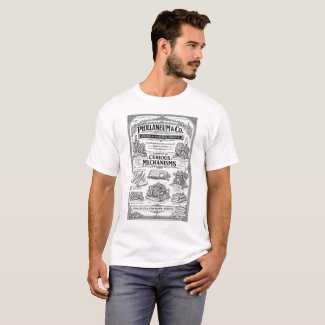
The strange beliefs explored in this article remind us that every generation has its own stories, symbols and mysteries. If you enjoy uncovering the forgotten curiosities of the Victorian world, the Phillaneum Cabinet of Curiosities T-shirt is a fitting companion. Inspired by the tradition of collecting unusual objects and remarkable stories, it celebrates a love of history, discovery and lifelong learning—making it the perfect gift for anyone fascinated by the curious side of the past.
Author's Notes
Notes & Memoranda
As is often the case, the subject extends beyond the bounds of a single article. The notes and memoranda below gather together useful definitions, related observations, references, and occasional curiosities discovered along the way.
Glossary
- Spiritualism
- A religious and social movement that became popular during the Victorian era, based on the belief that the living could communicate with the spirits of the dead through mediums and séances.
- Spirit Photography
- A form of Victorian photography that claimed to capture ghostly figures or spirits alongside living people. Most examples were later shown to be created using photographic tricks such as double exposure.
- Hogmanay
- The traditional Scottish celebration of New Year's Eve, featuring customs such as first-footing, singing, gift-giving and welcoming the new year with family, friends and neighbours.
- First-footing
- A British New Year tradition in which the first person to cross the threshold of a home after midnight was believed to determine the household's luck and prosperity for the coming year.
- Death Watch Beetle
- A wood-boring beetle that produces a distinctive tapping sound by striking its head against timber to attract a mate. During the Victorian era, this mysterious noise was widely believed to foretell the death of someone in the house.
Frequently asked questions
Why did Victorians believe photographs could capture part of the soul?
Early photography appeared almost magical, while Victorian interest in spiritualism and spirit photography encouraged fears that cameras might reveal or capture more than a person's physical appearance.
Why was a bird flying into a Victorian house considered a bad omen?
British folklore associated ravens, owls, blackbirds and other unexpected bird visitors with death or misfortune, especially when they entered a home or appeared near someone who was ill.
Where did the superstition about opening an umbrella indoors come from?
The belief may have developed from practical warnings because early umbrellas had stiff ribs and strong mechanisms that could injure people or damage objects when opened inside small rooms.
What caused the mysterious tapping of the death watch beetle?
The tapping was produced by wood-boring beetles striking their heads against timber to attract mates, although many Victorians interpreted the sound as a warning that someone in the house would soon die.
Further Reading…

References
- Victoria and Albert Museum. A Brief History of Ghosts and Spirit Photography. Available at: https://www.vam.ac.uk/articles/a-brief-history-of-ghosts-and-spirit-photography (Accessed 2 August 2026).
- Sikes, W. British Goblins: Welsh Folk-Lore, Fairy Mythology, Legends and Traditions. Project Gutenberg. Available at: https://www.gutenberg.org/files/20096/20096-h/20096-h.htm (Accessed 2 August 2026).
- Bergen, F. D. (ed.). Current Superstitions: Collected from the Oral Tradition of English-Speaking Folk. Project Gutenberg. Available at: https://www.gutenberg.org/ebooks/18992 (Accessed 2 August 2026).
- Hogmanay Customs. Rotorua Morning Post, 6 January 1932. Papers Past, National Library of New Zealand. Available at: https://paperspast.natlib.govt.nz/newspapers/RMPOST19320106.2.60 (Accessed 2 August 2026).
- Encyclopædia Britannica (1911). "Death-watch." Wikisource. Available at: https://en.wikisource.org/wiki/1911_Encyclop%C3%A6dia_Britannica/Death-watch (Accessed 2 August 2026).
Disclosure
This article explores historical beliefs and superstitions that were recorded or reported during the Victorian era. It is intended for educational and historical interest and should not be interpreted as endorsing or validating these beliefs. Where possible, the information has been supported by historical sources, and modern scientific explanations are included to provide historical context.