7 Unusual Victorian Occupations
Introduction
Imagine earning your living by waking strangers before sunrise, searching river mud for scraps to sell, collecting dog dung for the leather industry, or even stealing freshly buried corpses. While these occupations sound like fiction today, they were genuine professions during the Victorian era.
The nineteenth century was a period of extraordinary industrial growth, expanding cities and rapid technological change. Millions of people migrated to urban centres seeking work, creating entirely new industries and, with them, entirely new jobs. Some occupations solved problems that no longer exist, while others disappeared as technology, sanitation and modern medicine transformed everyday life.
To historians, occupations are more than lists of jobs—they reveal how a society functioned. The work people performed reflects the technology they possessed, the diseases they feared, the industries they relied upon and the social conditions they endured. By examining these forgotten professions, we gain a richer understanding of everyday Victorian life than we could from kings, politicians or famous inventors alone.
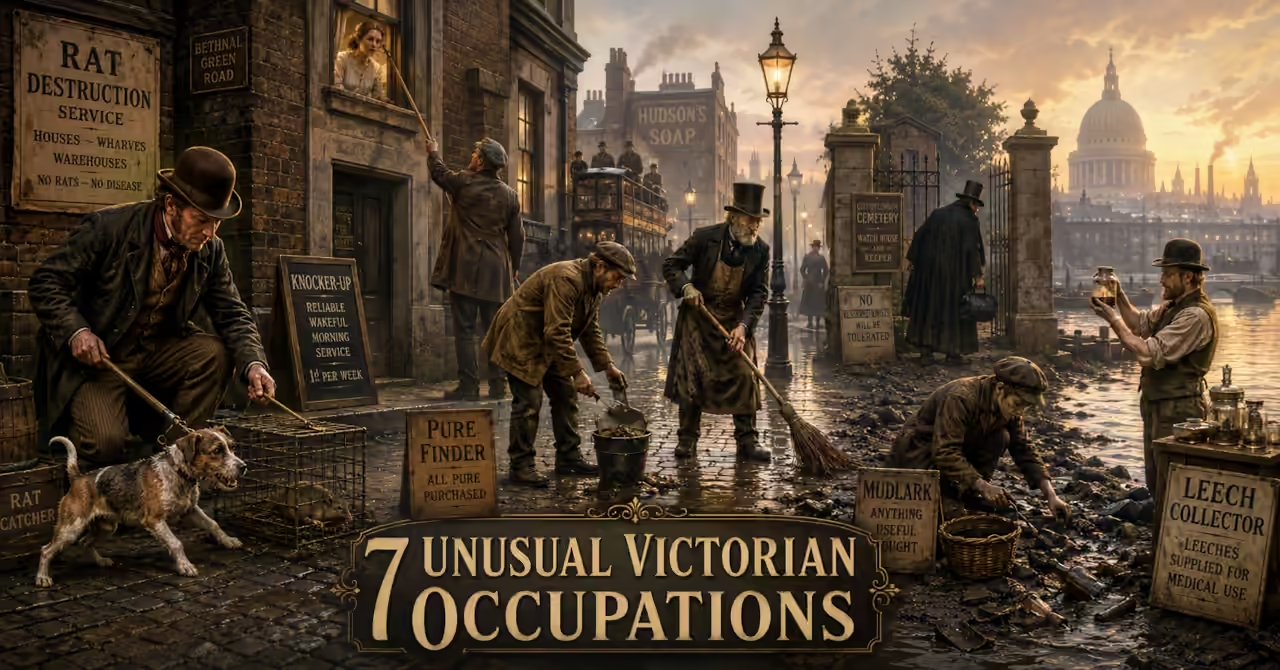
1. Rat Catcher
Victorian cities were plagued by rats. They consumed food supplies, damaged property and spread disease, making skilled rat catchers an essential part of urban life. Armed with traps, ferrets and specially trained terriers, these professionals hunted thousands of rodents in warehouses, factories, docks and private homes.
Some rat catchers became minor celebrities, demonstrating their dogs' abilities before paying audiences or supplying rats for sporting events. Although unpleasant and often dangerous work, successful rat catchers earned a respectable living while helping keep rapidly growing cities under control.
2. Knocker-Up
Long before alarm clocks became affordable, thousands of workers relied upon a human alarm service. Known as Knocker-Ups, these early morning professionals walked the streets before dawn carrying long bamboo poles or pea shooters.
For a small weekly fee they tapped bedroom windows until their clients were awake. Accuracy and reliability were essential, as missing the morning shift could cost a factory worker an entire day's wages. Some Knocker-Ups became so well known that families trusted them for decades, continuing the occupation well into the twentieth century before inexpensive alarm clocks finally replaced them.
3. Pure Finder
Perhaps the strangest occupation on this list belonged to the Pure Finders. Their job was to collect dog droppings from city streets and sell them to leather tanneries.
Known simply as "pure", the material contained chemicals valuable for softening leather during the tanning process. It was unpleasant work requiring hours of searching through busy streets with little more than a bucket and shovel. Yet demand from the leather industry ensured that even this seemingly worthless material had commercial value. It serves as a remarkable reminder that Victorian cities found economic use for almost everything.
4. Crossing Sweeper
Before modern drainage and paved roads, many busy streets became muddy rivers whenever it rained. Crossing Sweepers earned a living by clearing narrow pathways across the mud so ladies, businessmen and visitors could cross without ruining their boots and clothing.
Armed with little more than a broom, they worked at busy intersections, politely requesting small coins from grateful pedestrians. Many were elderly people, injured labourers or children with few other employment opportunities. Charles Dickens frequently included Crossing Sweepers in his novels, reflecting their familiar presence throughout Victorian London.
5. Resurrectionist
Few occupations generated as much public outrage as the Resurrectionists, commonly known as body snatchers. During the early nineteenth century, medical schools desperately needed human bodies for anatomical study, but legal supplies were limited.
Some criminals recognised a profitable opportunity. Under cover of darkness they secretly exhumed recently buried bodies before selling them to medical institutions. Their activities terrified grieving families and prompted many cemeteries to install watch houses, iron coffin cages and armed guards.
Public outrage eventually contributed to changes in the law, providing legitimate sources of cadavers for medical education and bringing the notorious trade to an end.
6. Mudlark
At low tide, the muddy banks of the River Thames became a workplace for the Mudlarks. Often among the poorest members of society, they searched the exposed riverbed for anything that could be sold: coal, rope, nails, copper, discarded tools and countless other objects washed into the river.
The work was physically exhausting and frequently dangerous. Sharp metal, polluted water and unpredictable tides posed constant risks. Yet for many families, Mudlarking represented the difference between eating and going hungry.
Today, licensed Mudlarks still search the Thames, although they now uncover historical artefacts rather than simply trying to survive.
7. Leech Collector
During much of the Victorian period, leeches were widely used in medicine for bloodletting and other treatments. Supplying this demand required Leech Collectors to gather the creatures from ponds and marshes.
Some collectors waded barefoot into shallow water, allowing hungry leeches to attach themselves before carefully removing and storing them for sale. It was slow, uncomfortable work that often left collectors with numerous bites and occasional infections.
Although modern medicine has abandoned many Victorian treatments, medical leeches are still used in certain specialised surgical procedures today, making this one of the few occupations on this list that survives in a highly specialised form.
More Than Just Strange Jobs
These unusual occupations remind us that work evolves alongside society. Each profession existed because it solved a real problem created by the technology, medicine, industries and living conditions of its time. As cities became cleaner, alarm clocks became affordable, medical science advanced and public health improved, many of these jobs quietly disappeared.
Looking back at these forgotten professions, it is easy to smile at their strangeness. Yet behind every Rat Catcher, Crossing Sweeper and Mudlark was an ordinary person adapting to the demands of a rapidly changing world. Their work reveals a Victorian society shaped by unfamiliar technologies, harsh living conditions and customs that can seem extraordinary today. To discover another curious side of everyday nineteenth-century life, continue with 5 Forgotten Victorian Beliefs and Superstitions.
From the Curator's Workshop
Exploring forgotten Victorian occupations is a reminder that history is often stranger, richer and more entertaining than fiction. If articles like this leave you wanting to discover even more of the remarkable Victorian world, why not take a little piece of it with you? Our William Morris Portrait Library Tote Bag celebrates one of the greatest figures of the Arts & Crafts Movement with a timeless design that's equally at home carrying books from the library, treasures from the museum or simply the essentials for your next adventure. Consider it your official field bag for collecting curiosities—fortunately, it has never been used to carry rats, leeches or buckets of "pure."
Author's Notes
Notes & Memoranda
As is often the case, the subject extends beyond the bounds of a single article. The notes and memoranda below gather together useful definitions, related observations, references, and occasional curiosities discovered along the way.
Frequently asked questions
What were some unusual occupations in Victorian Britain?
Unusual Victorian occupations included rat catchers, knocker-ups, pure finders, crossing sweepers, resurrectionists, mudlarks and leech collectors. Each occupation met a practical need created by Victorian cities, industries, medicine or working conditions.
What did a Victorian knocker-up do?
A knocker-up acted as a human alarm clock. Before affordable alarm clocks became common, knocker-ups walked the streets before dawn and used long poles or pea shooters to tap on their clients' bedroom windows until they woke.
Why did Victorian pure finders collect dog dung?
Pure finders collected dog dung because it was valuable to the leather industry. Known as 'pure', the material was sold to tanneries and used during the process of softening and preparing animal hides.
Why did unusual Victorian occupations disappear?
Many unusual Victorian occupations disappeared as technology, sanitation, medicine and working conditions improved. Alarm clocks replaced knocker-ups, cleaner streets reduced the need for crossing sweepers, and legal reforms ended the trade of resurrectionists.
Further Reading…
Disclosure
This article is intended as an engaging introduction to several unusual occupations that existed during the Victorian era. While every effort has been made to ensure historical accuracy, working practices, dates and regional variations differed across Britain and throughout the nineteenth century. The examples presented here are representative rather than exhaustive and are designed to encourage further exploration of Victorian social history.