15 Victorian Designers, Artists and Makers Worth Knowing
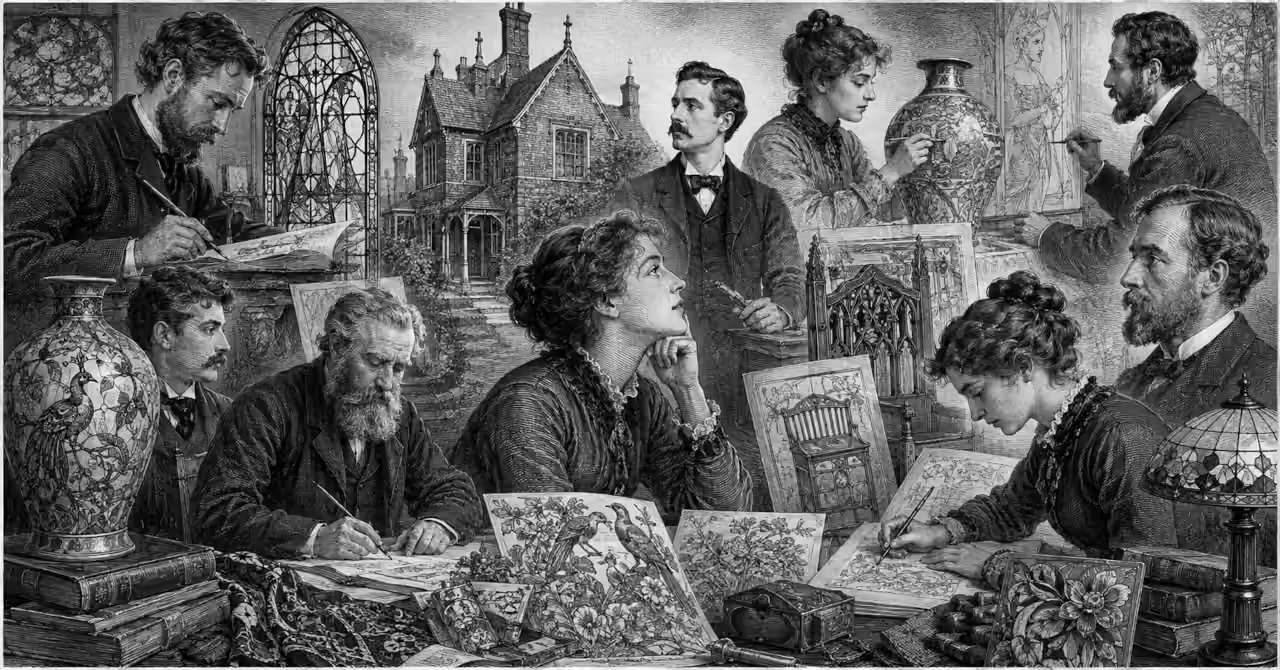
Ask someone to name a Victorian designer and there is a good chance they will say William Morris. It is a sensible answer. Morris created some of the era’s most recognisable patterns and became the great public champion of beautiful, well-made things.
But he was far from alone. The Victorian world produced an extraordinary collection of architects, illustrators, potters, furniture makers, theorists and artistic rebels. Some worked together, some disagreed fiercely, and a few seemed to belong to an age that had not yet arrived.
Their influence can still be found in wallpaper, furniture, book illustration, architecture and even modern industrial design. Here are fifteen Victorian designers, artists and makers worth knowing.
Visionaries
William Morris — The Movement’s Greatest Champion
William Morris was a designer, writer, printer, businessman and social reformer who believed that everyday objects should be both useful and beautiful. His wallpapers and textiles remain instantly recognisable, filled with winding leaves, flowers, birds and carefully balanced repetition. Yet his greatest influence may have been his insistence that good design mattered in ordinary life. Morris inspired generations of craftspeople to question cheap mass production and value skilled workmanship. If the Arts and Crafts movement has a patron saint, he is probably it.
John Ruskin — The Philosopher Behind the Workshop
John Ruskin was not primarily a maker, but his ideas helped shape those who were. He argued that art, architecture, labour and morality could not be separated. A badly made object was not merely unattractive; it reflected a society that had lost respect for its workers. Ruskin admired medieval buildings because he believed their irregularities revealed the freedom and humanity of the craftspeople who built them. His writing influenced Morris, architects, educators and reformers, giving the Arts and Crafts movement much of its intellectual foundation.
Designers
Christopher Dresser — The Victorian Modernist
Christopher Dresser often surprises modern viewers because so much of his work looks decades ahead of its time. While many Victorian designers embraced elaborate decoration, Dresser experimented with clean geometry, strong silhouettes and practical forms. His metal teapots, glassware and ceramics can resemble objects from the 1920s—or even the present day. He also understood commercial production and designed for manufacturers rather than rejecting industry altogether. Dresser is worth knowing because he complicates the idea that Victorian design was always ornate, sentimental and crowded.
C.F.A. Voysey — The Master of Quiet Pattern
Charles Francis Annesley Voysey designed houses, furniture, wallpapers and textiles with a distinctive lightness. His patterns often feature birds, trees and gently simplified natural forms arranged with remarkable clarity. Unlike some heavily detailed Victorian interiors, Voysey’s work could feel calm and spacious. His houses also helped anticipate the cleaner forms of twentieth-century domestic architecture. Today, his designs seem familiar even to people who do not recognise his name, partly because his graceful flat patterns have been repeatedly revived in fabrics and wallpapers.
Charles Rennie Mackintosh — The Designer Between Two Worlds
Charles Rennie Mackintosh combined strict geometry with elongated flowers, delicate curves and theatrical interiors. Working mainly in Glasgow, he created buildings, furniture and decorative schemes that seem to stand between the Arts and Crafts movement and European modernism. His high-backed chairs are elegant but almost severe, while his famous rose motifs soften their surroundings. Mackintosh is worth knowing because his rooms were conceived as complete experiences. Architecture, furniture, lighting and decoration were not separate additions; they were parts of one carefully controlled atmosphere.
Makers
William De Morgan — The Potter of Fantastic Creatures
William De Morgan turned ceramic tiles into miniature worlds. His designs feature fish, ships, peacocks, dragons and strange floral creatures, often painted in rich blues, greens and lustrous metallic tones. A friend and collaborator of William Morris, De Morgan brought humour and imagination to Arts and Crafts interiors. His tiles could transform a fireplace or wall into something playful and slightly mysterious. He is especially worth discovering because his work reminds us that serious craftsmanship does not have to be solemn. Victorian decorative art could be inventive, eccentric and wonderfully strange.
Ernest Gimson — The Furniture Maker’s Designer
Ernest Gimson believed that furniture should reveal how it had been made. Rather than hiding joints beneath excessive decoration, he treated construction itself as a source of beauty. His chairs, cabinets and tables often have a sturdy, almost agricultural character, softened by fine proportions and carefully worked details. Gimson also established workshops where designers and craftspeople worked closely together. His furniture may appear modest beside grand Victorian interiors, but that restraint was deliberate. He wanted objects to feel honest, durable and connected to the hands that produced them.
Charles Robert Ashbee — The Guild Builder
Charles Robert Ashbee did more than design objects; he attempted to build a community around their creation. He founded the Guild of Handicraft in London and later moved it to the rural town of Chipping Campden. The guild produced metalwork, jewellery, furniture and silverware while trying to restore dignity and creativity to labour. The experiment faced commercial difficulties, but its ambition remains fascinating. Ashbee believed design reform required more than attractive products. It required a different relationship between artist, worker, customer and community.
Illustrators
Walter Crane — Art for Every Part of Life
Walter Crane was one of the Victorian era’s most influential illustrators, particularly in children’s books. His bold outlines, decorative borders and flattened areas of colour drew inspiration from medieval art and Japanese prints. Crane believed illustration should be beautiful without speaking down to young readers. He also designed wallpapers, textiles, ceramics and political images, bringing the same decorative intelligence to each. His books helped establish the idea that pages could be designed as complete visual compositions, with words, pictures and ornament working together.
Kate Greenaway — The Illustrator Who Created a Fashion
Kate Greenaway became famous for delicate illustrations of children in idealised old-fashioned clothing. Her pictures were so popular that the dresses, bonnets and smocks she drew influenced real children’s fashion. Greenaway’s world was gentle, orderly and filled with gardens, games and quiet domestic moments. Yet her compositions were carefully designed, using open space and graceful figures in ways that felt fresh and distinctive. Her work is worth knowing not only for its charm, but because it demonstrates the extraordinary cultural influence a successful illustrator could achieve.
Randolph Caldecott — The Man Who Made Pictures Move
Randolph Caldecott brought movement, timing and comedy to book illustration. Horses gallop, dogs leap, people tumble and expressions change from one page to the next. Rather than simply illustrating what the words already said, Caldecott allowed pictures to continue the joke or tell another part of the story. His lively approach helped shape the modern picture book. The prestigious Caldecott Medal, awarded for distinguished American picture-book illustration, was later named in his honour—a fitting tribute to an artist who understood how images could carry a narrative.
Artists & Innovators
Edward Burne-Jones — The Painter of Dreaming Worlds
Edward Burne-Jones filled paintings, stained glass and tapestries with knights, angels, sleeping princesses and melancholy figures from legend. Closely associated with Morris, he helped give the later Pre-Raphaelite world its dreamlike visual identity. His people often appear distant from ordinary life, inhabiting landscapes where time has paused. Burne-Jones is worth knowing because his work linked fine art with decorative design. His images did not remain confined to galleries; they appeared in churches, books, textiles and domestic interiors.
Philip Webb — The Architect of the Honest House
Philip Webb is often remembered for designing the Red House for William Morris, but his influence extends much further. He rejected showy imitation and designed buildings around their materials, setting and practical purpose. Brickwork, timber, windows and roofs were allowed to look like what they were rather than being disguised beneath borrowed historical ornament. Webb’s houses could appear traditional while quietly challenging Victorian architectural convention. His work helped establish the domestic principles that later shaped Arts and Crafts architecture in Britain and beyond.
May Morris — The Embroiderer Who Stepped Beyond Her Father’s Shadow
May Morris was William Morris’s daughter, but she deserves recognition as a major designer and craftswoman in her own right. She became an accomplished embroiderer, managed the embroidery department of Morris & Co., lectured internationally and worked to improve the standing of women in the decorative arts. Her designs display technical confidence and a sophisticated understanding of natural forms. For many years, her achievements were overshadowed by her father’s reputation. Rediscovering May Morris reveals how much of the movement’s practical success depended upon talented women whose work was too easily treated as secondary.
Aubrey Beardsley — The Brilliant Victorian Provocateur
Aubrey Beardsley’s black-and-white illustrations were elegant, unsettling and unmistakably modern. With sweeping curves, stark contrasts and decadent figures, he created images that shocked some Victorian viewers and fascinated many others. His career was tragically brief, yet his influence on graphic design, poster art and illustration was immense. Beardsley belongs on this list because he reveals another side of Victorian creativity: experimental, irreverent and willing to disturb polite taste. He did not celebrate the handmade domestic ideal of Morris, but he shared the era’s determination to make visual art impossible to ignore.
A Remarkable Generation of Creators
These fifteen figures did not create a single, tidy Victorian style. Dresser embraced manufacturing while Morris criticised it. Gimson valued restrained construction, while De Morgan covered surfaces with fantastic beasts. Greenaway offered gentle childhood scenes, while Beardsley produced images that seemed designed to unsettle the drawing room.
That variety is precisely what makes Victorian design so rewarding to explore. One famous name leads to a network of collaborators, rivals, workshops, publishers and forgotten makers. William Morris leads to May Morris and Burne-Jones. Ruskin leads to the philosophy of the Arts and Crafts movement. Walter Crane, Kate Greenaway and Randolph Caldecott open the door to the golden age of illustrated books.
The Victorian creative world was not built by one genius. It was shaped by an entire generation of people who believed that buildings, books and household objects could carry ideas. Their work still surrounds us—and there are always more names waiting to be discovered.
From the Curator's Workshop
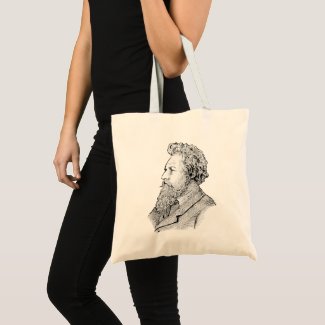
If you enjoyed meeting the designers and makers who transformed the Victorian world, take a little of that Arts and Crafts spirit with you. The Phillaneum William Morris Portrait Library Tote Bag celebrates the movement’s most famous champion on a practical everyday carry—an understated way to show your appreciation for beautiful design, remarkable craftsmanship and the enduring creative world of William Morris.
Author's Notes
Notes & Memoranda
As is often the case, the subject extends beyond the bounds of a single article. The notes and memoranda below gather together useful definitions, related observations, references, and occasional curiosities discovered along the way.
Glossary
Some of the terms used in this article have specialised, historical or technical meanings. This glossary provides additional context for selected terms and ideas.
- Arts and Crafts movement
- A late‑19th‑century design and social reform movement that reacted against industrial mass production by valuing handcraft, honest materials and simple, well‑proportioned forms; it combined practical workshops, aesthetic theory and sometimes political ideas about labour to reshape architecture, furniture, textiles and everyday objects.
- Guild of Handicraft
- A cooperative workshop and community founded by Charles Robert Ashbee which sought to revive pre‑industrial craft practices by bringing designers and makers together to produce metalwork, jewellery, furniture and silverware while promoting higher standards and greater dignity in labour; it was modelled on medieval guild ideals and later moved from London to Chipping Campden.
- Red House
- The domestic project by Philip Webb for William Morris that became a touchstone of Arts and Crafts architecture: a house conceived around its materials, structure and practical use rather than historicist ornament, and intended as an integrated setting where architecture, furnishings and decoration formed a unified whole.
- Pre‑Raphaelite (later Pre‑Raphaelite)
- An artistic movement originating in the mid‑19th century that looked back to medieval and early Renaissance models for vivid colour, intricate detail and moral or literary themes; the later Pre‑Raphaelite tendency, associated with figures like Burne‑Jones, translated those ideals into dreamlike, decorative images that crossed into stained glass, tapestries and domestic design.
- Caldecott Medal
- A prestigious American award for distinguished picture‑book illustration named after Randolph Caldecott, given in recognition of the narrative energy and pictorial timing he brought to children’s books and signalling his lasting influence on the development of the modern picture book.
Frequently asked questions
Curious about something you’ve just read? These frequently asked questions explore some of the key ideas, details and questions surrounding the topic.
Why is William Morris considered so important to Victorian design?
He combined roles as designer, writer, printer, businessman and social reformer who insisted that everyday objects should be both useful and beautiful, creating instantly recognisable wallpapers and textiles while inspiring craftsmen to challenge cheap mass production and value skilled workmanship.
How did Christopher Dresser differ from more ornate Victorian designers?
Dresser favoured clean geometry, strong silhouettes and practical forms that often look decades ahead, and he designed for manufacturers rather than rejecting industry, complicating the idea that Victorian design was always ornate and sentimental.
What was John Ruskin's influence on the Arts and Crafts movement?
Ruskin argued that art, architecture, labour and morality were inseparable, claiming badly made objects reflected a society that disrespected workers; his writings provided much of the movement’s intellectual foundation and influenced designers, architects and reformers.
What roles did women play in Victorian design?
Women made major contributions: May Morris was an accomplished embroiderer who ran the embroidery department of Morris & Co., lectured internationally and worked to improve women’s standing in the decorative arts, while Kate Greenaway’s delicate children’s illustrations even shaped contemporary children’s fashion.
Further Reading…

Disclosure
This article provides a general historical introduction to selected Victorian designers, artists and makers and is intended to encourage further exploration of their work. The descriptions necessarily summarise complex careers, artistic movements and relationships, and the selection is not intended as a definitive ranking or comprehensive account of Victorian design and decorative arts.