4 Victorian Dishes We Would Never Eat Today
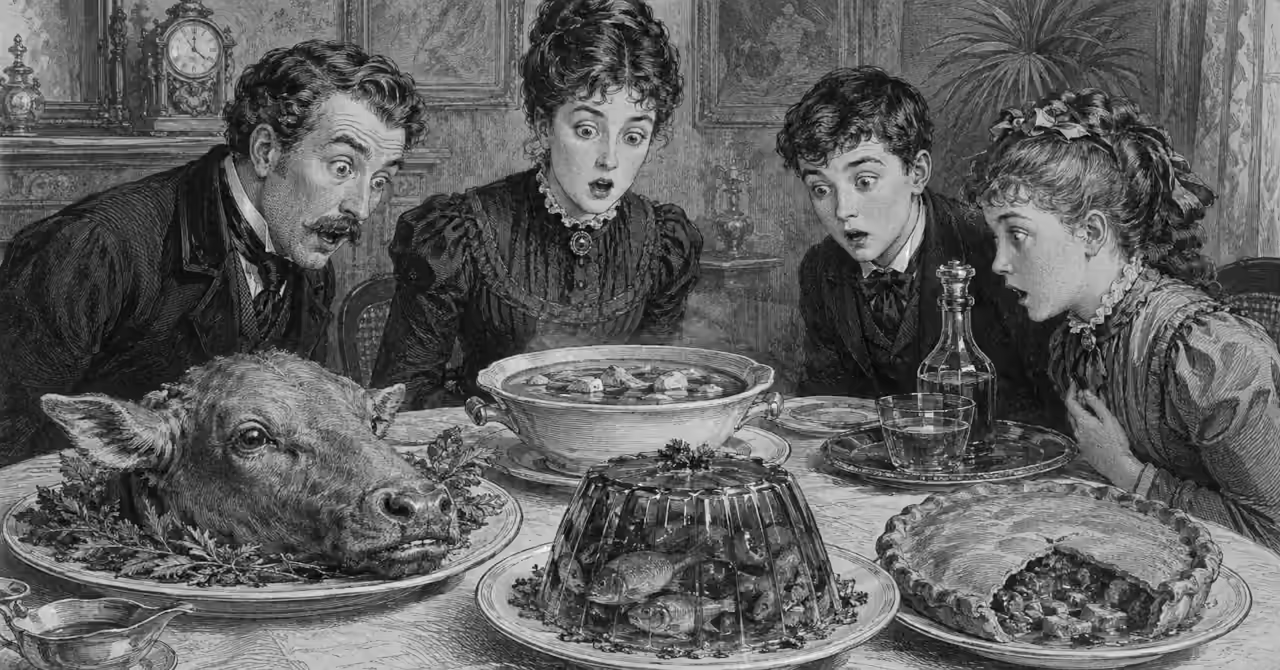
Victorian dining was not all roast beef, plum pudding and immaculate cucumber sandwiches. Venture a little further into the nineteenth-century kitchen and you might encounter a calf's head staring back from the serving dish, a bowl of imitation turtle soup, pieces of eel suspended in shimmering jelly, or a restorative drink made from burnt toast. To modern readers, some Victorian recipes sound less like dinner and more like a test of character.
If you've arrived here after reading The Art of Conversation at Dinner Parties, you may wish to reconsider that invitation. Maintaining sparkling conversation across the table is one thing; doing so while somebody serves the calf's head is quite another.
Yet Victorian cooks were not trying to horrify their guests. These dishes made sense in a world that valued thrift, used nearly every edible part of an animal and placed considerable faith in foods believed to restore strength and health. What appeared on the table depended on price, availability, season and contemporary ideas about nourishment—ideas that did not always survive the arrival of modern nutritional science.
And that is what makes these dishes so fascinating. Some have disappeared from ordinary life, while others linger in traditional kitchens as reminders of a very different food culture. So, with napkin properly arranged and perhaps a little courage, let us inspect four Victorian dishes that reveal just how dramatically our ideas about a respectable meal have changed.
Calf's Head
A calf's head was once regarded as a useful and respectable ingredient. After careful cleaning, it could be soaked, boiled for several hours and served with vegetables, gravy or a sharp sauce. The tongue might be sliced separately, while the brains could be prepared as another part of the meal.
Victorian cookbooks often gave detailed instructions for the entire process. This was not food intended only for the desperate or impoverished. A properly dressed calf's head could appear at a substantial family dinner, particularly when presented with an elaborate garnish.
The dish made practical sense. Meat was valuable, and a capable household was expected to avoid waste. The head contained edible flesh, fat, tongue and gelatin-rich tissue. Slow cooking softened the tougher parts and created the smooth, slightly sticky texture that many nineteenth-century diners enjoyed.
Modern consumers are usually presented with meat that has been trimmed, portioned and stripped of anything that makes the animal recognisable. A whole head on the kitchen table therefore feels confronting in a way it would not necessarily have seemed to a Victorian cook.
The decline of calf's head says as much about modern food culture as Victorian taste. We still eat beef and veal, but we generally prefer the animal's identity to remain out of sight.
Mock Turtle Soup
Real turtle soup was once an expensive symbol of fashionable dining. Green sea turtles were imported for grand dinners, where their meat was turned into a rich soup associated with wealth and ceremony. Most households, however, could not afford such extravagance.
Mock Turtle Soup offered an ingenious substitute. Instead of turtle, cooks used a calf's head, whose soft meat and gelatinous texture could resemble the prized original. The broth was enriched with vegetables, herbs, spices and sometimes wine. Eggs, small meatballs or slices of lemon might be added before serving.
The result was not considered a poor imitation. Mock Turtle Soup became popular enough to develop its own reputation and appeared at dinners, banquets and public celebrations. Diners who had never tasted real turtle could still enjoy a dish carrying some of its prestige.
There is something surprisingly modern about this culinary deception. Supermarkets now sell imitation crab, plant-based burgers and substitutes designed to reproduce the taste or texture of more expensive ingredients. Victorian cooks were working from the same principle, although their chosen replacement was rather more confronting.
What makes Mock Turtle Soup difficult for many diners today is not the idea of imitation, but the method. A soup based on a boiled calf's head no longer fits comfortably with modern expectations of elegant dining.
Eel Pies and Jellied Eels
Eels were once plentiful in and around London. They could survive for some time out of water, making them easier to transport than many other types of fish. They were also relatively inexpensive, which made them an important food for working households.
Londoners found more than one way to make a meal of them. Eels could be cut into pieces and baked beneath pastry as a substantial eel pie, while another familiar preparation was to simmer them and allow the cooking liquor to cool around the pieces of fish. The eel's natural collagen helped the liquid set into the characteristic jelly.
For a modern diner, jellied eels can present an unfamiliar combination of appearance and texture. Pieces of soft eel surrounded by translucent savoury jelly are a considerable distance from the crisp coatings, smooth sauces and neatly separated ingredients common in much modern cooking.
To Victorian diners, however, there was nothing especially peculiar about savoury jelly. Aspics, brawns and jellied meats were familiar preparations, and cooks regularly took advantage of the natural gelatins produced by meat and fish. What might appear strange to us belonged to a much broader culinary tradition.
Eel pies and jellied eels also tell a story about economy. A plentiful local ingredient could be turned into filling food with relatively simple preparation. Pie made it substantial; jelly made use of the cooking liquor rather than wasting it. Both suited a city in which inexpensive prepared food mattered to working people.
The tradition has not disappeared entirely. Jellied eels can still be found in London's surviving pie-and-mash shops, where they are part of a food culture that once seemed thoroughly ordinary. Today they are more likely to attract the curious visitor than serve as an everyday meal.
That change may be the most interesting part of the dish. The Victorians did not sit down to eel pie or jellied eels because they wanted an adventurous historical experience. They were simply eating food. What now seems wonderfully peculiar was once lunch.
Toast Water and Beef Tea
The final examples were not generally served as hearty dinners. Toast water and beef tea belonged to the Victorian sickroom, where they were given to invalids believed to be too weak for ordinary food.
Toast water was made by browning or even slightly charring a piece of bread and soaking it in hot or cold water. The bread was then removed, leaving a faintly flavoured drink. It was considered gentle, refreshing and suitable for patients with delicate stomachs.
Beef tea sounded more nourishing. Lean beef was chopped or shredded, covered with water and slowly heated so that its juices passed into the liquid. The resulting broth was strained and served warm, sometimes with a little salt.
Victorian doctors and household guides often treated beef tea as a concentrated source of strength. In reality, much of the meat's protein remained behind. The drink might provide some flavour, fluid and comfort, but it was not the powerful restorative many people imagined.
That does not mean these preparations were entirely useless. A warm drink could encourage hydration, settle an anxious patient and provide a sense of care. The problem was that such drinks were sometimes trusted as though they offered the nourishment of a proper meal.
Modern readers may find toast water particularly bleak, but every period develops foods supported by fashionable health claims. Future historians may be equally puzzled by some of today's detox drinks, meal replacements and powdered supplements.
What These Dishes Tell Us About Victorian Life
These foods were not strange simply for the sake of being strange. They belonged to a culture in which household economy mattered, animal products were used thoroughly and tastes in texture and presentation differed considerably from our own. Even the rather unpromising glass of toast water made sense within contemporary ideas about illness, nourishment and recovery.
Victorian diners might, of course, find plenty to question on our own tables. Brightly coloured energy drinks, protein powders, artificial flavourings and meat substitutes could appear every bit as peculiar as Mock Turtle Soup or jellied eels. Food has always reflected the assumptions of its age, and ours will eventually look historical too.
That is why the interesting question is not whether Victorian food was disgusting, but why these dishes once seemed sensible, comforting or even desirable. Recipes preserve details that grand histories often overlook: what ordinary people could afford, what they believed was good for them, what they considered appetising and what they proudly placed before their guests.
And if the calf's head has diminished your enthusiasm for the Victorian dinner table, perhaps it deserves another chance. Continue to April Showers Bring May Flowers — Barometer Flowers (1922), where a charming page from Dennison's 1922 Gala Book presents an Easter table decorated with colour-changing paper flowers that respond to the weather itself. No jellied eels are required—just one more wonderfully inventive idea for making the dining table a little extraordinary.
From the Curator's Workshop
If you enjoyed this glimpse into the curious world of Victorian life, carry a little of the period with you. Our William Morris Portrait Library Tote Bag celebrates one of the great figures of the Arts and Crafts movement, combining Victorian character with something considerably more practical than a bowl of jellied eels. Explore it in the Phillaneum Museum Shop and take a piece of Victoriana into the modern world.

Author's Notes
Notes & Memoranda
As is often the case, the subject extends beyond the bounds of a single article. The notes and memoranda below gather together useful definitions, related observations, references, and occasional curiosities discovered along the way.
Glossary
Some of the terms used in this article have specialised, historical or technical meanings. This glossary provides additional context for selected terms and ideas.
- Calf's head
- A whole head of a young bovine prepared as a named dish by careful cleaning, long boiling and separate use of parts such as tongue and brains; slow cooking releases gelatin from cartilage and connective tissue, yielding the soft, slightly sticky textures Victorian diners prized, and the recipe reflected thrift and respectability rather than mere poverty.
- Mock Turtle Soup
- A Victorian substitute for expensive green‑turtle soup made by using a calf's head (or other cheaper meats) to reproduce the rich, gelatinous mouthfeel of real turtle, with added vegetables, herbs and sometimes wine; it functioned as a social shortcut that carried some of the prestige of the original and later gained its own culinary reputation.
- Jellied eels
- A traditional London preparation in which eel pieces are simmered and the cooking liquor cools and sets into a savoury jelly thanks to the fish's natural collagen, creating a dish once common among working households because eels were plentiful, transportable and inexpensive.
- Toast water
- A Victorian sickroom beverage made by browning or lightly charring bread and steeping it in hot or cold water, producing a faintly flavoured liquid thought to be gentle on weak stomachs and suitable for invalids rather than a source of substantial nutrition.
- Beef tea
- A warm strained broth produced by gently heating lean beef in water so its juices flavour the liquid; historically promoted as a restorative for the sick, it provided flavour and hydration but—contrary to contemporary belief—was not a concentrated source of the meat's protein.
Frequently asked questions
Curious about something you’ve just read? These frequently asked questions explore some of the key ideas, details and questions surrounding the topic.
Why did Victorians eat calf's head?
Calf's head was a respected, economical ingredient that used edible parts—flesh, tongue, brains and gelatin-rich tissue—so households avoided waste; slow cooking softened tougher parts and a properly dressed head could appear at a substantial family dinner, often with elaborate garnish.
What is Mock Turtle Soup made from and why was it used?
Mock Turtle Soup substituted calf's head for expensive green sea turtle meat, using the head's soft, gelatinous flesh to mimic the original and enriching the broth with vegetables, herbs, spices, and sometimes wine, eggs, meatballs or lemon; it became popular in its own right as a more affordable way to enjoy a dish associated with prestige.
Why were eel pies and jellied eels common in Victorian London?
Eels were plentiful around London, could survive out of water for transport and were inexpensive, so they were turned into filling foods like eel pies (baked under pastry) or jellied eels (simmered so the natural collagen set the cooking liquor into jelly), making economical use of a local ingredient.
Did toast water and beef tea really restore strength for sick people?
Toast water was a faintly flavoured drink made by soaking browned bread and was considered gentle for delicate stomachs, while beef tea extracted some flavour and juices from lean beef into a broth; both could provide fluid, warmth and comfort, but beef tea contained much less protein than people often believed and was not the powerful restorative it was thought to be.
Further Reading…

Disclosure
This article explores historical Victorian foods for general educational and cultural interest. Recipes, ingredients and medical beliefs described reflect nineteenth-century practices and should not be interpreted as modern nutritional, medical or food-safety advice.