6 Common Victorian Children's Games
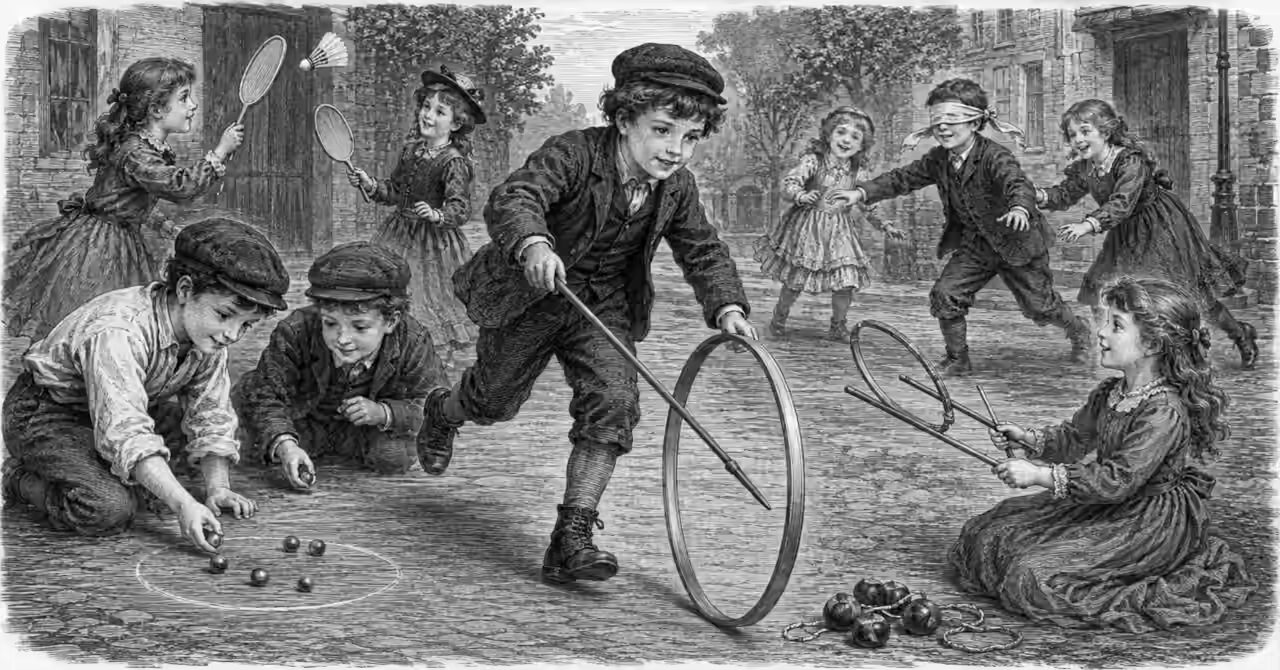
Victorian children lived long before television, electronic games and the endless supply of manufactured toys available today. Yet their streets, schoolyards, gardens and parlours were rarely short of entertainment. A wooden hoop, a few marbles or a chestnut on a string could occupy an entire afternoon.
Many popular Victorian games were inexpensive, easy to learn and adaptable to whatever space was available. Some rewarded accuracy and coordination, while others depended on speed, courage or the ability to avoid laughing at exactly the wrong moment. Several have survived into the present day, although modern children may know them only from books, period dramas or the stories of older relatives.
These six common games offer a lively glimpse into the everyday world of Victorian childhood.
1. Hoop Rolling
Hoop rolling was one of the simplest and most recognisable Victorian street games. A child ran beside a large wooden or metal hoop, keeping it upright with a short stick or hooked guide. The aim might be to travel the greatest distance, complete a course or outrun another player without allowing the hoop to topple.
It sounds easy until the hoop begins to wobble. Successful players needed balance, quick reactions and a surprisingly delicate touch. Strike too hard and the hoop raced away. Tap too gently and it slowed, tilted and fell into the road.
The game was also wonderfully economical. Metal hoops could be salvaged from barrels, while wooden versions could be made or repaired without elaborate tools. In a working-class neighbourhood, one hoop might be shared among several children and used for years.
Competitive hoop races turned ordinary streets into improvised sporting grounds. Corners, puddles and uneven paving made the game more difficult, while a passing cart could bring the contest to a sudden and sensible pause.
2. Marbles
Marbles were small enough to carry in a pocket but important enough to inspire fierce playground rivalries. Victorian marbles might be made from clay, stone or glass, with the finest examples treasured for their colour and pattern as much as their usefulness in a game.
Rules differed between schools and neighbourhoods. A circle could be scratched into the dirt, marbles placed inside it, and players challenged to knock them out using a carefully aimed shooter. In some versions, a successful player kept the marbles they won, giving every shot a little more consequence.
Skill came from judging distance, angle and force. A good player learned how to flick a marble accurately with the thumb while keeping the hand steady against the ground. A careless attempt might miss entirely or leave a favourite marble perfectly positioned for an opponent.
Marbles combined play, collecting and informal trade. Children compared their best pieces, swapped duplicates and argued over whether a particular shot had crossed the line. The game required almost no space and could begin wherever two or three children found a patch of bare ground.

3. Shuttlecock and Battledore
Before badminton became a formal sport, Victorian children played shuttlecock and battledore. A battledore was a small paddle, usually covered with parchment or another light material. Players used it to strike a feathered shuttlecock into the air and prevent it from touching the ground.
The object was generally cooperation rather than victory. Two players could pass the shuttlecock between them, or one player could attempt to keep it aloft while counting every successful strike. A long rally became its own achievement.
The game required concentration, timing and gentle control. Hitting too hard sent the shuttlecock beyond reach, while a weak stroke allowed it to flutter towards the floor. Because it needed less running than many outdoor games, it could be played in gardens, courtyards and sufficiently spacious rooms.
Its appeal crossed social boundaries. Simple equipment made it accessible, while the graceful movement of the game also suited the Victorian taste for activities that appeared both healthy and respectable.
4. Blind Man's Buff
Blind Man's Buff required almost no equipment beyond a piece of cloth and a group of children prepared to make noise. One player was blindfolded and turned around before attempting to catch the others by following footsteps, whispers and suppressed laughter.
The remaining players might call out, brush past the blindfolded child or remain silent in a corner until someone else drew attention away. The real entertainment came from uncertainty. A sound that seemed close could come from across the room, while a player who thought they were safely hidden might betray themselves with a giggle.
The game was popular at parties and family gatherings because nearly everyone could join. It could be played outdoors, but Victorian parlours and drawing rooms provided extra hazards in the form of chairs, curtains and occasionally disapproving furniture.
Adults sometimes joined the game as well, especially during Christmas festivities. This made Blind Man's Buff more than a children's pastime: it became a noisy social game capable of temporarily dissolving the usual boundaries between generations.
5. Graces
Graces was one of the more elegant Victorian games. Two players each held a pair of slender sticks. By crossing and then separating the sticks, one player launched a decorated hoop through the air for the other to catch.
The game demanded careful timing and coordination. The hoop had to be thrown high enough to reach the other player but not so forcefully that it sailed over their head. Catching it neatly on the sticks was even more satisfying than sending it well.
Victorian commentators often approved of Graces because it encouraged upright posture, controlled movement and moderate exercise. It was particularly associated with girls, although boys also played it. The name itself suggested refinement, making the game attractive to families concerned with both recreation and manners.
Despite its graceful appearance, an enthusiastic game could become highly competitive. A badly directed hoop might land in a flowerbed, strike a hat or send both players scrambling across the lawn.
6. Conkers
Conkers became especially popular during the later Victorian period. Children collected horse chestnuts, bored holes through them and threaded them onto lengths of string. Players then took turns striking their opponent's conker until one cracked or broke apart.
Finding the right chestnut was part of the ritual. Large, hard and perfectly shaped conkers were prized, while weak or damaged specimens were discarded. Children developed their own methods for selecting and preparing champions, and every playground seemed to possess a rumour about an unbeatable conker.
The game was simple but dramatic. One player held a conker steady while the other swung. A clean strike produced a satisfying crack; a poor attempt might miss, tangle the strings or strike the holder's knuckles.
Victories accumulated around surviving conkers, giving successful specimens a reputation and sometimes a title based on the number of opponents defeated. The pastime continued well beyond the Victorian era and remains one of the most recognisable traditional British playground games.
Why Victorian Games Still Feel Familiar
These games reveal a childhood culture built around movement, imagination and shared rules. The equipment was often ordinary, but the experiences were not. A hoop became a racing machine, a marble became a prize, and a chestnut became a playground champion.
Victorian children did not necessarily need adults to organise their recreation. Games were passed from child to child, altered to suit local conditions and argued over with great seriousness. The same game could have dozens of regional variations, each regarded by its players as the proper version.
What makes these pastimes feel familiar is not the equipment but the behaviour surrounding them: friendly rivalry, invented rules, treasured objects and the determination to play for five more minutes. The Victorian playground may have looked very different from the modern one, but the children within it would probably have been instantly recognisable.
These games reveal a childhood culture built around movement, imagination and shared rules. The equipment was often ordinary, but the experiences were not. A hoop became a racing machine, a marble became a prize, and a chestnut became a playground champion. The games may look simple from a century away, but perhaps that was their great trick: Victorian children could turn almost anything they found into something worth playing with.
From the Curator's Workshop
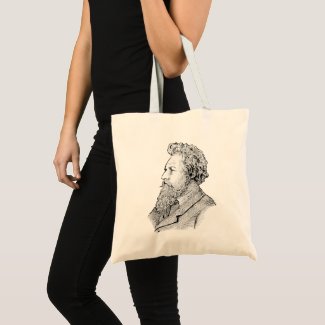
If you enjoyed this glimpse into the everyday pleasures of Victorian life, carry a little of that nineteenth-century spirit with you. The Phillaneum William Morris Tote Bag celebrates one of the era’s most distinctive designers, combining Arts and Crafts beauty with a practical bag for books, shopping and everyday adventures, while helping support more curious journeys into the Victorian world.
Author's Notes
I have always loved the everyday side of vintage culture—the small objects, habits and amusements that make the past suddenly feel alive. Victorian children's games are wonderful examples: marbles became prized possessions, hoops transformed ordinary streets into racetracks, and a horse chestnut could become a playground champion. Looking beyond grand buildings and famous Victorians to these ordinary moments is one of my favourite ways to explore the nineteenth century, because they remind us that behind the old photographs and formal clothes were people who competed, laughed, played and found delight in remarkably simple things.
Notes & Memoranda
As is often the case, the subject extends beyond the bounds of a single article. The notes and memoranda below gather together useful definitions, related observations, references, and occasional curiosities discovered along the way.
Frequently asked questions
Curious about something you’ve just read? These frequently asked questions explore some of the key ideas, details and questions surrounding the topic.
How was hoop rolling played and why was it so popular?
Children ran beside a large wooden or metal hoop, keeping it upright with a short stick or hooked guide and aiming to travel furthest, complete a course or outrun another player without letting it topple; success required balance and quick reactions. It was popular because it was economical—hoops could be salvaged or made cheaply, shared among children and used for years—and streets provided natural, challenging courses.
What were the basic rules and skills involved in playing marbles?
Players scratched a circle in dirt, placed marbles inside it and used a carefully aimed shooter to knock them out, with some versions allowing winners to keep the marbles they won. The game rewarded judging distance, angle and force and learning to flick a marble accurately with the thumb while stabilising the hand.
What was shuttlecock and battledore and where could it be played?
A battledore was a small paddle, often covered with parchment, used to strike a feathered shuttlecock to keep it from touching the ground; play was usually cooperative rather than competitive and could involve long rallies. Because it needed less running than many outdoor games, it could be played in gardens, courtyards and sufficiently spacious rooms, and it existed before badminton became a formal sport.
Why do these Victorian games still feel familiar, and who played them?
They centred on movement, imagination, shared rules, friendly rivalry and treasured objects, so the behaviour around play—rather than the equipment—feels recognisable today. Simple, inexpensive equipment made many games accessible across social classes, children passed games between themselves, and adults sometimes joined in social settings like Christmas gatherings.
Further Reading…
Disclosure
This article provides a general historical overview of children’s games associated with the Victorian era. Games, names, rules and customs varied by period, region and social setting, and some pastimes described here existed before the Victorian period or remained popular long afterwards.