The Phillaneum Arts & Crafts Newsletter – August 2026
Editor's Introduction
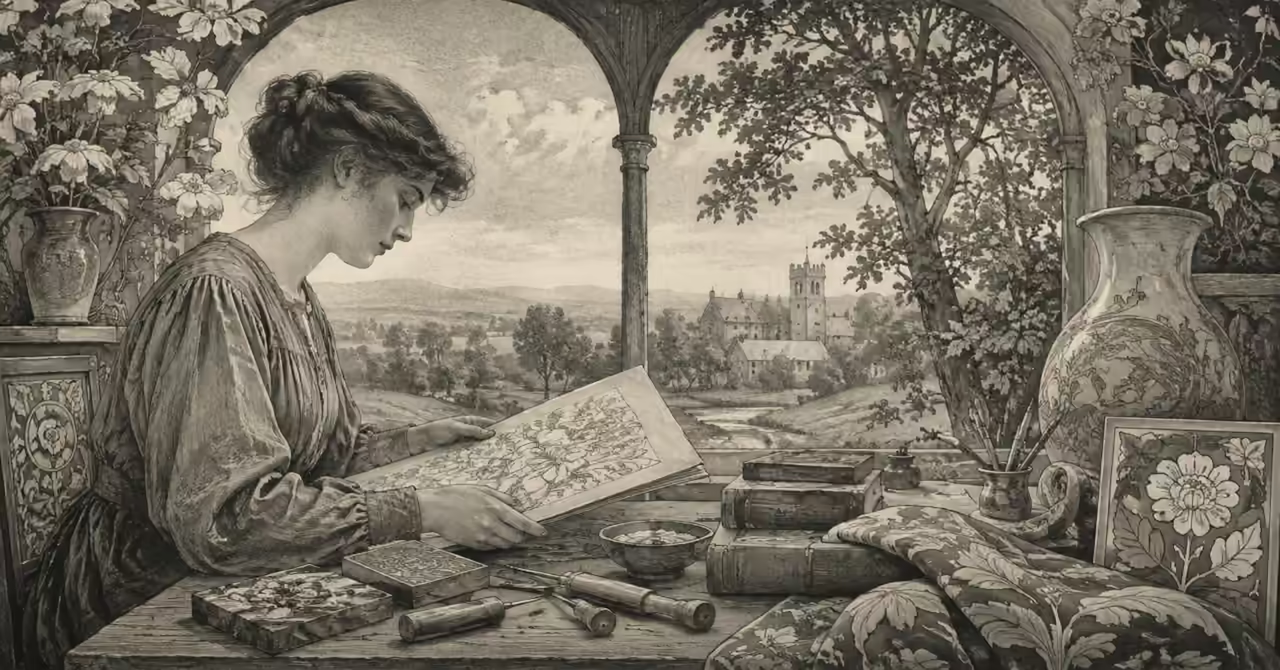
Welcome to the August edition of the Phillaneum Arts & Crafts Newsletter. Over the past three months, museums, galleries and craft organisations around the world have continued to demonstrate that the Arts and Crafts movement remains far more than an episode in design history. New exhibitions, digitised archives and contemporary makers all remind us that craftsmanship, thoughtful design and respect for materials still resonate with modern audiences. This edition gathers together the stories that caught our attention, alongside practical projects, historical discoveries and recommendations for readers wishing to explore the movement more deeply.
News & Announcements
More Than Forty-Five Morris Wallpapers Go on Display
One of the season’s most important Arts and Crafts exhibitions opened at Watts Gallery in Surrey on 21 May 2026.[1] The Art of Wallpaper: Morris & Co. brings together more than forty-five original wallpapers from the Morris & Co. archive, including familiar botanical patterns and less frequently displayed designs.
Rather than treating wallpaper merely as decorative background, the exhibition examines the drawing, repeating patterns and hand-printing techniques behind it. It also explores the relationships connecting William and May Morris with George and Mary Watts and the De Morgan circle. The exhibition continues until 10 January 2027.
It's not the Watts Gallery, but we do have The House journal's notes when journalists visited The Manufactory of Messrs. Chas. Knowles & Co., Ltd. in 1902.
Blackwell Asks Whether Craft Should Still Be Useful
Blackwell, the Arts and Crafts house overlooking Windermere, opened Useful/Beautiful on 1 May 2026.[2] The exhibition celebrates twenty-five years of contemporary craft collecting at the house and places modern ceramics and sculpture within one of Britain’s finest surviving Arts and Crafts interiors.
Works by Magdalene Odundo, Edmund de Waal, Kate Malone and Philip Eglin appear alongside recent acquisitions. The exhibition also revives a distinctly Morrisian question: should the objects collected by museums, and made for our homes, be useful as well as beautiful? It remains open until 29 August 2026.
Emery Walker Returns to the Centre of His Own Story
The exhibition Emery Walker: Both a Figure and a Person continued at Emery Walker’s House through 15 July 2026. Walker is often introduced simply as William Morris’s friend and printing adviser, but the exhibition restores his independent importance as a photographer, printer, teacher and influential figure in the private-press movement.[3]
Portraits, personal possessions, gifts and archival material reveal both his technical accomplishments and the friendships that sustained the Hammersmith Arts and Crafts circle.
Community Highlights
The Art Workers’ Guild Opens Its Doors
During London Craft Week in May, the Art Workers’ Guild presented The Art of Making 2026. Twenty makers exhibited, demonstrated and sold work in disciplines including weaving, ceramics, jewellery, printmaking, woodwork, textiles and millinery.[4]
Founded in 1884, the Guild was one of the organisations through which Arts and Crafts ideals became a working community rather than simply an aesthetic style. Its modern programme retains that emphasis on makers learning from other makers and allowing the public to see the knowledge hidden inside a finished object.
Clay and Fibre in Bankstown
Closer to home, Bankstown Arts Centre presented to handle / to hold from 13 June to 18 July. The exhibition brought together work by Kyiesha Booth, Alice Royds, Anisha Sawaid and Sirinya Stuebe, using clay and fibre to explore cultural history, identity, domestic labour and the physical experience of handmade objects.[5]
Although contemporary in subject, the exhibition echoed a central Arts and Crafts belief: materials are not neutral. Clay, thread, cloth and fired surfaces carry evidence of labour, place and memory.
Craft NSW Celebrates 120 Years of Making
During July, Craft NSW prepared for its August celebration of 120 years of continuous making. Founded in 1906 as the Society of Arts and Crafts of New South Wales, it is Australia’s oldest continuously operating craft organisation.[6]
Its anniversary exhibitions bring together jewellery, textiles, ceramics, glass and woodwork. The milestone is a useful reminder that the Arts and Crafts movement did not simply arrive in Australia as a decorating fashion. It created associations, exhibitions and communities through which practical skills could survive across generations.
Historian’s Corner
William Morris Did Not Work Alone
Popular accounts often make William Morris appear to have invented the Arts and Crafts movement single-handedly. The real history is more interesting. The movement consisted of overlapping guilds, workshops, schools, manufacturers and exhibition societies. Morris was enormously influential, but he worked within a network that included Philip Webb, Walter Crane, C.R. Ashbee, May Morris, Emery Walker, William De Morgan and many others.[7]
Even the term “Arts and Crafts movement” became widely used only in the early twentieth century. Its participants did not always agree with one another. Some wanted a return to small medieval-style workshops. Others collaborated successfully with commercial manufacturers. Morris himself was not opposed to every machine; he objected more strongly to repetitive labour that separated workers from the meaning and result of their work.
What united the movement was not a single decorative appearance but a cluster of ideas: respect for materials, fitness for purpose, pleasure in skilled labour, honest construction and the belief that ordinary surroundings influence the quality of everyday life.
For readers wishing to explore the movement in greater depth, Phillaneum's Apostle of Art – William Morris presents a remarkable series of early twentieth-century lectures examining why William Morris became one of the most influential figures of the Arts and Crafts movement. Drawing on contemporary perspectives, the collection explores his philosophy, artistic achievements, social ideals and lasting impact on design, craftsmanship and everyday life.
New Crafting Projects
1. Print a Morris-Inspired Botanical Repeat
Begin with one local leaf rather than copying an existing Morris pattern. Draw it from several angles, simplify the strongest outline and arrange two or three versions inside a square. Trace the design onto a soft-cut printing block and test how the edges meet when the square is repeated.
The challenge is not carving the leaf but making the spaces between the leaves feel deliberate. Morris patterns succeed because background and foreground are designed together.
2. Stitch a Small Art-Needlework Panel
Transfer a simple curling stem onto linen and work it with stem stitch, satin stitch and long-and-short stitch. Limit the project to three harmonious thread colours. The objective is not photographic realism but a lively surface in which the direction of each stitch helps describe the plant.
This is a manageable introduction to the freer embroidery associated with May Morris and the late nineteenth-century revival of art needlework. Readers curious about other decorative surface techniques may also explore this 1902 example of Broderie Peinte from The House: The Journal of Home Arts and Crafts, an intriguing period technique combining painted or stained colour with textile decoration.
3. Make a Useful and Beautiful Letter Rack
Construct a small desktop letter rack from three pieces of timber joined with dowels or simple housing joints. Shape the end panels with a restrained arch or leaf profile, then finish the wood with oil or shellac rather than hiding it beneath thick paint.
Before adding ornament, ask the Arts and Crafts question: does the decoration clarify the structure, or merely sit upon it?
Objects Rediscovered
These objects have not necessarily been newly excavated or identified. Instead, recent exhibitions have brought them out of archives, private rooms and storage, allowing them to be encountered afresh.
Original Morris & Co. Wallpaper Lengths
The Watts Gallery exhibition offers the rare opportunity to examine original wallpaper rather than modern licensed reproductions. Subtle irregularities in colour and printing reveal the physical process behind patterns that can appear mechanically perfect when reproduced digitally.
Emery Walker’s Personal Gifts and Mementoes
Items displayed at Emery Walker’s House illuminate the private exchange of objects within the Arts and Crafts circle. Such pieces may be modest beside a famous tapestry or cabinet, but they help historians reconstruct relationships between printers, writers, artists and political reformers.
Blackwell’s Newer Craft Acquisitions
Recent additions displayed in Useful/Beautiful show how an Arts and Crafts collection can remain alive rather than becoming a sealed historical room. Contemporary ceramics placed within Blackwell invite comparison between old principles and new forms without requiring modern makers to imitate nineteenth-century decoration.
Tips and Tricks
Let the Material Suggest the Decoration
A design for carved oak should not be transferred unchanged to embroidery, clay or printed paper. Each material has its own strengths. Timber favours bold cuts and clear edges; thread allows gradual colour and directional movement; clay rewards impressed, incised and modelled surfaces.
Study the Repeat Before Choosing a Colour
When designing wallpaper or fabric, photocopy or digitally repeat the uncoloured motif first. Weak joins, accidental gaps and obvious stripes are easier to correct before colour makes the design appear more finished than it really is.
Use Fewer Motifs More Carefully
Arts and Crafts design can look abundant, but successful examples are often built from a small vocabulary of leaves, flowers, birds and stems. Repetition, rotation and overlap create richness. Adding unrelated motifs usually produces confusion rather than variety.
Leave Evidence of the Hand
Handmade does not mean careless, but neither must every surface be made indistinguishable from a factory product. A slight variation in carving, glaze, weave or printed colour can reveal the process and give the finished piece life.
From the Library
Arts and Crafts Architecture Across America by Maureen Meister
Published recently and discussed by the William Morris Society in the United States in early 2026, this study broadens the movement beyond its familiar English houses. It examines the regional forms taken by Arts and Crafts architecture across the United States and the people who adapted its ideals to different communities and landscapes.[8]
William Morris Textiles by Linda Parry
An essential reference for understanding Morris’s woven and printed fabrics. Parry connects individual patterns with production methods, commissions and the development of Morris & Co.
May Morris: Arts & Crafts Designer edited by Anna Mason
A valuable corrective to accounts that leave May Morris in her father’s shadow. The book examines her embroidery, jewellery, teaching, writing and role in preserving and interpreting William Morris’s legacy.
The Journal of William Morris Studies
The William Morris Society has expanded its online journal archive with three additional issues covering 2022–2024. The journal is particularly useful for readers ready to move beyond introductory biographies into specialist research on design, literature, politics and material culture.[9]
Australian Vintage Arts & Crafts Special
While the Arts and Crafts movement was born in Britain, its ideas found fertile ground in Australia during the late nineteenth and early twentieth centuries. Architects, furniture makers, potters and community craft societies adapted Morris's philosophy to local materials, native plants and the Australian climate, producing a distinctive regional interpretation that valued honest workmanship without simply copying English designs.
Craft NSW Celebrates 120 Years
One of Australia's oldest continuing craft organisations reached an important milestone this year. Established in 1906 as the Society of Arts and Crafts of New South Wales, today's Craft NSW traces its origins directly to the period when Arts and Crafts ideals were spreading throughout Australia.[10]
Anniversary exhibitions celebrate not only contemporary makers but also more than a century of Australian craftsmanship in wood, ceramics, textiles, jewellery and metalwork. Few organisations provide such a continuous thread linking Edwardian workshops with today's studio craft movement.
The Australian Interpretation
Australian designers quickly discovered that British motifs did not always suit local conditions. Instead of oak leaves and English hedgerows, many designers incorporated gum leaves, waratahs, banksias, flannel flowers and native birds into furniture, stained glass and decorative arts.
Native hardwoods including Blackwood, Queensland Maple, Silky Oak and Jarrah became favoured cabinet timbers. Their dramatic grain often required very little ornament, allowing the natural beauty of the timber to become the principal decorative feature—an approach William Morris himself would likely have appreciated.
Architect Spotlight — Robin Dods
Brisbane architect Robin Dods remains one of Australia's finest interpreters of Arts and Crafts principles. Rather than copying English country houses, he designed buildings suited to Queensland's subtropical climate, introducing broad verandahs, generous ventilation and carefully crafted timber detailing.
His work demonstrates that Arts and Crafts was never intended to be a decorative style alone. It was a philosophy of thoughtful design responding honestly to local materials, climate and the needs of everyday life.
Collector's Corner
Australian Arts and Crafts furniture often appears at regional auctions and estate sales, frequently described simply as "Edwardian" or "Oak furniture." Collectors should look for exposed joinery, hand-worked surfaces, restrained carving, copper or brass fittings and timber selected for its figure rather than heavy applied ornament.
Original provenance dramatically increases historical interest, particularly pieces associated with local workshops, architects or Arts and Crafts societies. Even modest household objects such as bookcases, fireside settles and occasional tables can illustrate how international design ideas were adapted for Australian homes.
Visit Worth Planning
Readers visiting Sydney should consider exploring the collection of Australian decorative arts at the Powerhouse Museum, where furniture, ceramics, textiles and metalwork help tell the story of Australia's own Arts and Crafts tradition. Combined with visits to historic houses and regional galleries, these collections reveal that the movement flourished far beyond Britain and developed a distinctive Australian identity.
New in Trove
During May, June and July 2026, Trove continued to add newly digitised newspapers, journals and other historical material contributed by libraries and community heritage organisations across Australia. Trove published a fresh monthly roundup for each of the three months, directing researchers towards titles that had recently become freely searchable online.[11]
Regional Newspapers Join the Digital Archive
July's additions included a valuable regional newspaper digitised through a partnership between the State Library of South Australia and the Port Lincoln History Group. Projects of this kind are especially important for craft historians because regional newspapers recorded exhibitions, agricultural shows, church bazaars, furniture workshops and local Arts and Crafts societies that rarely appeared in metropolitan publications.
A newly searchable country newspaper can reveal much more than local news. Advertisements identify cabinetmakers, ironmongers and suppliers of art needlework materials. Show reports name prize-winning embroiderers, woodcarvers and amateur painters. Notices for technical schools and mechanics' institutes show where practical design and manual skills were being taught.
Historic Magazines Worth Exploring
Trove's digitised periodical collections provide another rich route into Australian design history. Publications such as The Australian Woman's Mirror, Everyones, Pix and Walkabout contain interiors, clothing, advertisements, craft instructions and photographs of Australian domestic life. These magazines extend beyond the conventional Arts and Crafts period, but they demonstrate how handmade decoration, native motifs and ideas about the beautiful home continued into the twentieth century.
Walkabout is particularly useful for images of regional buildings, traditional industries and Australian materials, while women's magazines can preserve patterns, household projects and decorative fashions that were seldom collected as formal works of art. Trove records substantial digitised runs of these titles, including 916 issues of Everyones, 826 issues of Pix and 494 issues of Walkabout.
Researching Australian Arts and Crafts in Trove
Searching only for the phrase Arts and Crafts will uncover societies and exhibitions, but it can miss much of the material. Historical newspapers usually described craft through the name of the activity, object or maker rather than through a modern movement label.
Useful searches include art needlework, wood carving, repoussé copper, stencilling, leather work, hand-wrought furniture, decorative design, technical school exhibition, native flower design and arts and crafts society. Combining these terms with a town, state or family name can uncover makers who have disappeared from conventional design histories.
A Trove Discovery: Craft Behind the Everyday Headline
One of the pleasures of Trove is discovering craft history in unexpected places. A newspaper page may lead with politics, crime or wartime rationing while a neighbouring column advertises an Arts and Crafts display, a needlework exhibition or furniture repairs. These minor notices help reconstruct the ordinary commercial and community environment in which Australian craft was practised.
Trove's text recognition is not always perfect, particularly where decorative typefaces or damaged newspapers are involved. Researchers should try spelling variations, shorter search phrases and visual inspection of the original page. Correcting the machine-generated text also contributes to the archive, making the same article easier for future researchers to find.
From the Curator's Cabinet

Explore the Jacobean furniture collection
The Work Continues
The strongest message from the past three months is that Arts and Crafts survives through practice. Historic houses preserve its interiors, museums reconsider its objects, historians restore overlooked collaborators and living makers continue to test the relationship between material, labour, utility and beauty.
Morris and his circle would not have agreed with every object being made under the banner of contemporary craft. They would, however, have recognised the seriousness of the questions being asked. What is worth making? Who benefits from the work? What deserves to last? Those questions remain the movement’s most enduring inheritance.
Continue Reading - Enjoyed this edition? Browse The Phillaneum Gazette No. 5, featuring Victorian curiosities, technology, Arts & Crafts discoveries and new additions to the Phillaneum collection.
From the Curator's Workshop
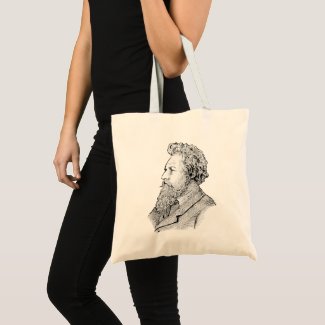
If this newsletter has left you wanting to carry a little of the Arts and Crafts world with you, our William Morris Portrait Library Tote Bag celebrates one of the movement's most influential figures. Designed for books, museum catalogues, market discoveries and everyday essentials, it makes a fitting field bag for anyone who still believes that useful things can also be beautiful.
Curator's Notes
One of the pleasures of compiling this newsletter has been seeing how often today's exhibitions lead us back to original historical sources. A Morris wallpaper displayed in a gallery can send us searching through a century-old journal for descriptions of how such patterns were manufactured, while a contemporary embroidery exhibition can revive techniques that makers were discussing generations ago. Every newly digitised newspaper, forgotten magazine or museum catalogue adds another fragment to the story, revealing not only celebrated designers but the craftsmen, teachers, workshops and local societies that surrounded them.
I find the Australian story particularly rewarding. The Arts and Crafts movement travelled remarkably well because its strongest ideas were principles rather than rules. Australian makers did not need to reproduce an English cottage garden in another hemisphere; they could work with native timbers, local plants, Australian light and a very different climate while remaining faithful to the belief that materials and craftsmanship deserved respect. Trove makes this history especially exciting because regional newspapers can still reveal exhibitions, craft societies and individual makers who have largely disappeared from conventional histories.
For me, that is where preservation becomes something more interesting than simply keeping old things safe. An archive preserves the evidence, but rediscovery gives it meaning again. Each object, newspaper notice or forgotten journal opens another path into the people who made beautiful things and the communities that valued them. There is still an enormous amount waiting to be found.
Notes & Memoranda
As is often the case, the subject extends beyond the bounds of a single article. The notes and memoranda below gather together useful definitions, related observations, references, and occasional curiosities discovered along the way.
Observation
Viewed together, this quarter's stories suggest that the Arts and Crafts movement is being remembered less as a historical decorating style and increasingly as a living set of ideas. Exhibitions are concentrating on materials, workmanship, usefulness and the people behind objects, while contemporary makers continue to explore many of the same questions. From Morris wallpapers and Emery Walker's printing world to Australian craft societies and modern ceramics, the recurring theme is remarkably consistent: how something is made, who makes it, and whether it deserves to endure still matter.
Glossary
The Arts and Crafts movement developed its own rich vocabulary of materials, techniques and traditional craftsmanship. Many of these terms are still used by furniture makers, potters, metalworkers, embroiderers and conservators today, while others have become unfamiliar outside specialist circles. This glossary introduces some of the movement's more intriguing expressions, explaining what they mean and highlighting an interesting fact that reveals why they remain part of the language of craftsmanship.
- Repoussé
-
A decorative metalworking technique in which a design is hammered from the reverse side of a sheet of metal to create a raised relief on the front. Copper repoussé became especially popular during the Arts and Crafts movement because it allowed individual makers to create richly textured decorative panels by hand.
Curious fact: Many Arts and Crafts homes featured handmade repoussé copper trays, wall plaques and fireplace accessories that proudly displayed the hammer marks left by the craftsman. - Marquetry
-
The art of creating decorative pictures or patterns by inlaying thin veneers of contrasting woods onto the surface of furniture or panels. Although marquetry predates the Arts and Crafts movement, many designers revived the technique using native timbers and restrained natural motifs.
Curious fact: Some master cabinetmakers could create landscapes and birds using nothing more than the natural colours of different timber species—without applying a single drop of paint. - Gesso
-
A smooth preparation layer made from chalk or gypsum mixed with a binder, applied to wood or canvas before painting or gilding. Gesso provides an ideal surface for decorative finishes and was widely used in Arts and Crafts furniture, picture frames and architectural decoration.
Curious fact: Traditional gesso can be polished to such a smooth finish that gold leaf appears almost mirror-like when applied over it. - Sgraffito
-
A decorative technique in which one coloured surface is scratched away to reveal a contrasting colour beneath. Potters, mural painters and architectural decorators employed sgraffito to create bold patterns and naturalistic designs without relying solely on paint.
Curious fact: The word sgraffito comes from the Italian verb meaning "to scratch," describing exactly how the decoration is produced. - Hammered Finish
-
A deliberately textured metal surface created by repeated hammer blows rather than polishing the object smooth. Arts and Crafts metalworkers celebrated this finish because it revealed the hand of the maker instead of concealing it behind perfect machine-made uniformity.
Curious fact: To an Arts and Crafts craftsman, visible hammer marks were considered evidence of quality and authenticity—not imperfections to be removed.
Frequently Asked Questions
How did the Arts and Crafts movement develop differently in Australia?
Australian designers adapted Arts and Crafts principles to local materials, plants and climate. Native timbers, Australian floral motifs and architecture suited to warmer conditions helped create a distinctive regional interpretation rather than a direct copy of British Arts and Crafts design.
Why was William Morris so influential in the Arts and Crafts movement?
William Morris helped popularise the idea that good design, skilled workmanship and respect for materials should be part of everyday life. His influence extended across textiles, wallpaper, furniture, publishing, social thought and the wider network of makers associated with the Arts and Crafts movement.
What kinds of Arts and Crafts material can be found in Trove?
Trove can reveal historical newspaper reports, advertisements, exhibition notices, craft society activities, technical school events and references to practices such as wood carving, art needlework, decorative metalwork and furniture making. Regional newspapers can be especially valuable for identifying forgotten Australian makers and local craft communities.
Is the Arts and Crafts movement still relevant to contemporary craft?
Yes. Contemporary exhibitions and craft organisations continue to explore many of the movement's central concerns, including workmanship, material honesty, usefulness, sustainability and the relationship between makers and the objects they create.
Further Reading…



References
- Art Fund — The Art of Wallpaper: Morris & Co.
- Art Fund — Useful/Beautiful
- Art Fund — Emery Walker: Both a Figure and a Person
- Art Workers’ Guild — The Art of Making 2026
- Bankstown Arts Centre — to handle / to hold
- Craft NSW — 2026 Exhibitions
- Victoria and Albert Museum — Arts and Crafts: An Introduction
- William Morris Society in the United States — Book Talk
- William Morris Society in the United States — News and Journal Archive Updates
- Craft NSW
- Trove News and Newly Digitised Collections
Disclosure
This newsletter covers announcements and activities publicly available during May, June and July 2026. Event details may change; readers should consult the linked organisations before planning a visit.