The Phillaneum Gazette 005 – Decorative Furniture Panel Special
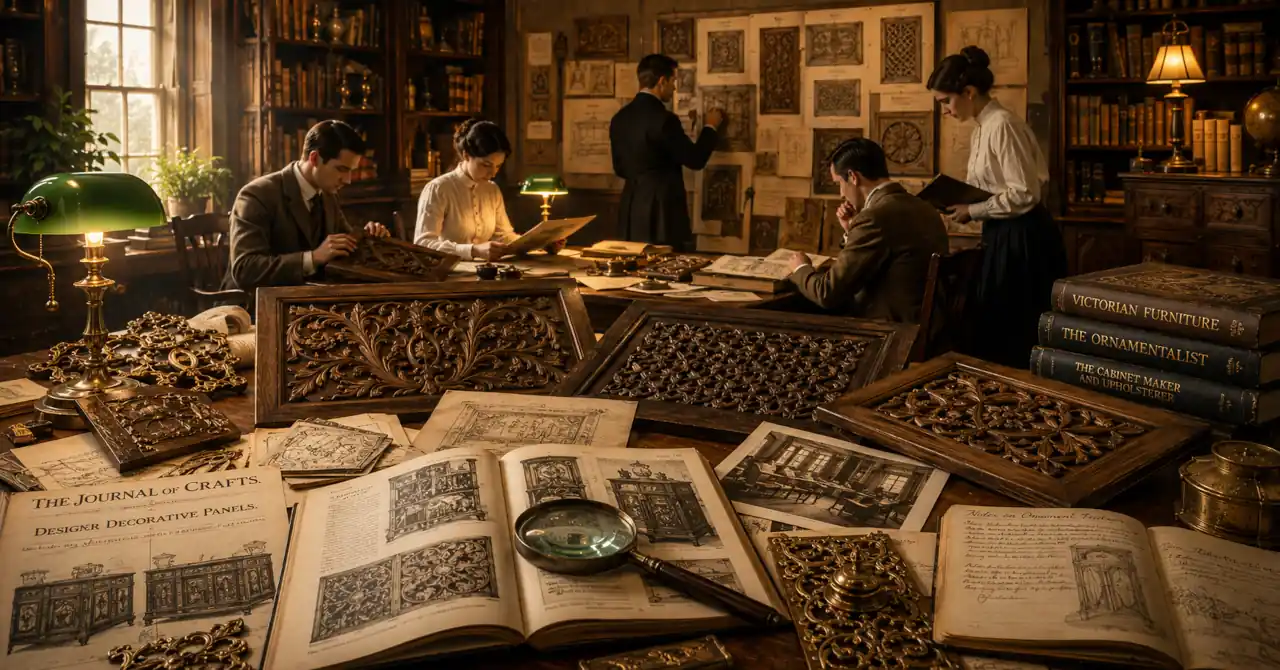
The Editor's Quill
When we began work on the Decorative Furniture Panels feature, I thought I knew where the journey would lead. Decorative panels seemed a straightforward enough subject: cabinets, sideboards, wardrobes, fretwork, carving, and perhaps a little restoration advice along the way.
Instead, the collection kept escaping its own boundaries.
The first surprise arrived during the Great Debate. I had expected a discussion about furniture. What emerged instead was an argument about modern living. Brenda Pearce and I quickly discovered that decorative panels were merely standing in for something much larger: whether modern interiors have become so focused on function that they have forgotten atmosphere, ornament, memory, and visual richness.
I confess I enjoyed the debate enormously. There is something wonderfully entertaining about discovering that an apparently innocent furniture panel is capable of starting a philosophical disagreement.
The second surprise arrived through photography. Several articles began exploring why decorative panels photograph so exceptionally well. Shadow, carving, worn timber, brass fittings, and layered surfaces seemed to create images with unusual depth and character. What started as an observation soon became a recurring theme throughout the cycle.
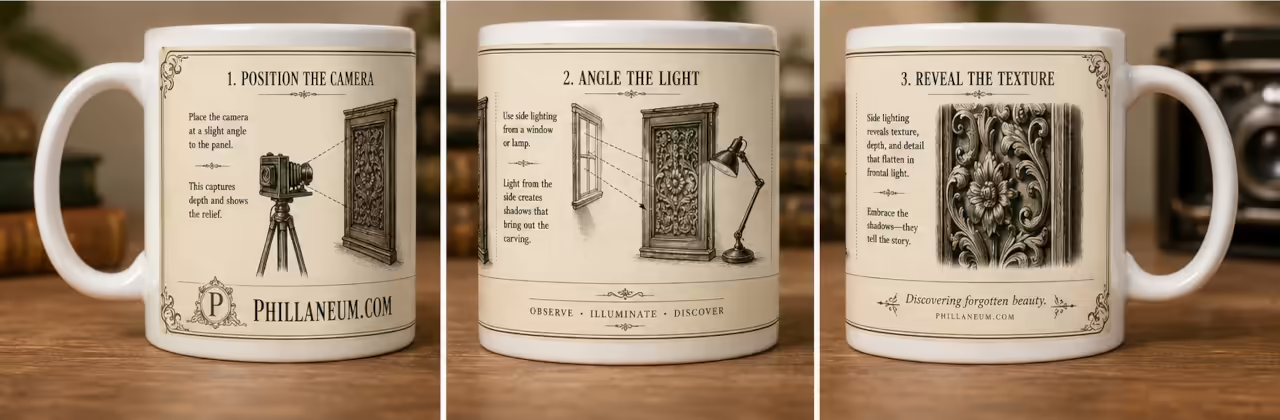
Then came one of those delightful publishing moments nobody plans. A discussion about photographing decorative furniture eventually led to the creation of a photographer's mug for the Zazzle collection. I remain rather amused that a decorative panel study managed to produce a piece of photographic merchandise.
Perhaps that has been my favourite discovery of the entire project. The best editorial investigations rarely travel in straight lines. You begin by studying decorative furniture panels and somehow end up debating the future of ornament, discussing the psychology of rooms, photographing carved cabinet doors, and designing mugs for furniture photographers.
I would not have it any other way.
From the Curator's Workshop
Inspired by this issue's exploration of photographing decorative furniture, this workshop reference mug combines practical camera and lighting guidance with the visual character of a historic instructional plate. Ideal for photographers, collectors, restorers, and readers who appreciate craftsmanship both on the page and at the desk.
New Additions to the Collection
Changes on the Estate

Marginalia
Palimpsest
- Meaning
- Something that bears visible traces of earlier forms beneath its present surface. Originally referring to a manuscript page that had been erased and written over, the term is now used more broadly for objects, places, and ideas that retain evidence of their past lives.
- When used
- Used when describing a surface, building, room, artefact, or cultural object that has accumulated layers of history rather than remaining fixed in a single state. The word is especially useful when discussing restoration, reuse, memory, and material change over time.
- Pronunciation (Australian English)
- /ˈpæl.ɪmpsest/ “PAL-imp-sest”
- In a sentence
- The restored cabinet became a palimpsest of domestic history, revealing traces of Victorian craftsmanship beneath later layers of paint and repair.
- Why use it (rather than “layered”, “historic”, or “restored”)
-
- Palimpsest conveys the coexistence of multiple histories within a single object or place.
- Layered describes structure but not necessarily historical continuity.
- Historic indicates age but says little about accumulated change.
- Restored focuses on intervention rather than the surviving evidence of previous lives.
- Phillaneum note
- Decorative furniture panels are often palimpsests. Beneath polish, repairs, scratches, fading finishes, and changing fashions remain traces of earlier owners, forgotten interiors, and vanished decorative traditions. To study such objects is not merely to examine furniture, but to read the overlapping records of domestic life preserved upon their surfaces.
Curiosities from Abroad
These selections extend the present investigation beyond the pages of the Gazette, offering studies, collections, and reflections that illuminate the wider world of ornament, craftsmanship, and decorative culture. Each has been chosen for its ability to reveal how decorative objects acquire meaning through materials, design traditions, historical context, and cultural memory. Taken together, they demonstrate that decorative furniture panels belong to a much larger conversation about how people shape their surroundings and express identity through the built environment. The reader is invited to treat them as further rooms within the same house of inquiry.
- V&A – Make Good: Rethinking Material Futures Symposium 2025 – A thoughtful exploration of materials, sustainability, and contemporary making, demonstrating how questions of craft and material culture remain as relevant today as they were to earlier decorative traditions.
- The Metropolitan Museum of Art – Art Nouveau – An excellent introduction to one of the most influential decorative movements of the modern era, illustrating how ornament, nature, and craftsmanship combined to create a distinctive visual language.
- National Gallery of Victoria – Making Sense of Nonsense – A fascinating study of decorative pseudo-script and visual symbolism, revealing how ornament can communicate atmosphere and meaning even when its literal content remains unreadable.
- The Online Books Page – Arts and Decoration Archive – A gateway to historic issues of Arts and Decoration, offering readers direct access to the decorative ideas, interiors, furnishings, and aesthetic discussions that shaped an earlier age.
Numerical Curiosities
57 ◆ 16 ◆ 83 ◆ 78 ◆ 41
Selected from the seed of this issue. Determined by rule, not by omen.
Recreations
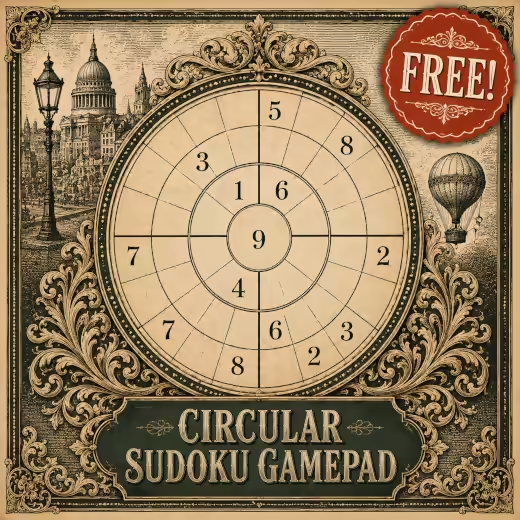
(free download, no registration required)
This month's recreation is a Circular Sudoku Gamepad. Download and print a copy for a quiet diversion of logic and deduction.
Parlour Music
To close this issue in the proper spirit, we offer a little parlour music: Chloe-E (Through the Mist), a contemporary interpretation inspired by the atmosphere of the 1927 standard Chloë. Its misty, old-room mood felt at home among carved panels, secret libraries, and decorative memories.
The Maker's Ledger
A few notes from the workshop: what's been fixed, improved, or learned on the road to keeping this site fast, useful, and brimming with curiosities.
- The Great Debate Arrives at Phillaneum
-
This issue introduces a new editorial experiment: The Great Debate. While Phillaneum has always explored ideas through articles, the debate format allows several voices to examine the same subject from different directions. What began as a discussion about decorative furniture panels soon expanded into a wider conversation about ornament, atmosphere, memory, and the changing character of modern interiors.
The format proved both enjoyable and unexpectedly insightful. Future debates will almost certainly find their way into other corners of the Cabinet.
- Opening the Cabinet Shop
-
This issue also marks the beginning of a small experiment beyond the editorial pages. Phillaneum has opened a Zazzle storefront featuring publication-inspired merchandise, decorative studies, atmospheric imagery, and designs that emerged from various investigations throughout the Cabinet.
The collection remains modest and exploratory, but readers are warmly invited to browse the shelves. Not every curiosity wishes to remain on the page.