Strange Decorative Furniture Details Buyers Now Obsess Over
·Revised
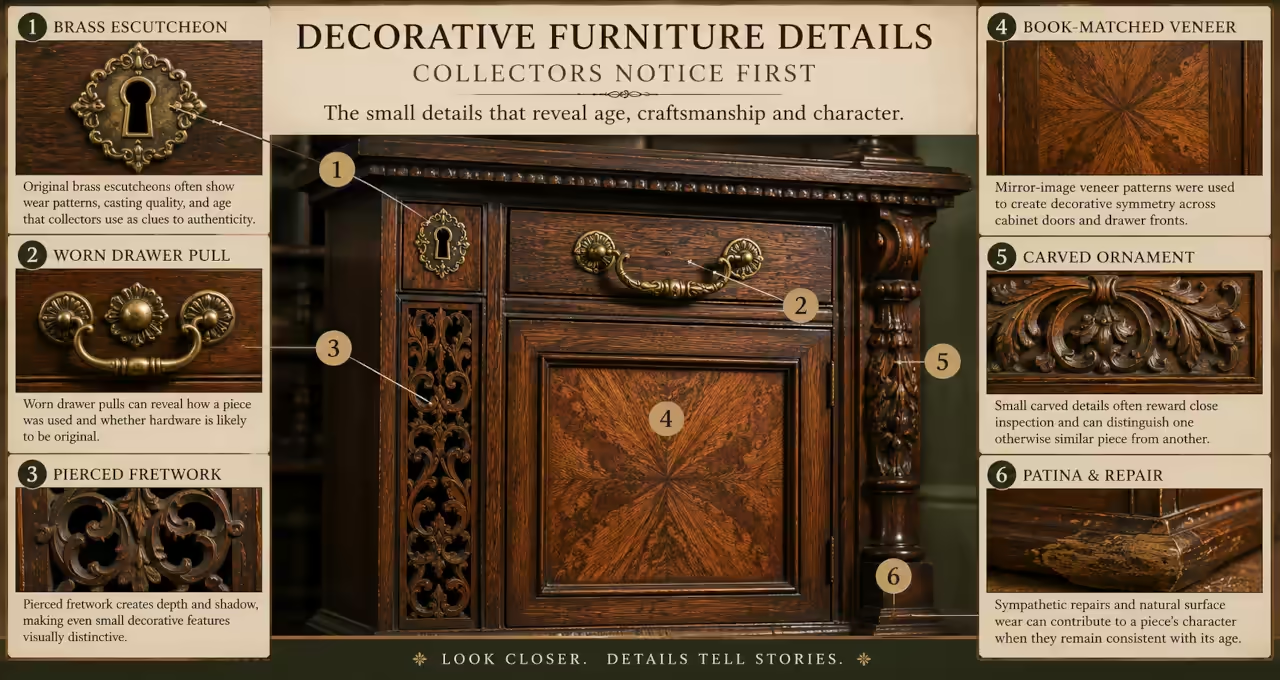
Before looking at individual examples, it helps to know the decorative details collectors often notice first. The visual guide above highlights six features that frequently attract attention in antique furniture listings, restoration projects, and decorative collections.
Why Small Details Matter
In a market still crowded with plain fronts and smooth modern finishes, many antique furniture buyers are becoming more interested in the small decorative details that make older pieces feel individual. A cabinet may first catch the eye because of its shape, but it is often the carved corner, the brass escutcheon, the unusual veneer, or the worn drawer pull that makes someone look twice.
These details are not always grand. Sometimes they are almost hidden: a pierced bracket beneath a shelf, a small floral carving beside a drawer, an embossed metal insert, or a veneer pattern that shifts when the light changes. For collectors, these minor irregularities often create more attachment than perfect condition. They suggest handwork, use, repair, and the layered life of the object.
Where Buyers Start Looking
Experienced buyers rarely look only at the front of a piece. They open drawers, check the backs of handles, run their eyes along moulded edges, and study whether decoration has been applied, carved, pressed, or cut through. The first question is not simply, “Is this beautiful?” It is also, “What has survived?”
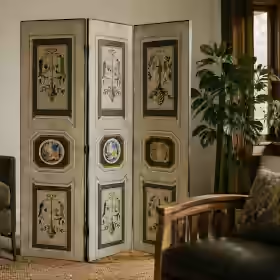
That is why decorative panels matter so much. A plain cabinet door may disappear into a room, but a carved or veneered panel gives the eye somewhere to rest. In 5 Decorative Furniture Panel Styles for Vintage Homes, the broader panel forms are introduced as part of Victorian and Edwardian domestic warmth. Here, the focus narrows to the details buyers notice once they are already close to the object.
The Small Details That Create Obsession
Collectors often pause over features that would be easy to miss in a quick listing photograph. A fretwork corner may cast a shadow. A brass handle may have lost its shine only where generations of hands touched it. A book-matched veneer may no longer align perfectly after age, movement, or repair. These are the details that give a piece its particular character.
Look especially for:
- pierced fretwork corners or brackets
- unusual brass handles, locks, or escutcheons
- small carved floral or leaf motifs
- embossed metal or pressed decorative inserts
- book-matched or unusually figured veneer
- drawer interiors with unexpected finishing
- old repairs that reveal continued use rather than neglect
None of these features needs to be perfect. In fact, excessive perfection can sometimes flatten the appeal. A slightly uneven carving, softened edge, or worn handle may be more interesting than a flawless reproduction because it shows where the object has been handled, moved, repaired, and kept.
Arts and Crafts Influence in the Details
The Arts and Crafts influence is especially visible in furniture where construction and decoration still appear closely connected. Carving, joinery, timber selection, and surface finish were not always treated as separate matters. A sideboard, cabinet, or dresser could use ornament to make the structure feel more human, more tactile, and more suitable for domestic life.
This is where the collector's curiosity becomes valuable. Do not only ask whether a piece belongs to a named style. Ask how its detail works. Does the carving follow the timber grain? Does the brasswork suit the weight of the cabinet? Does the panel sit proudly, or has it been made to disappear into the frame? These observations often tell us more than a broad label.
Why Old Luxury Was Often in the Detail
Before modern consumer culture turned luxury into branding, older ideas of taste were often expressed through reading habits, social display, material knowledge, and domestic refinement. The same world explored in How the Vintage Elite Defined Luxury and Taste helps explain why small furniture details still carry such force. A carved panel, a better handle, or a more carefully chosen veneer could signal judgement rather than mere expense.
That does not mean every decorated piece was elite. Many ordinary homes contained modest furniture with thoughtful touches. But even modest ornament could suggest care. A little carved flourish on a dresser, a decorative panel on a cabinet door, or a shaped bracket beneath a shelf gave everyday rooms a sense of intention.
Authenticity, Wear, and the Buyer’s Imagination
The appeal of these details is partly visual and partly psychological. Buyers often respond to objects that still show evidence of life. Scuffs, softened corners, repaired edges, dulled brass, and faded polish can all contribute to a sense of authenticity when they belong naturally to the piece.
The danger is to romanticise damage for its own sake. Not every crack is charming. Not every repair is good. But when wear supports the character of the object rather than overwhelming it, the result can be deeply attractive. The detail becomes a record of use, not merely a flaw.
What to Notice Before You Buy
When examining decorative furniture, start with the features most likely to distinguish one piece from another. Look at the handles before the overall silhouette. Check whether the panels have depth or are simply flat decoration. Study the corners, feet, drawer fronts, and door edges. These are often the places where craftsmanship, economy, later repair, and decorative ambition meet.
A buyer may forget the exact dimensions of a cabinet, but remember the brass pull that had worn smooth at the centre. They may forget the listing title, but remember the little carved flower beside the drawer. This is why strange decorative details matter. They make furniture memorable.
Closing Observation
The best decorative details do not shout. They reward looking. A pierced corner, a worn escutcheon, a lively veneer, or an unexpected carving can turn an ordinary antique-shop discovery into the piece a buyer keeps thinking about after leaving. In that moment, decorative furniture becomes more than storage or display. It becomes an object with surface, memory, and presence.
Market Snapshot
While researching decorative furniture details for this article, I spent time browsing eBay listings for antique brass escutcheons, drawer pulls, cabinet hardware, and carved decorative fragments. The market remains surprisingly accessible for collectors interested in decorative detail rather than complete furniture. Individual brass escutcheons and keyhole surrounds commonly appear in the AU$5–25 range, while more ornate Victorian examples, matched pairs, and unusual cast brass pieces often sell between AU$30–100. Decorative drawer pulls, carved timber appliqués, fretwork fragments, and restoration components appear regularly, making eBay an excellent source of inspiration for collectors, restorers, and decorative enthusiasts.

One of the pleasures of browsing this category is the variety. A single search can reveal everything from tiny brass lock plates and floral drawer pulls to richly carved cabinet fragments, fretwork panels, veneer-fronted drawers, and complete furniture sections removed from damaged pieces. Many items are sold as salvage rather than finished antiques, which can make decorative details surprisingly affordable.
The good news is that originality still matters. Listings showing genuine wear, aged brass patina, old screws, and period construction details often provide clues about authenticity. Close-up photographs can reveal casting quality, hand-finishing marks, and the subtle irregularities that collectors appreciate.
However, buyers should watch carefully for modern reproductions, heavily polished hardware, replacement castings, and decorative pieces sold without dimensions. Many listings photograph items attractively but provide little scale reference. It is also worth checking whether fittings are complete, whether mounting hardware is included, and whether matching pairs are actually identical.
For readers inspired by the details discussed in this article, search terms such as Victorian brass escutcheon, ornate drawer pull, pierced fretwork, book-matched veneer, and antique furniture hardware can quickly open a fascinating world of decorative discovery. Sometimes the most memorable find is not an entire cabinet at all, but a single decorative detail waiting to be noticed.
Author's Notes
I have always enjoyed the slow looking that happens in old furniture listings. An auction page can seem ordinary at first: a cabinet front, a sideboard, a tired little dresser photographed in difficult light. Then, after a second or third look, one small detail begins to take hold.
It may be a brass handle worn smooth in the centre, a carved corner just visible beneath shadow, or a veneer pattern that looks far more interesting in the close-up photograph than it did in the main image. These are the details that make me pause. They are not always the grandest features, but they are often the ones I remember.
That is one of the pleasures of browsing eBay auctions and antique listings. You learn to look slowly. You begin to notice where a drawer has been repaired, where a panel has darkened with age, where a decorative fitting seems original rather than replaced. A listing becomes less like a sales page and more like a small visual investigation.
This article came from that habit of looking closely. Decorative furniture often rewards patience. The strange little details are not incidental. They are where character gathers.
Notes & Memoranda
The following notes and memoranda collect supplementary observations, references, and discoveries related to this topic.
Glossary
- Escutcheon
- In this article, an escutcheon refers to the decorative metal plate surrounding a keyhole or lock. Antique buyers often notice original escutcheons because they can reveal age, craftsmanship, and signs of long-term use.
- Pierced Fretwork
- Pierced fretwork is decorative woodwork created by cutting patterns completely through a panel or bracket. The resulting shadows and visual depth make these details especially attractive to collectors and photographers.
- Book-Matched Veneer
- Book-matched veneer is created by placing consecutive veneer sheets side by side as mirror images. This technique produces symmetrical grain patterns often found on decorative cabinet doors, drawer fronts, and furniture panels.
- Patina
- Patina describes the surface changes that develop naturally through age, handling, and exposure. In antique furniture, patina may appear as softened timber, dulled brass, faded polish, or subtle colour variation that contributes to a sense of authenticity.
- Embossed Insert
- An embossed insert is a decorative element featuring raised ornament or pressed patterns, often made from metal, leather, or composite materials. These inserts add texture and visual interest to furniture surfaces.
- Decorative Veneer
- Decorative veneer refers to a thin layer of highly figured timber applied to a furniture surface. Unusual grain patterns, burl formations, and contrasting timber species were often used to create visual richness without extensive carving.
- Original Hardware
- Original hardware includes handles, locks, hinges, escutcheons, and fittings that remain with a piece from its period of manufacture. Collectors frequently value original hardware because it preserves the furniture's decorative and historical integrity.
- Sympathetic Repair
- A sympathetic repair is a restoration carried out in a manner that respects the age, materials, and appearance of the original furniture. Such repairs aim to preserve character rather than erase evidence of use.
- Drawer Interior
- The drawer interior refers to the hidden construction surfaces inside a drawer. Collectors often inspect these areas because they can reveal joinery methods, timber quality, age, and evidence of restoration work.
- Decorative Panel
- A decorative panel is an ornamental surface integrated into furniture such as cabinets, dressers, wardrobes, and sideboards. Panels may feature carving, fretwork, veneer, embossing, or other decorative treatments that contribute visual texture and character.
Frequently asked questions
What decorative furniture details do antique buyers notice first?
Antique buyers often notice small details such as worn brass handles, keyhole escutcheons, carved corners, pierced fretwork, unusual veneer patterns, embossed inserts, and evidence of careful repair.
Why do small decorative details matter in antique furniture?
Small decorative details help distinguish one piece from another. They reveal craftsmanship, age, use, repair, and decorative intent, often making a cabinet, dresser, or sideboard more memorable than its overall shape alone.
Are worn brass handles and old repairs a bad sign?
Not always. Natural wear, softened edges, dulled brass, and sympathetic repairs can add character when they suit the age and use of the furniture. Serious structural damage or poor replacement work should still be examined carefully.
What should I look for in close-up antique furniture photos?
Look for carving depth, veneer matching, handle wear, keyhole plates, drawer interiors, corner brackets, panel edges, and signs of original hardware. These details can reveal whether a piece has decorative character beyond its basic form.
Why are decorative furniture panels popular with collectors?
Decorative furniture panels appeal to collectors because they add texture, shadow, ornament, and individuality. Carved, veneered, pierced, or embossed panels often give older furniture a stronger sense of craft and presence.
Mentions & Echoes
- Pierced Fretwork Panels Collectors Rarely Ignore Today - Fretwork connects with the wider collector fascination for decorative furniture details.
Further Reading…
Disclosure
This article explores decorative furniture panel styles commonly associated with Victorian and Edwardian interiors, including carved oak, fretwork, embossed ornament, inlaid surfaces, and decorative veneers. The feature is presented in the curatorial style of Phillaneum.com and combines decorative commentary, historical interpretation, and atmosphere-focused interior observations. It is intended as an introductory editorial guide rather than a formal restoration manual, valuation guide, or conservation reference.