Why Decorative Ornament Became Socially Unfashionable
The Decline of Decorative Ornament: A Cultural Journey
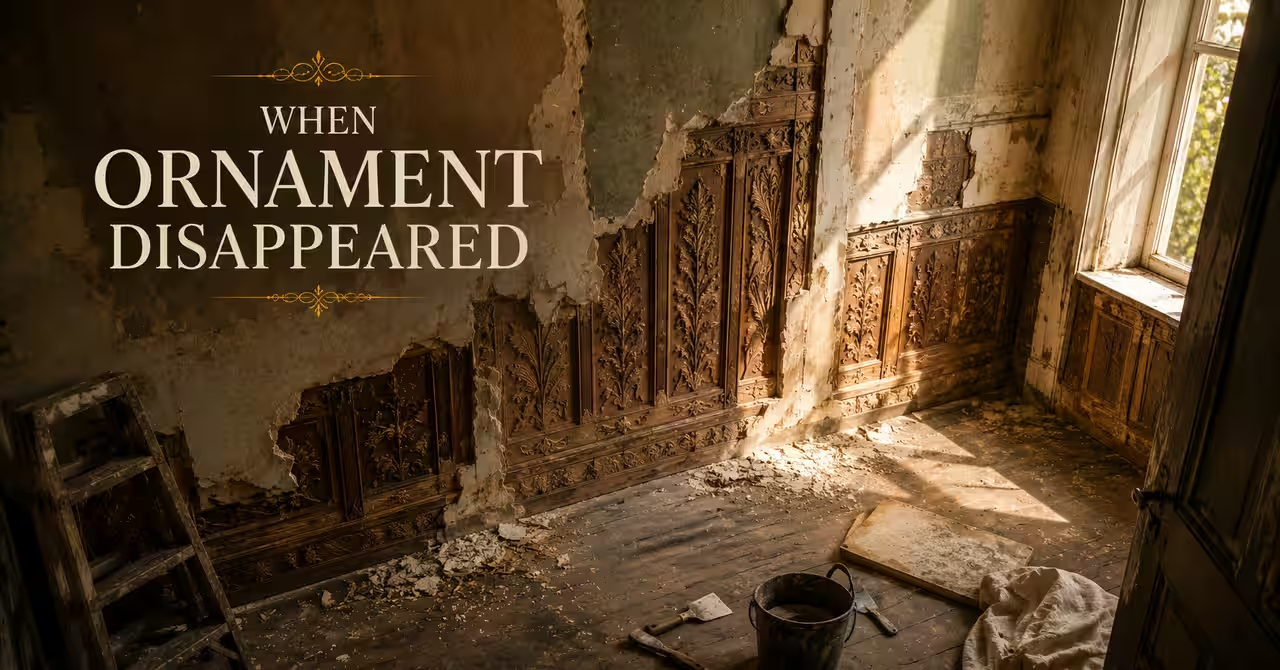
In the subdued light of an old house's hallway, layers of dust settle on elegantly carved furniture, remnants of a bygone era evoking tales of class and craftsmanship. The evolution of decorative ornamentation in furniture reflects our shifting social and cultural landscapes. As we traverse the twentieth century, we observe a profound transition, from the bold embellishments of the Victorian period to the austere minimalism that now dominates interior design. This story goes beyond mere shifts in taste; it intertwines with economic realities and the ideals of modernism.
Victorian Elegance and Craftsmanship
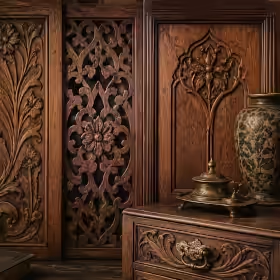
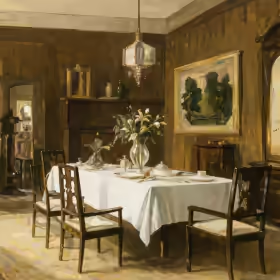
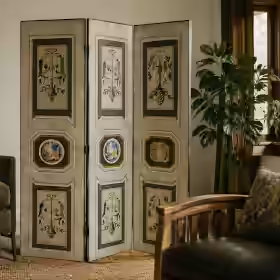
The Victorian era marked an explosion of decorative artistry. Each piece of furniture, whether a sideboard or a chair, became a canvas for artisans eager to display their skills. Ornate panels adorned with intricate carvings and vibrant motifs transformed parlours and reading rooms, embodying a decorative confidence steeped in warmth. The scent of polished wood mingled with flickering candlelight, creating spaces that felt alive with narrative.
Yet, as the Industrial Revolution advanced, the mechanization of labor introduced a new ethos: utility over flourish. This transition diminished the relevance of lavish ornamentation, as modernism emerged, advocating for a new aesthetic. Clean lines and efficient design took precedence over decorative excess, reshaping our understanding of good taste. By the mid-twentieth century, cultural dynamics had shifted, paving the way for minimalism, which viewed ornamentation as an unnecessary echo of a chaotic past.
Ornament as Nostalgia
This decline invites reflection on the emotional context surrounding minimalism. Public spaces, stripped of visual distractions, became frames for personal expressions rather than collective sentiments. Within this shift, decorative panels transitioned from vibrant expressions of domestic pride to mere relics, cherished by collectors for their craftsmanship. These objects became artifacts that rebelled against an age celebrating simplicity over character.
As collectors gather remnants of the past, their affection reveals a connection not just to artistry but to the narratives embedded in each object. The wear of time on furniture surfaces, the subtle patina of polished wood, and the delicate traces of handprints in carved recesses all evoke the lives that unfolded around them. Every detail of joinery speaks to a connection with home, contrasting the warmth of human experience with the coldness of minimalism.
The Emotional Disconnect of Minimalism
The stark aesthetics of minimalism, though liberating from clutter and ornate detail, introduce a disconnection from the emotional warmth that decorative elements once provided. Open spaces, devoid of narrative-rich items, can feel sterile, sacrificing character at the altar of utility. What was once a tapestry of textures, like luxurious velvet or the glimmer of brass fixtures, transforms into flat surfaces lacking vibrancy.
In reflecting on this shift, we must consider what it reveals about our values. While functionality promotes efficiency, it often leads to a loss of intimacy in our environments. When decorative panels, once potent symbols of taste and individuality, became mere echoes of nostalgia, they mirrored our culture's lean toward anonymity. The stories of families intertwined with these furnishings, their decorative richness, began to fade from our interiors, leaving behind features that fulfill practical functions alone.
Reclaiming the Narrative of Ornamentation
In this exploration, we must recognize how our interiors reflect broader social trends. The transformation of ornamentation from a status symbol to a niche identifier testifies to our collective values. While minimalism offers clarity and simplicity, we must ponder what has been sacrificed, how much warmth and storytelling has been lost in the name of modernity?
Today, as authenticity rises in value, we witness a gentle resurgence of interest in decorative elements. Collectors and enthusiasts are drawn to ornate treasures, whether it’s the graceful lines of a well-crafted cabinet or the intricate details of a decorative panel. We rediscover not just craftsmanship but emotional connections to history. These objects serve as reminders of the past, helping us piece together lost narratives that enrich our domestic landscapes.
Continuing the Journey of Decorative Panels
The journey through the decline of decorative ornamentation opens avenues for thoughtful exploration. Reflecting on our choices in contemporary and historical contexts invites deeper investigation into the stories surrounding these rich objects. Understanding how decorative panels once symbolized good taste and how they now embody nostalgia reveals layers of meaning worth uncovering. Here are related themes to expand this conversation:
- The Decorative Furniture Style That Sci-Fi Forgot Entirely
- Why Decorative Panels Once Signalled Good Taste
- The Emotional Warmth of Ornamented Victorian Homes
As we navigate our curated spaces, whether filled with remembered ornamentation or minimal lines, we hold the power to shape our narratives. Each piece, with its unique history and emotional weight, invites us to contemplate the significance we assign to beauty and craftsmanship. Will we allow the gentle echoes of ornament to resurface in our lives, or will we let them rest as cherished curiosities in the corners of our memories?
Browse surviving decorative panels, carved cabinets, and vintage room dividers currently circulating through the collector market.
Author's Notes
Notes & Memoranda
As is often the case, the subject extends beyond the bounds of a single article. The notes and memoranda below gather together useful definitions, related observations, references, and occasional curiosities discovered along the way.
Further Reading…

Disclosure
This article explores decorative furniture panel styles commonly associated with Victorian and Edwardian interiors, including carved oak, fretwork, embossed ornament, inlaid surfaces, and decorative veneers. The feature is presented in the curatorial style of Phillaneum.com and combines decorative commentary, historical interpretation, and atmosphere-focused interior observations. It is intended as an introductory editorial guide rather than a formal restoration manual, valuation guide, or conservation reference.