Why Decorative Panels Once Signalled Good Taste
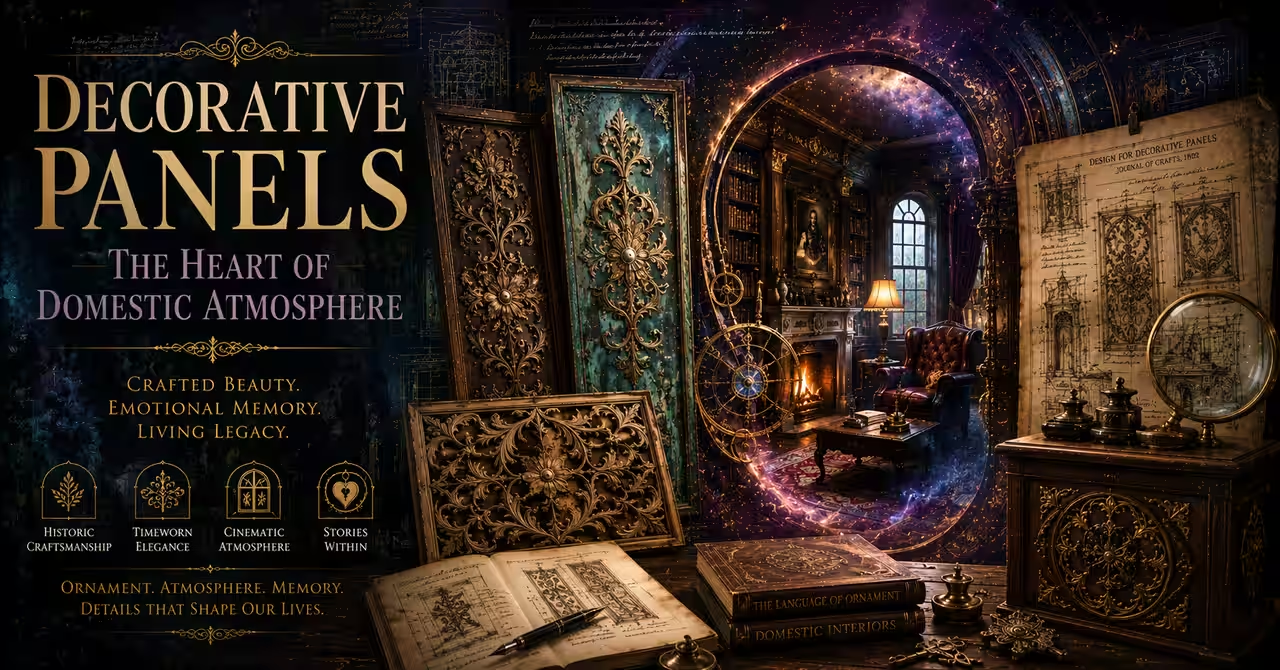
The Silent Language of Decorative Panels
In the quiet corners of Victorian parlours and the sunlit alcoves of Edwardian reading rooms, decorative panels became more than embellishments; they evolved into a rich language woven into the fabric of domestic life. Crafted from fine timber and adorned with intricate carvings, these panels not only signified a refinement of taste but also served as a testament to personal aspirations. Each surface bore the marks of human touch, where polished veneers captured light, reflecting stories of social ambition and familial warmth.
Symbols of Quality and Care
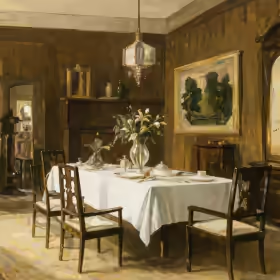
Understanding the significance of decorative panels requires a look at their historical context. During the Victorian and Edwardian eras, a flourishing middle class transformed homes from simple living quarters into curated exhibits of character. Panels set into dressers, cabinets, and dining tables provided visual punctuation in the symphony of domestic life. Their detailed woodwork caught light in ways that illuminated the beauty of dust particles, each glimmer a reminder of time’s passage among lovingly curated pieces.
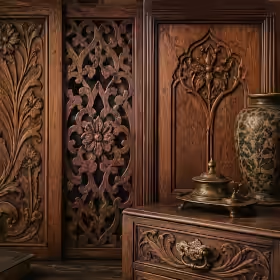
Consider the elegance of a cabinet embellished with floral motifs, its botanical carvings beautifully contrasting with the smooth, lacquered surfaces. Or think of the meticulously crafted panel framing an Edwardian hallway, where every curve and edge celebrates fine craftsmanship. These artworks expressed an ethos captivated by home and hospitality. It wasn’t merely about possessing fine objects; it was also about inviting others into a carefully created world that spoke of attentiveness and refinement, fostering connections among family and friends.
The Emotional Intelligence of Spaces
Each decorative panel transformed domestic spaces into emotional landscapes, inviting reflection and cultivating an atmosphere rich with intimacy. Imagine entering a reading room where a finely carved panel frames a flickering fire. The warm glow beckons, evoking the joy of evenings lost in literary worlds or shared quiet thoughts. Such spaces become sanctuaries imbued with stories and connections, shaped by every line and curve of those ornamental designs.
The nuances found in these panels invite curiosity, reminding us that spaces reflect not just our possessions, but our experiences. In contrast to the starkness of contemporary minimalism, these ornamented surfaces carry emotional weight, layering sentiment often overlooked. Can a bare room evoke the same feelings as one graced with the tactile warmth of decorative panels? The answer highlights what these pieces convey: stories, aspirations, and the shared simplicity of life.
Evolving Perspectives on Ornament
With the dawn of the twentieth century, perceptions of ornamentation began to shift dramatically. The rise of modernism challenged traditional aesthetics, suggesting that stripped surfaces represented progress and functionality. In this context, once-coveted ornamental pieces were often viewed as quaint relics, fading into the background as tastes evolved.
Yet, even amid this minimalist wave, decorative panels retained their allure, etched into the histories of homes altered and preserved. The traces left by restorations told stories of lives that once thrummed with vibrancy. A chipped edge or dulled polish revealed the diligent hands of artisans and the families who inhabited those spaces, each mark a testament to time's passage and the communal narratives crafted within these walls.
Cultural Reverberations in Modern Spaces
Today, a renewed interest in heritage craftsmanship is ushering in a gentle renaissance for decorative panels. More individuals are undertaking restoration projects, imbuing their homes with nostalgia and a desire to forge emotional connections within their spaces. This revival highlights the significance of storytelling and collective memory in curating modern interiors.
By selecting pieces that resonate with personal histories and familial lore, individuals breathe life into these once-slumbering artifacts, allowing them to speak anew. The intricacy of decorative panels mirrors the complexities of relationships cultivated in those environments, showcasing how culture interlaces with craftsmanship to create beauty and emotional depth.
Reflecting on the Craft of Life
At their core, decorative panels embody human experience, aspirations, and emotions that span generations. As we delve deeper into our environments, curating our homes with intention, let us pay attention to the quiet stories articulated through finely carved edges and rich patinas. In celebrating these adornments, we open a doorway to a richer understanding of ourselves and the shared experiences we cherish.
For those intrigued by the emotional resonance found within these crafted forms, further explorations await, including The Emotional Warmth of Ornamented Victorian Homes and the impact of panels within Theatre of Domestic Life. You may also wish to delve into our archive on Designer Decorative Panels (1902), which provides valuable insights into the artistry and significance of these captivating elements. As we reflect on these connections, let us honor the legacy of decorative panels and their enduring influence on the spaces we inhabit.
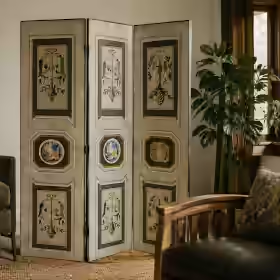
Browse surviving decorative panels, carved cabinets, and vintage room dividers currently circulating through the collector market.
Author's Notes
Notes & Memoranda
As is often the case, the subject extends beyond the bounds of a single article. The notes and memoranda below gather together useful definitions, related observations, references, and occasional curiosities discovered along the way.
Further Reading…

Disclosure
This article explores decorative furniture panel styles commonly associated with Victorian and Edwardian interiors, including carved oak, fretwork, embossed ornament, inlaid surfaces, and decorative veneers. The feature is presented in the curatorial style of Phillaneum.com and combines decorative commentary, historical interpretation, and atmosphere-focused interior observations. It is intended as an introductory editorial guide rather than a formal restoration manual, valuation guide, or conservation reference.