The Decorative Furniture Style That Sci-Fi Forgot Entirely
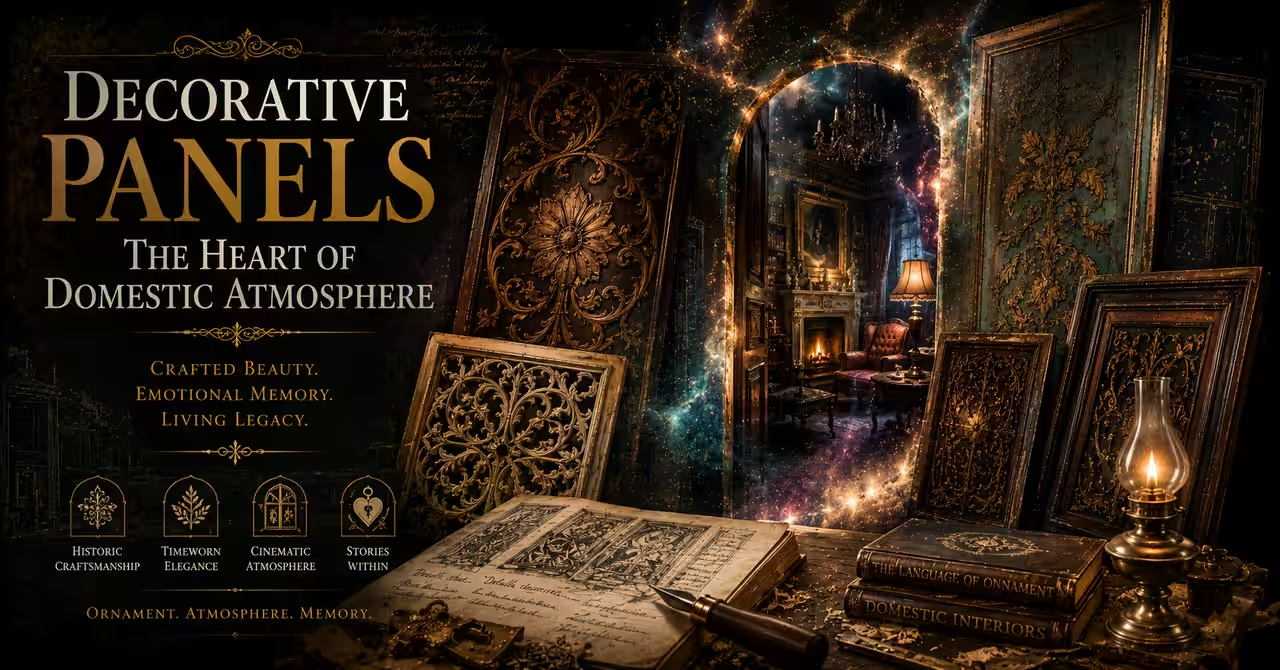
Decorative Furniture Style: What Sci-Fi Left Behind
In the nostalgic corners of our memories lies a world rich with ornamentation, where every carved surface and polished edge tells a story. Yet, this vibrant tapestry of decorative furniture often contrasts sharply with the cold minimalism found in contemporary science fiction interiors. Here, sleek lines and sterile aesthetics prevail, seemingly erasing humanity's warmth and craftsmanship from our imagined futures.
The Allure of Decorative Panels
Reflecting on the absence of decorative flourishes in fictional narratives, we’re drawn to the Victorian era's intricate carvings and rich veneers that defined home spaces. This past offered a vibrant dialogue with ornamentation, celebrating individuality and connection. In contrast, sci-fi settings often embrace an austere design, immersing us in stark environments that lack emotional resonance.
This artistic retreat prompts us to ponder: why has ornamentation become so alienated in our vision of the future? Is it a collective yearning for efficiency that has sidelined the artistry of decorative details? Or is it a cultural shift toward prioritizing functionality over beauty? As we explore these questions, we find glimpses of nostalgia within the retrofuturism movement, where designers attempt to reintroduce lost elements into modern contexts.
Craftsmanship and Material Richness
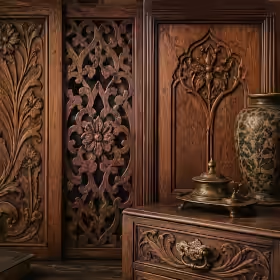
Imagine stepping into a room where shadows dance across elaborately carved wooden panels, revealing histories etched in time. Each curve of a dresser carries the weight of personal stories, with soft patinas whispering of laughter, solitude, and shared moments. These surfaces invite engagement, encouraging us to feel the life that courses through them.
In contrast, the sharp lines and austere finishes of modern interpretations often leave us as mere observers in a sterile environment. They don’t beckon our touch or curiosity, underscoring an emotional disconnect. As we traverse these imagined spaces, we notice the lack of warmth in sleek surfaces devoid of character. Well-worn furniture, marked by charm and aging, speaks volumes about the lives they’ve touched.
Interpreting Cultural Shifts
Historically, design reflects cultural identity, shaped by the values and aspirations of its time. The post-war era, characterized by a quest for efficiency, birthed an aesthetic focused on minimalism. Within this world, the vibrant complexity of ornamentation seems at odds with the doctrines of pure form and function. Yet, such starkness raises crucial questions about the future we envision. Does the absence of ornament signify progress or a cultural stagnation?
Imagining a world devoid of decorative identity is akin to picturing a place devoid of stories and emotions woven into architecture. The joyful complexity of life contrasts sharply with the unembellished designs that dominate sci-fi narratives. Interestingly, our exploration of the past may help ground us in a future rich with emotional and sensory depth.
A New Role for Salvaged Pieces
Today, as society shows renewed interest in salvaged furniture, we witness intricately carved pieces from bygone eras finding new life in contemporary spaces. These relics, embodying history, create dialogues between past and present, infusing warmth into modern settings. Incorporating these decorative elements transcends mere aesthetics; it’s about restoring connections and inviting stories back into our homes.
In rooms where each piece exudes individuality, from the carved edges of a sideboard to the rich texture of a cabinet, an inviting atmosphere emerges. The interplay of light against aged surfaces fosters an intimacy often missing in bare, minimalist interiors. Our human experience is encapsulated within these moments, where texture, color, and craftsmanship coalesce into a rich narrative.
Reclaiming the Domestic Atmosphere
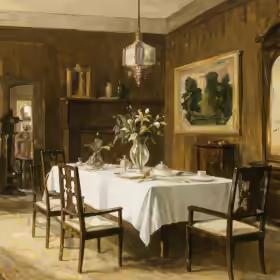
Spaces adorned with decorative elements offer a sanctuary where creativity, warmth, and personal stories thrive. They provide more than shelter; they serve as a theatre of domestic life, where every detail contributes to an overarching narrative. Picture entering a reading room graced with finely crafted bookcases, each shelf filled with well-thumbed volumes, the smooth finish of the furniture a testament to craftsmanship and care.
The memories of shared conversations and quiet evenings weave into the very fabric of these environments. Each decorative flourish, be it the hand-carved trim on a cabinet or the softly worn upholstery, enhances our well-being, fostering connection. These details remind us that even amidst technological advancement, our built environments must resonate with our human experience.
The Future We Can Envision
As we navigate the spectrum of decorative identity, the need to reconcile the past with the future becomes increasingly clear. Embracing ornamentation within modern design does not indicate a regression but rather a thoughtful understanding of what makes us human. By celebrating complex aesthetics, we can craft environments that reflect both our history and aspirations.
This balanced approach allows us to imagine a world where intricately carved doors meet innovative technology, where the warmth of yesterday’s craftsmanship harmonizes with modern materials. Bringing decoration back into our lives means reclaiming the vibrancy of our collective spirit.
Conclusion: The Narrative of Our Spaces
As we look towards a future filled with possibilities, we must recognize the value of ornament in shaping our environments. Let us envision spaces where the warmth of craftsmanship, the allure of textured surfaces, and the narrative quality of decorative elements thrive alongside modernity. It is within this rich interplay that we can create a future, one that is not merely functional but deeply resonant with our shared human experience.
By integrating the virtues of Victorian ornamentation with contemporary design, we craft spaces that reflect not only who we are but also who we aspire to be. This vision honors the vibrant complexity of life and serves as a reminder that the beauty of our environments begins and ends with the stories they tell.
To delve deeper into the fascinating interplay of decorative elements in our lives, explore how decorative furniture panels feel cinematic today, or consider why decorative salvage feels more authentic than modern decor. Additionally, reflect on how our environments shape our identities through the theatre of domestic life.
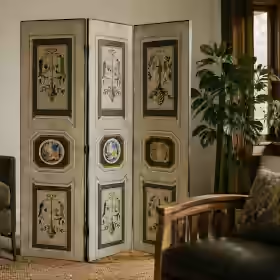
Browse surviving decorative panels, carved cabinets, and vintage room dividers currently circulating through the collector market.
Author's Notes
Notes & Memoranda
As is often the case, the subject extends beyond the bounds of a single article. The notes and memoranda below gather together useful definitions, related observations, references, and occasional curiosities discovered along the way.
Further Reading…

Disclosure
This article explores decorative furniture panel styles commonly associated with Victorian and Edwardian interiors, including carved oak, fretwork, embossed ornament, inlaid surfaces, and decorative veneers. The feature is presented in the curatorial style of Phillaneum.com and combines decorative commentary, historical interpretation, and atmosphere-focused interior observations. It is intended as an introductory editorial guide rather than a formal restoration manual, valuation guide, or conservation reference.