Vintage Ads Are Just Collectibles
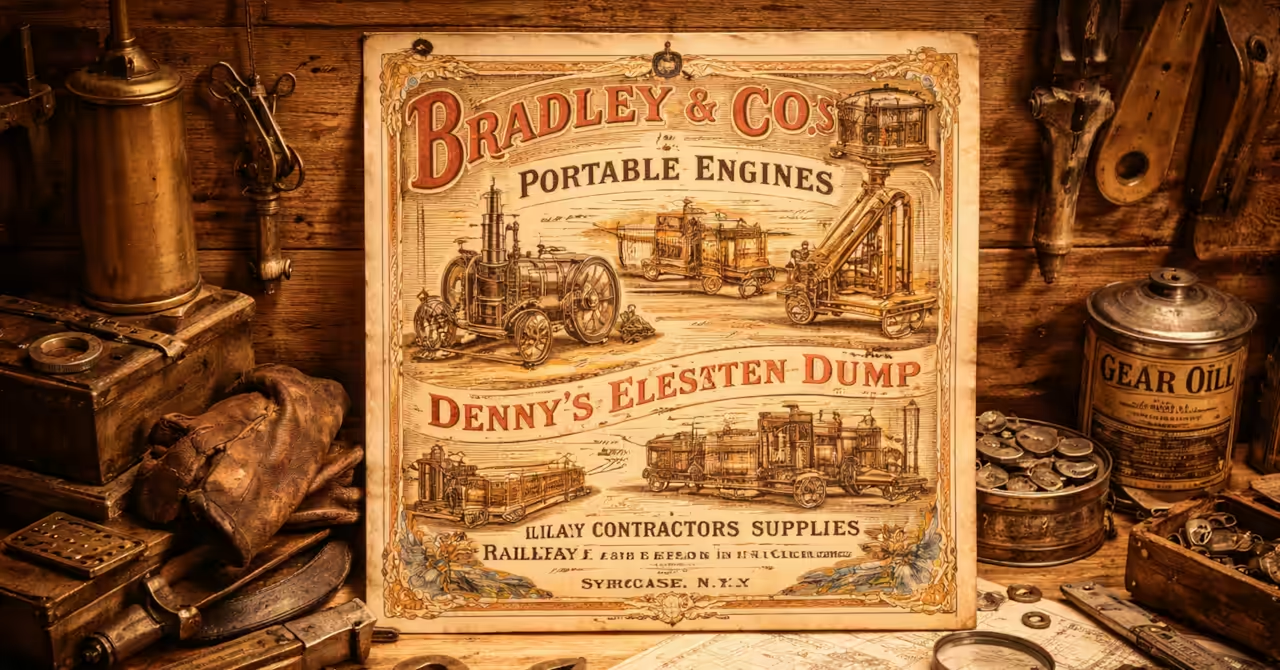
Decorative Pages Often Carry Working Knowledge
It is easy to see why vintage advertisements are often treated as collectibles. They are visually appealing, self-contained, and well suited to framing, scanning, and sharing. Their typography, illustration, border work, and period atmosphere invite admiration at first glance. Many survive precisely because someone valued them as printed objects. Yet the claim that vintage ads are just collectibles collapses as soon as the page is read more closely. That is the relationship that matters here. A vintage advertisement may be collectible in form, but it is rarely collectible only in form. It usually carries evidence of trade, taste, technical change, and everyday use as well.
This is what gives the advertisement its double life. On one level it can be appreciated as design. On another, it can be read as a practical communication from one historical moment to another. The page was originally made to do something specific. It was meant to persuade a buyer, position a firm, describe a product, announce a service, or shape confidence around a new method or material. Even when the result now looks charming or ornamental, it still contains the logic of its original task.
To stop at collectibility is therefore to stop too soon. It leaves the advertisement suspended as an image when it can instead be treated as a compact record of how goods were explained, how needs were framed, and how commercial worlds made themselves visible. The collectible surface is real, but it is only the entry point.
Collectibility Can Obscure the Page’s Original Function
The idea that vintage advertisements are just collectibles grows naturally from the way they now circulate. They appear in antique shops, online marketplaces, framed interiors, ephemera albums, and decorative reproductions. In those contexts, the page is often valued for style, rarity, age, and condition. Buyers may look for colour, period charm, named brands, or appealing subject matter. This is not a false way of valuing the object. It is simply an incomplete one.
The trouble begins when decorative appreciation replaces historical reading. A page for a soap, stove, patent fitting, bicycle accessory, or dress fabric may then be treated as though its main significance lies in its pleasing arrangement. The typography becomes atmosphere. The illustration becomes nostalgia. The paper becomes a token of age. What disappears is the fact that the page once stood inside an active commercial environment. It responded to competition, materials, distribution, and habits of use. It made claims that assumed a reader with needs, choices, and practical judgement.
Once that older function is restored, the advertisement becomes far more interesting. It begins to show not only what looked good in print, but what mattered enough to mention. Why this feature was praised. Why this price point was stressed. Why one material was named while another was left aside. These choices were not random. They were shaped by the surrounding market and by the expectations of the intended audience. The page therefore offers more than aesthetic charm. It offers clues to a working culture.
The sales page still describes a real world
A vintage advertisement usually contains more concrete detail than its collectible afterlife encourages us to notice. Even a small notice may name materials, sizes, prices, patents, manufacturing locations, or approved uses. A larger display advertisement may show the object in context, place it in a household or workshop, compare it with older methods, or emphasise features such as cleanliness, durability, economy, or speed. These details are not decorative overflow. They are the means by which the seller made the product legible.
This practical density matters because it ties the page back to real conditions. A claim about rust resistance implies a problem with corrosion. A stress on fuel economy implies cost pressure. A boast about sanitary design points to a public concern. An offer of interchangeable parts suggests standardisation and ongoing maintenance. A list of client sectors hints at the product’s field of use. What looks like period charm on the surface can therefore be read as compressed industrial or domestic evidence underneath.
That is why advertisements reward comparison. One page may seem merely attractive. A cluster of pages begins to reveal patterns. Shared language, repeated claims, recurring visual conventions, and common anxieties come into view. The collectible object becomes a readable unit inside a much larger system of trade and persuasion.
Decoration and evidence are not opposing categories
Part of the misunderstanding comes from assuming that an object must be either decorative or informative. Vintage advertisements show that the two can coexist comfortably. A beautifully arranged page may still be rich in practical content. In fact, the appeal of the design was often meant to support the transmission of that content. Ornament drew the eye, but explanation secured the sale. The attractive page and the useful page were not enemies. They were collaborators.
This is especially important in fields where visual refinement itself formed part of the value being sold. Advertisements for furnishings, dress goods, domestic wares, books, or decorative objects often blend aesthetic presentation with practical description. They do not abandon substance because they care about beauty. They use beauty to make substance more persuasive. Even machinery advertising can operate this way, arranging technical seriousness with visual order to project reliability and confidence.
Once this is understood, the collectible status of the advertisement becomes less limiting. The page can be admired for its composition without being trapped there. Its visual appeal may be what saves it, but its deeper value lies in what that appeal was originally helping to communicate. The advertisement is not diminished by being beautiful. It is made more layered.
Reading past the frame opens wider historical use
The most useful step is to read past the frame. Instead of asking only whether a page is attractive, rare, or suitable for display, it helps to ask what sort of world it assumed. Who was meant to read it. What prior knowledge was taken for granted. What problem or aspiration gave the claims their force. What associated goods or services are implied but not shown. Once those questions are asked, the advertisement opens outward into broader research and interpretation.
That move changes the role of the page. It becomes more than a collectible fragment. It becomes an access point into material culture, commercial language, technical history, and habits of daily life. A collector may still preserve it. A curator may still display it. But the strongest use of the object is often to let it speak beyond its border.
So the claim that vintage ads are just collectibles is too small for the evidence before us. They are collectible, certainly, and often delightfully so. But they are also records of persuasion, traces of manufacture, clues to use, and compact statements about how goods once entered the world. The next sensible step is not to stop collecting them. It is to start reading them with more ambition.
Author's Notes
Notes & Memoranda
Further Reading…




Disclosure
This article presents an interpretive reading of historical advertisements and related material, with attention to their technical, cultural, and practical context. It reflects editorial analysis rather than a definitive account of historical practice. Readers seeking primary context should consult period sources and surviving examples.