Wanderer Cycles: Built for Canadian Roads
ENGINEER AND INVENTOR | April 1893
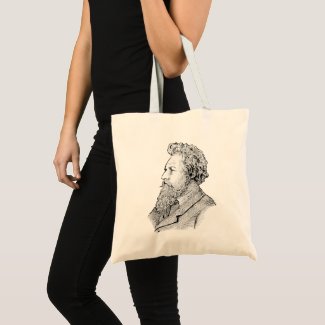
The Wanderer bicycle was made for taking the long road. We think a good museum tote should be much the same. Our William Morris Portrait Library Tote Bag celebrates one of the great figures of the Arts & Crafts Movement and is ready for books, market finds, museum catalogues and whatever curiosities you collect along the way. Consider it a little piece of the Phillaneum you can take with you — and a practical way to support our continuing exploration of the remarkable Victorian world.
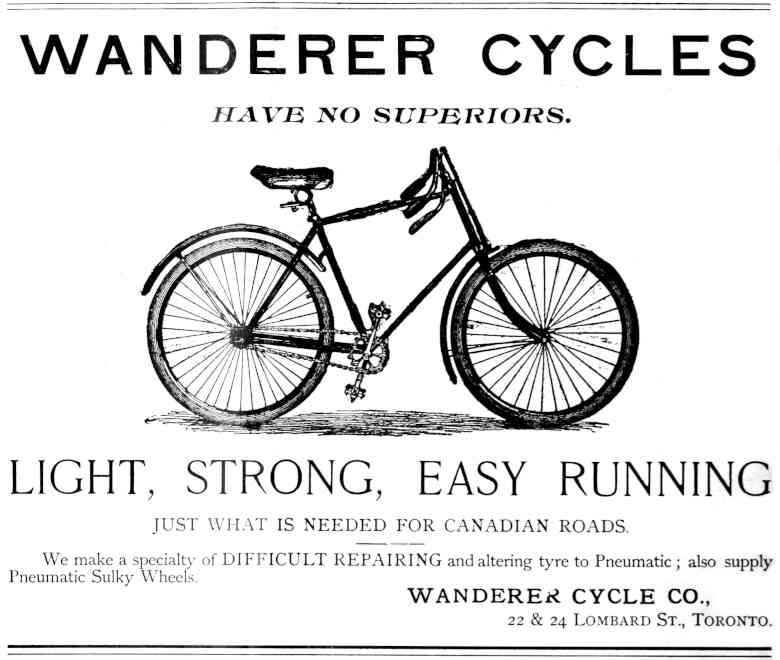
The Wanderer Cycle Company presents itself in this advertisement with a clear and confident claim: “Have no superiors.” The statement is direct and unqualified, reflecting a period in which manufacturers asserted superiority as a means of establishing trust in a rapidly expanding consumer market. The bicycle is shown in full profile, allowing the viewer to inspect its form without distraction. This visual clarity suggests that the product itself is intended to carry the argument.
The descriptive line “Light, Strong, Easy Running” distils the selling proposition into three functional qualities. These are not ornamental claims. They speak to the practical concerns of late nineteenth-century riders, particularly in a Canadian context where road conditions could be uneven and demanding. The supporting phrase “Just what is needed for Canadian roads” anchors the product geographically, positioning the bicycle as suited to local conditions rather than as a generic import or novelty item.
A smaller line of text offers an additional insight into the company’s operations. The reference to “difficult repairing” and the alteration of tyres to pneumatic systems indicates that the firm was engaged not only in manufacture but also in adaptation and servicing. This suggests a transitional period in bicycle technology, where older solid-tyre machines were being upgraded to newer pneumatic designs. The company is therefore positioned within both production and maintenance, serving a market still in technical evolution.
The address at 22 & 24 Lombard Street, Toronto, locates the business within an established commercial district. No telephone or telegraphic contact is provided. This absence reflects standard practice for the period, where transactions were conducted through physical presence or written correspondence. The advertisement, in its economy of text and emphasis on tangible qualities, presents the bicycle not as a speculative innovation but as a practical machine intended for everyday use.
When I look at this advertisement, I am drawn less to what it claims and more to how confidently it presents the bicycle as a settled form. The machine is no longer experimental or uncertain. It is shown as complete, proportioned, and ready for use. That composure suggests a moment where design had stabilised enough for manufacturers to focus on refinement rather than invention.
I also see an economy of communication that feels deliberate. There is no attempt to overwhelm the reader with technical detail. Instead, the advertisement relies on a small number of carefully chosen signals: form, wording, and placement. This restraint implies a readership that already understands the object, requiring only confirmation rather than explanation.
What remains most interesting to me is the balance between product and presence. The company does not overextend itself with narrative or personality. It allows the bicycle to stand at the centre, supported by a minimal frame of text. In doing so, the advertisement preserves a clear relationship between maker, machine, and rider. It is a presentation that feels grounded, and in that grounding, it reveals a technology that has begun to find its place in everyday life.
This advertisement shows that bicycle marketing in 1893 centred on practical performance rather than lifestyle branding. The phrases "Light, Strong, Easy Running" and "Have no superiors" emphasise durability, efficiency, and confidence in manufacture.
The reference to Canadian roads positions the bicycle as suited to local riding conditions. It suggests that road surfaces and travel demands were important selling points, and that riders expected a machine capable of handling practical, everyday use.
The mention of altering tyres to pneumatic indicates a transitional phase in bicycle technology. It suggests that older machines were still in use and that firms such as Wanderer Cycle Co. offered repair and upgrade services as pneumatic tyres became more desirable.
The full side profile allows the machine itself to be inspected clearly. This presentation gives prominence to the bicycle's frame, wheels, and proportions, supporting the advertisement's appeal to function, design, and mechanical confidence.
The following articles extend or reflect the ideas explored here, returning to similar questions through different materials, contexts, and lines of inquiry.
This article presents a curated extract and editorial interpretation of material originally published in Engineer and Inventor, April 1893. The content reflects the language, assumptions, and technical understanding of its time. While care has been taken to preserve the original context, minor formatting and presentation changes have been made. Readers seeking deeper technical accuracy or historical verification should consult primary sources and period engineering references.