Why Decorative Panels and Pillows Once Shared the Same Language
Victorian Homes Rarely Treated Ornament as Separate Things
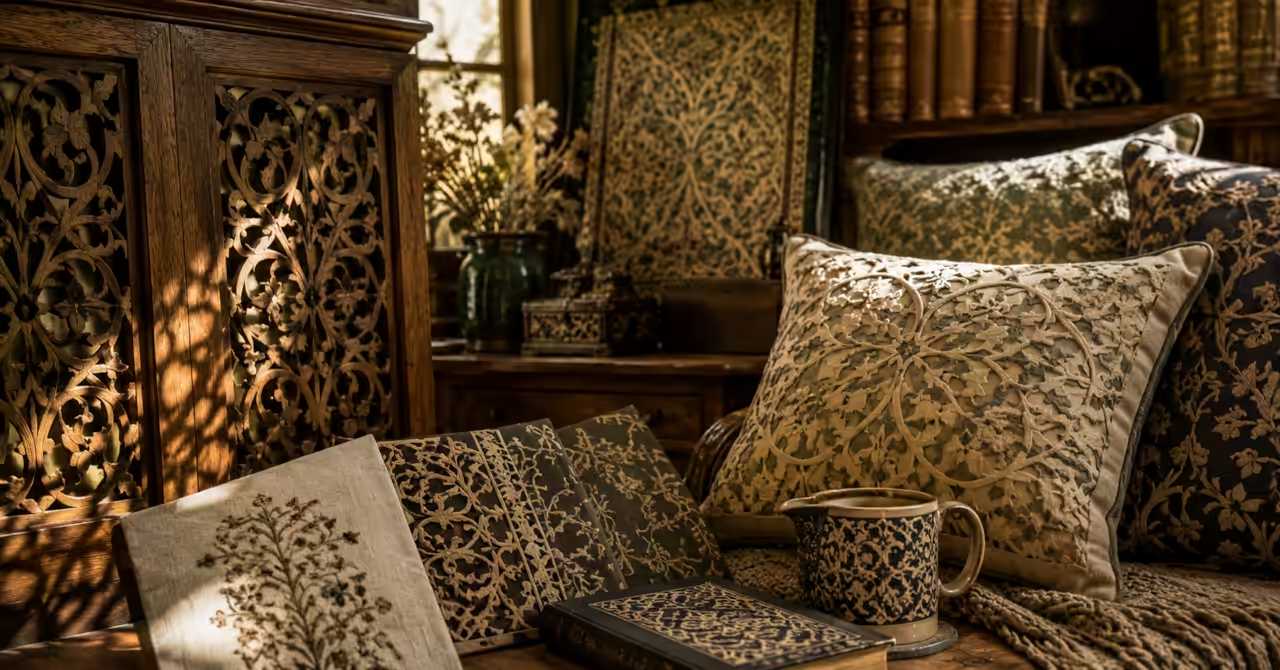
Walk into a well-preserved Victorian interior and a curious pattern emerges. The same decorative ideas appear everywhere. Curves carved into cabinet doors reappear in wallpaper borders. Floral motifs stitched into cushions echo shapes found in timber fretwork. Decorative screens cast shadows that resemble the embroidery hanging nearby. Rather than treating furniture, textiles, and architecture as separate categories, Victorian designers often worked with a shared visual vocabulary.
Ornament moved freely throughout the room. A successful motif might begin life as a carved panel, appear again in a curtain border, and surface later in a piece of needlework resting on a parlour chair. The goal was not variety for its own sake but harmony. Rooms felt layered because their decorative elements spoke to one another.
This helps explain why fretwork-inspired pillows look surprisingly natural today. They are not borrowing from an unrelated tradition. They are participating in a decorative conversation that has existed for generations.
From Fretwork to Fabric
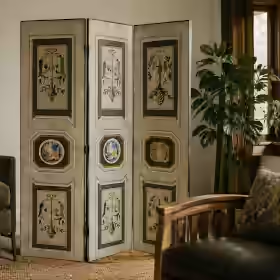
Victorian fretwork was designed to be noticed. Pierced timber panels produced intricate silhouettes, repeating patterns, and dramatic shadows that shifted throughout the day. Whether installed in a cabinet door, room divider, or veranda screen, the appeal lay as much in the pattern as in the timber itself.
That pattern proved remarkably portable. The same geometry appeared in embroidery, upholstery, lacework, and printed textiles. Looking through contemporary marketplaces today reveals fretwork-inspired pillows, cushions, and decorative fabrics carrying motifs that would have felt entirely familiar in an Arts and Crafts drawing room more than a century ago.
The material has changed, but the decorative language remains recognisable. What once appeared as carved oak now appears as stitched thread, printed fabric, or woven texture. The motif survives because it was never tied exclusively to furniture in the first place.
The Modern Descendants of Victorian Ornament
One of the pleasures of studying decorative culture is discovering where old ideas resurface. Fretwork motifs now appear on pillows, notebooks, mugs, wall art, fabrics, and countless other decorative objects. The journey from cabinet front to contemporary homeware is shorter than it first appears.
This is not a revival driven by historical accuracy. Most buyers are not consciously recreating Victorian interiors. Instead, they are responding to qualities that decorative motifs continue to offer: rhythm, symmetry, texture, and visual richness. The same characteristics that made a fretwork panel attractive in 1895 remain appealing on a cushion or ceramic mug today.
Ornament rarely disappears. It migrates. Materials change, manufacturing changes, fashions change, yet successful decorative motifs continue finding new surfaces on which to live.
Why Decorative Panels and Pillows Once Shared the Same Language
The relationship between decorative panels and pillows becomes much easier to understand once the focus shifts from the object to the motif. Victorian homes were filled with recurring patterns that travelled between timber, fabric, paper, and ceramic surfaces. Decorative panels and pillows shared the same language because they often drew from the same pool of ornamental ideas.
Today that migration continues. A fretwork design that once cast shadows across a polished cabinet door may now appear as a printed textile, a decorative cushion, or a contemporary home accessory. The object has changed, but the visual vocabulary remains remarkably familiar. In many ways, these modern descendants are carrying forward the same decorative conversation that Victorian designers began more than a century ago.
For readers interested in exploring the original source material, Pierced Fretwork Panels Collectors Rarely Ignore Today examines the carved timber patterns that inspired many of these decorative descendants. Those interested in the broader atmosphere created by ornament may also enjoy The Emotional Warmth of Ornamented Victorian Homes and the Secret Library Interior Atmosphere Collection.
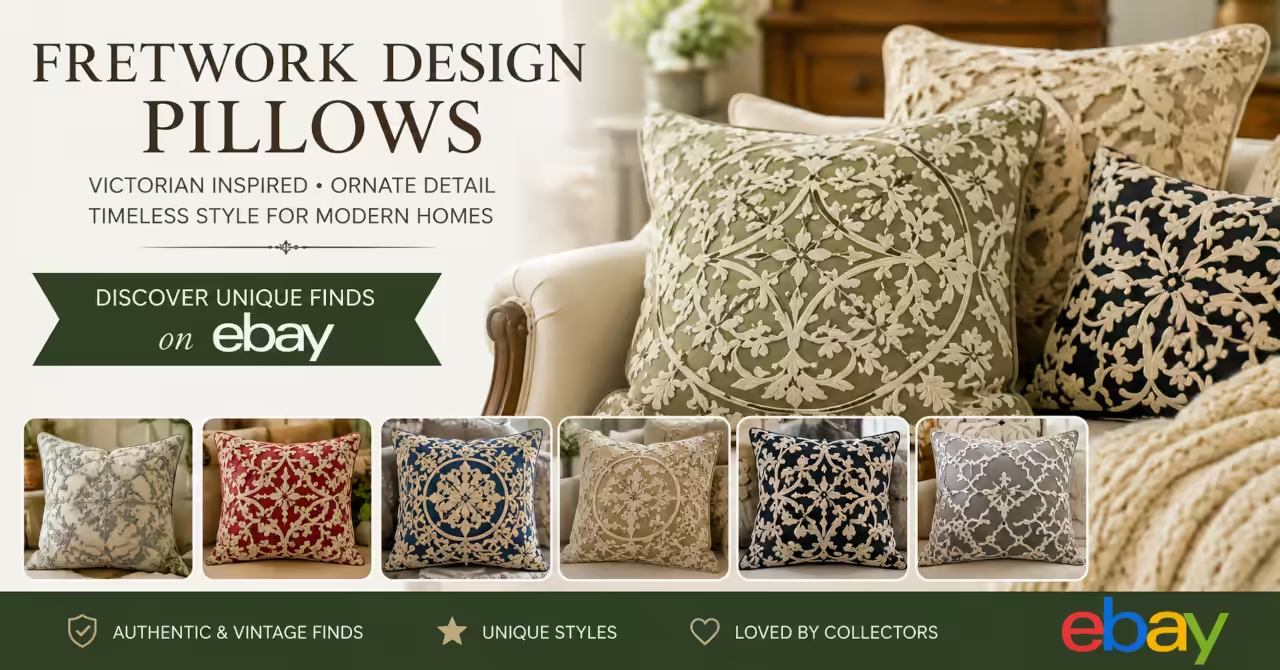
Market snapshot: A search for fretwork-inspired pillows reveals a surprisingly active decorative niche where Victorian and Arts & Crafts motifs have found new life in contemporary textiles. Expect to discover embroidered cushions, geometric fretwork patterns, ornate floral designs, laser-cut inspired motifs, and decorative fabrics that echo the same visual language once found in carved furniture panels and architectural ornament.
Author's Notes
I began this article expecting a small decorative curiosity: the idea that fretwork patterns might translate gracefully from carved panels into soft furnishings. What surprised me was discovering that this migration is already visible in the marketplace. Fretwork-inspired pillows are not theoretical descendants of Victorian ornament. They are already out there, carrying carved patterns into fabric, embroidery, and contemporary domestic decoration.
That changed how I understood the article. The pillow became less important than the journey of the motif itself. A carved panel, a cushion, a mug, a notebook, or a printed textile may seem like separate objects, yet each can carry the same ornamental language. The material changes, but the decorative memory remains.
I find that quietly delightful. Ornament has a way of escaping its original setting. It slips from timber into fabric, from furniture into ceramics, from historic rooms into modern homes. This article is really about that movement: the strange and pleasing survival of pattern across time.
Notes & Memoranda
As is often the case, the subject extends beyond the bounds of a single article. The notes and memoranda below gather together useful definitions, related observations, references, and occasional curiosities discovered along the way.
Glossary
- Fretwork
- In this article, fretwork refers to decorative designs created by cutting repeating patterns through timber. Victorian fretwork was commonly used on furniture, screens, verandas, and room dividers, producing distinctive silhouettes and shadow patterns that later inspired textile designs.
- Motif
- A motif is a recurring decorative pattern or design element. Floral scrolls, geometric borders, and repeating ornamental shapes are all examples of motifs that can migrate between furniture, fabrics, wallpaper, ceramics, and other decorative objects.
- Embroidery
- Embroidery is the decorative stitching of patterns onto fabric using thread. Within Victorian interiors, embroidered cushions, table coverings, and textile furnishings often echoed the same ornamental motifs found in carved furniture and architectural decoration.
- Upholstery
- Upholstery refers to the fabric coverings, padding, and decorative textiles used on furniture such as chairs, sofas, and cushions. In the context of this article, upholstery provided another surface upon which Victorian decorative motifs could be repeated and adapted.
Frequently asked questions
What should I look for when buying fretwork design pillows?
Look for repeating patterns, decorative symmetry, and motifs that resemble pierced fretwork or carved ornament. Designs with strong geometry, shadow-like patterning, and Arts and Crafts influences often connect most clearly with the decorative furniture traditions discussed in this article.
Do fretwork-inspired pillows suit Victorian or Arts and Crafts interiors?
Yes. Fretwork-inspired pillows work particularly well alongside carved timber furniture, library-style interiors, Arts and Crafts décor, and richly layered Victorian-inspired rooms. They help repeat decorative motifs already present in furniture, shelving, and architectural details.
Are fretwork design pillows historical reproductions?
Most are contemporary decorative products rather than exact historical reproductions. Their appeal lies in adapting Victorian and Arts and Crafts motifs into modern textiles, allowing traditional ornament to continue evolving through cushions, fabrics, and other home furnishings.
From the Curator's Workshop
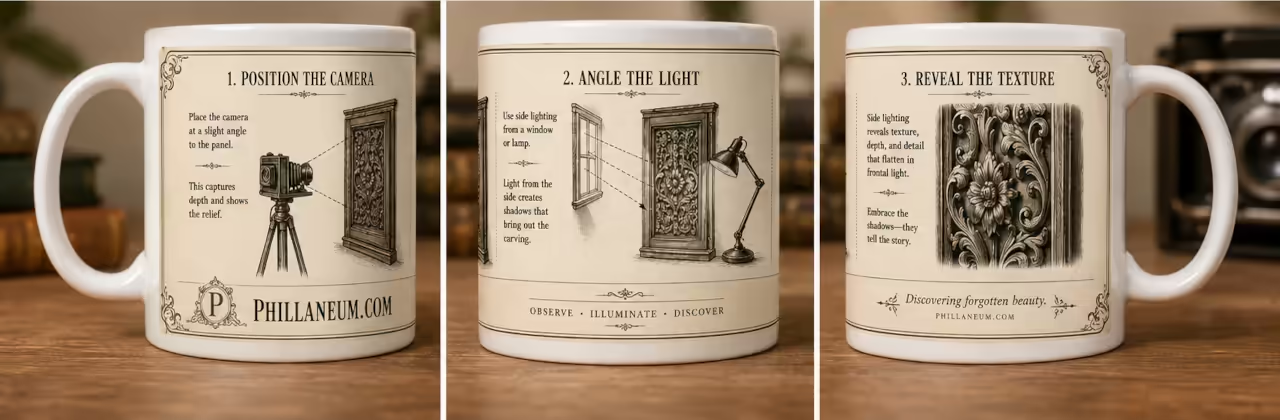
Decorative motifs often reveal their character through light, shadow, and surface texture. This collector's reference mug features a practical guide to photographing fretwork, carved ornament, and decorative furniture panels, helping enthusiasts document decorative details for restoration projects, research notes, collection records, and motif-inspired creative work. It is a small reminder that many of the patterns found on textiles, furnishings, and decorative objects often begin with careful observation of the original ornament itself.
Further Reading…
Disclosure
This article explores decorative furniture panel styles commonly associated with Victorian and Edwardian interiors, including carved oak, fretwork, embossed ornament, inlaid surfaces, and decorative veneers. The feature is presented in the curatorial style of Phillaneum.com and combines decorative commentary, historical interpretation, and atmosphere-focused interior observations. It is intended as an introductory editorial guide rather than a formal restoration manual, valuation guide, or conservation reference.