Introduction
Victorian trade journals can feel forbidding at first glance: dense columns, unfamiliar typography, and pages that seem indifferent to modern reading habits. It is easy to assume they were never meant for us. In truth, they were never meant to be read like novels at all. They were working documents; weekly or monthly companions for people who were building, repairing, arguing, persuading, and competing in public. Once you begin to recognise their signals, the pages stop behaving like intimidating scans and start revealing themselves as readable, purposeful artefacts.
This article is a practical reading guide within the Phillaneum Library, designed to help modern readers interpret technical journals curated in the Phillaneum Library [1] as working artefacts rather than historical curiosities. It is not a history lecture and it does not ask for scholarly commitment. Instead, it offers a reader’s method: how to interpret layout, recognise recurring sections, follow the language, and enjoy the advertisements, illustrations, and human tone that still flickers through these pages more than a century later.
1. Why We Care About Old Technical Journals
The modern reader’s first reaction is usually an honest one: This is hard work. The pages are dense. The type is small. The structure resists immediate understanding. Your eye hesitates, unsure where to settle. That reaction is not a failure of attention; it is part of the encounter. Victorian trade journals were written for readers already immersed in the work. They assumed context. They assumed urgency. They assumed you would skim, return, compare, and clip what mattered.
The most useful reframing is simple. These journals are not “books” in the modern sense. They are professional instruments. They sit somewhere between newspaper, technical memo, marketplace catalogue, and public forum. They carry technical insight, certainly—but they also carry ambition, rivalry, persuasion, and a sense of what felt important enough to be set in type that week.
Technology has changed dramatically in the last 150 years, but many of the underlying concerns have not. Materials still fail. Structures still crack. Systems still compete. Standards still emerge through negotiation and conflict. One of the quiet pleasures of reading with hindsight is watching those fault lines form: the confidence, the anxieties, the personal stakes, and the politics that sit just beneath the technical language.
Consider how charged the debate around DC versus AC electricity became in the late nineteenth century. It was never only about engineering. It was about reputation, influence, and commercial survival. The technical details have changed, and the modern discussion is more nuanced, but the pattern of competing systems, persuasive writing, public positioning remains recognisable. That continuity is one reason these journals are still readable today. They are old, but they are not silent.
“All serious intellectual work happens on the page, and we shouldn’t pretend otherwise. If you want to contribute to the world of ideas, if you want to entertain and manipulate complex thoughts, you have to read and write.”
— Adam Mastroianni [2]
Phillaneum approaches these journals as a Cabinet of Curiosities rather than an archive dump. The aim is not to overwhelm, but to place artefacts where they can be read, referenced, and enjoyed. These texts can still be cited in your own notes and writing—not as unquestioned authority, but as primary voices that show how people thought, argued, and built in their own moment.
2. Sections and Signals: What Journals Do
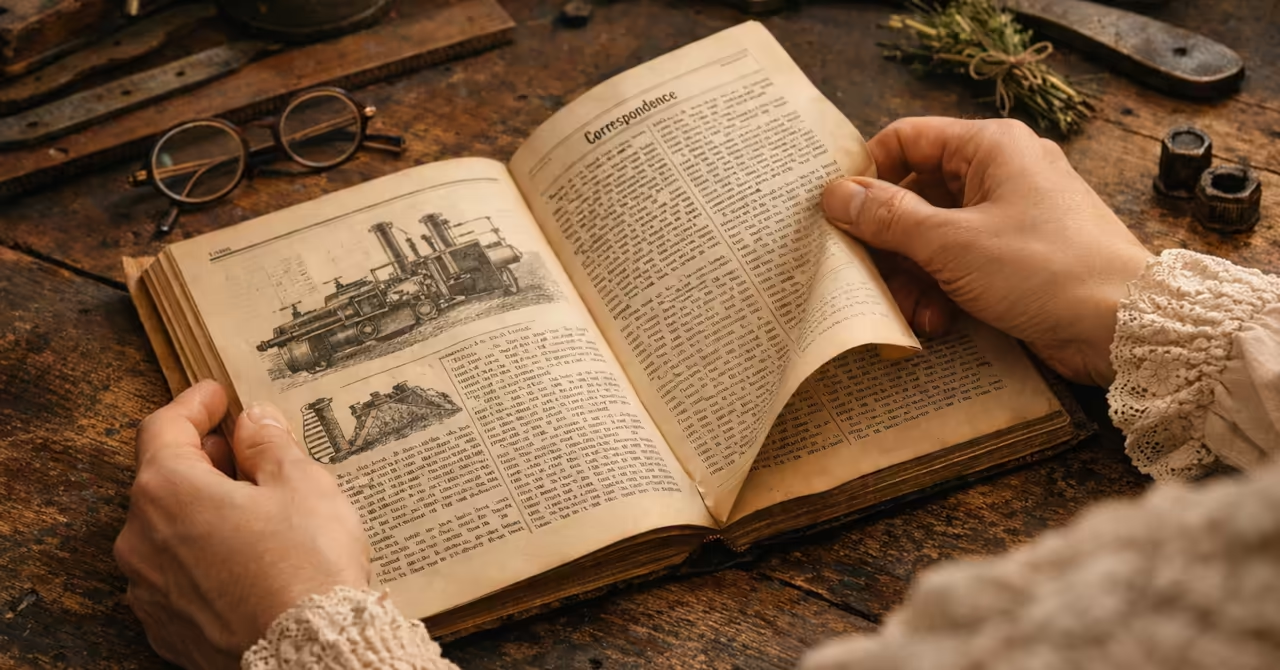
In many ways, trade journals have not changed much in the last 150 years. If you have ever read a contemporary industry magazine, the rhythm will feel familiar: editorials, correspondence, notices, abstracts, reports, product mentions, and opinion presented as “practical guidance.” What differs most is not intention, but visual language.
One of the most liberating habits is to read across an issue rather than from beginning to end. Victorian journals were designed for dipping in: a paragraph here, a notice there, an advertisement that catches your eye, followed by an article you return to later. Meaning often accumulates sideways—an editorial echoed by a letter, a technical report reinforced by a product claim, a brief notice revealing what the industry quietly worried about that month.
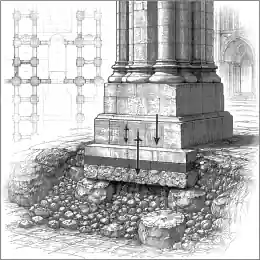
Reading this way also makes historical connections easier to see. In The Builder, for example, an article examines cracking in the piers at Truro Cathedral. The building still stands today, and that fact gives the article its quiet power. You are not reading a ruin. You are reading an engineer’s attention while the structure is still young enough to worry about, and important enough to argue over.
To see a building through an engineer’s eyes, stress, settlement, workmanship, responsibility, is to see it differently forever. The journal becomes more than information. It becomes a lens that subtly reshapes how the present is understood.
3. Looking Beyond the Text: Marketing Material
Often, the most revealing parts of a historical journal sit beyond the headline article. Advertisements, illustrations, and graphical layouts carry their own kind of evidence. In many issues, the adverts are not distractions at all, but catalogues of aspiration, showing what was for sale, what was valued, and what the trade understood as modern.
Notice how persuasion works on the page: where bold type appears, how illustrations establish authority, how brand names and addresses are displayed, how claims are framed as “proved” or “recommended.” Notice the tone—sometimes warm, sometimes blunt, sometimes quietly competitive. These are human voices, speaking with confidence to a professional audience.
If you find your attention lingering here, it is worth pausing and treating these advertisements as artefacts in their own right. A focused reading reveals not just products, but a worldview—how industry presented itself, how innovation was framed, and how confidence was manufactured on the printed page. This perspective is explored in more detail in Selling the Machine Age: 1893 Industrial Advertisements, where a selection of period adverts are examined as deliberate pieces of industrial storytelling rather than incidental page-fillers.
The layouts themselves reflect creative constraint. Printing press technology shaped these publications—typefaces, line art, column rules, limited image reproduction—and yet the results can still feel elegant. Constraint often sharpens intention. A well-made Victorian page can be crowded and graceful at the same time, practical without abandoning beauty.
Names and locations matter, too. A firm’s address, a place-name dropped in passing, an inventor credited in a footnote—all of these details make the pages feel inhabited. These journals were made by people, read by people, argued over by people, and paid for by people. Let your attention drift beyond the main article, and the human world quietly returns.
4. Curating Our Technical Heritage
Phillaneum is not trying to be comprehensive. It is a Cabinet of Curiosities: a curated journey through artefacts we enjoy, value, and want to keep close. Curation, here, is an act of care. It is the difference between a pile of scans and an experience of reading.
Where it helps the reader, we may add headings to long texts to make them easier to navigate. Occasionally we may rework an image when the original copy is difficult to read. At times, images are recoloured or sharpened so they remain legible on modern screens. The intention is not to rewrite history, but to remove unnecessary friction so the artefact can be met on its own terms.
Many entries also include a curation note: what drew our attention, why a page stood out, or what question it raised. You may encounter glossaries for terms that have faded from use, links to related artefacts, or contextual references that enrich the reading.
Over time, curation reveals what isolated documents cannot. As more artefacts sit side by side, connections appear across decades and disciplines—shared concerns, recurring language, familiar anxieties. Some of these relationships were invisible to contemporary readers. Placed together, they grant us a wider, more generous view.
From that wider view, new writing becomes possible. Not just reproduction, but reflection: tracing ideas across time, noticing what persisted, what disappeared, and what quietly changed its name.
5. Conclusion
Phillaneum treats technical journals as an essential part of the commons. Their value lies in being read again—first in historical context, and then in conversation with the present. The past is not simply a museum. It is a workshop full of unfinished arguments, evolving standards, and recognisably human behaviour.
Curation is how this heritage remains accessible. We care about what we share. We care about clarity and readability. We care about the small editorial decisions that transform “a scan” into “a page worth lingering over.” Phillaneum’s artefacts are presented in web-friendly form so curiosity can move easily between desktop, tablet, and phone.
Our approach is simple: we read, we enjoy, we reflect, and we add context where it helps. These journals are not treated as dead scrolls. They are living documents—still capable of teaching, surprising, and gently reshaping how we understand the world that inherited them.
Explore the Journals
- Engineer & Inventor (1893)
- The Builder Heritage (1902)
- The House: The Journal of Home Arts & Crafts (1902)