How to Use Decorative Panels in Furniture and Interiors
·Revised
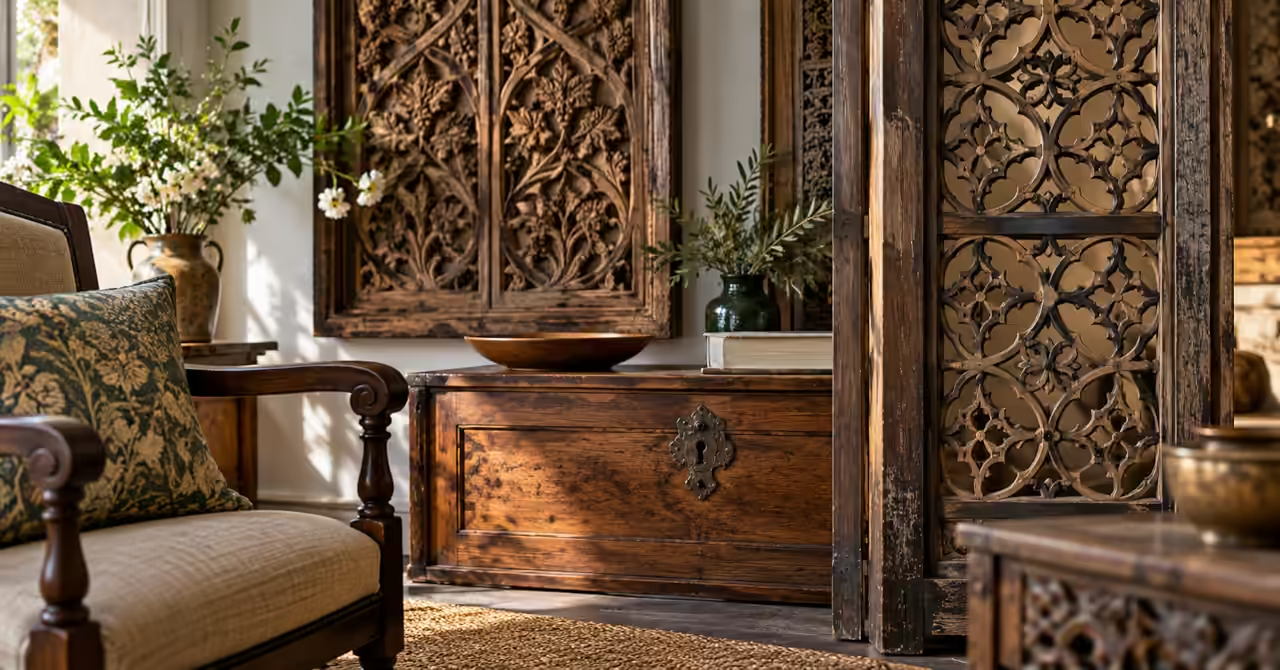
Begin with the panel, not the room
Before choosing a location, examine what the panel is asking you to notice. A shallow geometric relief behaves differently from deeply carved foliage. A pierced panel depends on the wall or light behind it. A painted surface may carry more visual weight than an unpainted timber panel of the same size.
Panels also carry evidence of their first setting. Proportions, mouldings and edges may suggest whether one belonged to furniture, an architectural scheme or a larger decorative arrangement. The Metropolitan Museum of Art's material on historic paneling is useful here because it presents paneling as coordinated work involving joiners, mouldings and specialist carving rather than as a collection of interchangeable ornaments.
A useful first inventory
- Measure the visible field, including the border and any surviving moulding.
- Record the depth of the relief. Deep carving needs directional light and more visual space.
- Look at the back. Fixing holes, rebates, unfinished edges or fading may indicate how the panel was installed.
- Check stability before alteration. Loose veneer, flaking paint, worm damage or split timber should be assessed before cutting, sanding or drilling.
A real object can change the decision
A useful discipline is to begin with an object whose history is documented, then separate what is known from what is merely attractive to imagine. The Metropolitan Museum's collection includes a French panel dated circa 1530–50. Its catalogue entry gives the panel a defined historical identity and context; it is not simply an anonymous piece of old timber waiting for a new purpose.
That distinction changes the interior decision. For a panel with a known place in decorative history, the least destructive option may be the most intelligent one: secure display, a sympathetic surround and lighting that makes the carving legible. Turning it into a cupboard door would introduce hinges, handling and movement, while cutting away its edges could remove evidence of how it was made or originally framed. Without a conservation assessment, it would be irresponsible to prescribe conversion merely because the dimensions happen to fit.
The lesson is not that every old panel belongs behind glass. It is that the panel's evidence should be part of the design brief. Ask what can be preserved, what can be reversed and what the proposed use would force the object to endure. A room can gain character from a historical fragment without requiring the fragment to pretend it was made for that room.
Four useful ways to incorporate a panel
1. Display a single panel as a picture
This is usually the least destructive and most flexible approach. It suits a panel with a complete composition, an unusually good border or evidence that it was intended to be seen from the front.
Give it enough surrounding space to read as an object. A small carved panel can disappear above a large sofa if hung alone on a broad wall; it may work better over a console, in a shallow niche or in a deliberately tight group. A tall architectural panel may need a quiet wall rather than several competing pictures.
Framing should support rather than disguise the object. A simple dark frame can settle pale carving against a light wall, while a restrained painted surround may help a worn or fragmentary panel feel intentional. Avoid making the new frame so elaborate that it competes with the original border.
2. Use a panel as a cabinet or cupboard insert
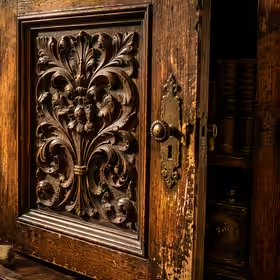
A panel with relatively even thickness and a strong perimeter may be a candidate for a door insert or cupboard front. The practical challenge is movement: solid timber can expand and contract across its grain, so it should not be rigidly trapped in a frame without allowance for seasonal change.
There is also a question of use. A fragile openwork carving may suffer from repeated contact, cleaning or door slamming. A shallow, structurally sound panel is more forgiving. Let the new furniture provide the hinges, strength and alignment; do not make the old carving carry loads it was never designed to bear.
For a modern cabinet, quiet surrounding material is often more successful than a second ornate timber. Painted wood, plain veneer or dark-stained framing can make the panel legible while keeping the furniture from becoming visual noise.
3. Make a headboard or room divider from a substantial panel
Large panels can become headboards, screens or partial room dividers, but scale is decisive. A headboard should relate to the bed rather than look like an unrelated picture hung behind it. A divider must be stable, safely supported and finished on the side visible from the room.
Pierced fretwork is especially effective as a screen because its pattern changes with the background. Against a pale wall it may read as a graphic silhouette; with light behind it, the same piece becomes a pattern of shadow. The effect is useful, but it also means the panel needs controlled lighting and a clean, uncluttered setting.
4. Add a panel to a larger composition
A fragment can be more successful when treated as one part of a composition rather than as a damaged version of a complete object. Pairing related panels above a sideboard, setting a small panel within a broad painted surround, or arranging fragments in a measured grid can give irregular objects a clear visual grammar.
Repeat one quality rather than every motif: the same timber tone, border width, background colour or approximate height is usually enough. Repeating floral, Gothic or geometric details at full strength throughout a room can make the interior feel themed rather than inhabited.
Match the treatment to the material
Carved wood
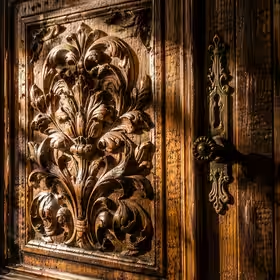
Relief carving depends on shadows. Light arriving from the side reveals tool marks, undercutting and worn edges more effectively than a flat beam aimed directly at the surface. The Victoria and Albert Museum's material on Grinling Gibbons is a useful reminder of how much carved detail depends on light and contrast.
This does not mean every carved panel needs a dark room or black background. It means the panel should have enough tonal separation from its surroundings for the relief to remain readable. Test wall colour and evening lighting before fixing the piece permanently.
Pierced or openwork panels
Openwork panels are partly drawings and partly screens. Their success depends on what can be seen through them. A busy bookcase behind a pierced panel may dissolve the pattern; a plain wall, textile or painted backing will make it clearer.
If used as a door or screen, consider dust and access. Openwork collects dirt in its recesses and can be awkward to clean without damage. A display position may therefore be more appropriate than a high-contact position in a kitchen, entrance hall or children's room.
Painted, gilded or finished panels
Colour changes the panel's relationship with the room. A faded painted panel can supply a palette of softened tones, while a bright or gilded surface may need more visual distance. Sample nearby fabrics and wall colours under daylight and artificial light; metallic finishes can shift from quiet to dominant as the light moves.
Do not automatically strip an old finish because the timber beneath appears attractive. Surface wear, darkened recesses and uneven colour may be part of the panel's material character. Cleaning and restoration should be proportionate to the object's condition and significance.
Three proportions that prevent a panel from looking misplaced
- Relate width to its support. A cabinet insert should not be so small that it resembles an afterthought, or so large that the new frame becomes structurally awkward.
- Give the eye a resting edge. Ornate panels need a border, wall margin or quiet neighbouring surface where the pattern can stop.
- Use height to establish purpose. Eye-level placement suggests a picture; a panel running from floor toward ceiling feels architectural; a low horizontal arrangement can relate to furniture or a dado.
The most convincing installations make the relationship legible. The viewer can tell whether the panel is furniture, a screen, a fragment of architecture or an artwork. Ambiguity can be attractive, but accidental ambiguity looks like an unfinished renovation.
Let age contribute without making the room a museum
Old timber, rubbed paint and small losses can give a room depth, but one historical object does not require a complete period interior. Pairing a carved panel with plain contemporary furniture can clarify its shape. A modern lamp, unpatterned upholstery or simple plaster wall may provide the visual pause an ornate panel needs.
The reverse is also true. In a richly furnished room, a single panel can link objects when its colour or motif is repeated discreetly elsewhere. The aim is not to match every surface. It is to make the panel feel expected without making it feel manufactured for the room.
For readers who enjoy looking closely
Decorative panels reward close attention: relief changes with the light, and a border, worn edge or tool mark can matter as much as the central motif. That habit of looking is part of Phillaneum's visual language.
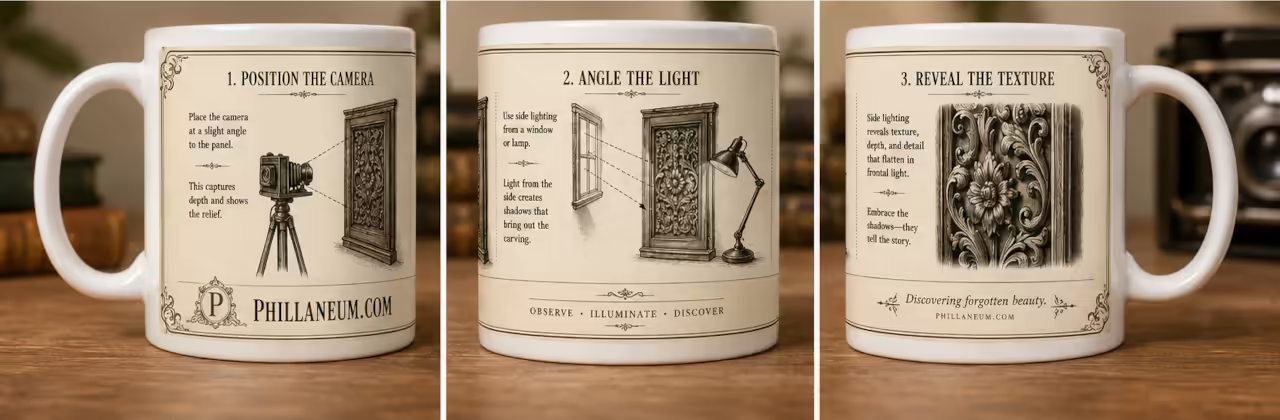
The Phillaneum Decorative Furniture Panel Photography Guide Mug I carries that language into a contemporary object. Its wraparound, vintage-style illustration uses an aged cream-and-sepia treatment, camera imagery, instructional text and examples concerning the photography of carved or decorative furniture panels. It is a Classic Mug in the 11 oz size—not a historical artefact or photographic instrument, but an optional everyday object for someone who likes the visual vocabulary of panels and old instruction diagrams.
Before you fix, cut or paint
Make a full-size paper template and live with it for a few days. Move it between walls, place it against the proposed cabinet or photograph it in morning and evening light. This simple test exposes problems of scale before they become holes, cuts or irreversible finishes.
Where a panel is old, rare, painted, gilded or structurally uncertain, preservation should take priority over conversion. Displaying it securely may be the better intervention. A good reuse does not force the object to become something else; it finds a new setting in which the original workmanship can still be understood.
Conclusion
The useful question is not “Where can I put this ornament?” but “What kind of object is this, and what does it need in order to be seen properly?” A shallow geometric panel may sharpen a cabinet. A pierced panel may make a screen or shadow picture. Deep carving may need a quiet wall and side light. A worn fragment may become convincing once a new border gives it a measured context.
When material, scale, condition and lighting are considered together, a decorative panel can sit comfortably between furniture and architecture. It remains an old piece of workmanship, but it gains a new life without losing the evidence of the one it had before.
Author's Notes
Notes & Memoranda
As is often the case, the subject extends beyond the bounds of a single article. The notes and memoranda below gather together useful definitions, related observations, references, and occasional curiosities discovered along the way.
Glossary
Some of the terms used in this article have specialised, historical or technical meanings. This glossary provides additional context for selected terms and ideas.
- rebate
- A rebate (also spelled rabbet) is a right-angled recess cut along the edge or end of a timber piece to receive another member or a panel; it creates an interlocking joint and a concealed seat for fixings. In historic panels rebates are a clear indicator of how the piece was originally installed—whether set into furniture frames, door stiles or wall panelling—and can show how the object moved, was supported or was trimmed.
- relief carving
- A carving technique in which figures or motifs are modelled so they stand out from a flat background rather than being fully three‑dimensional; relief ranges from very shallow (low relief) to deeply undercut (high relief). The depth and undercutting control how shadows define the design, so lighting, viewing distance and the panel’s surrounding tonal contrast are vital to legibility and conservation.
- pierced fretwork
- Delicately cut, often repetitive or interlaced patterns carved all the way through a panel to create an openwork screen-like surface. Because pierced fretwork depends on what sits behind it for contrast, and traps dust in its recesses, it behaves both as drawing and as a filter of light—making background, support and cleaning practicalities important design considerations.
- Grinling Gibbons
- A celebrated 17th‑century English woodcarver famed for extraordinarily naturalistic, high‑relief limewood carvings of foliage, fruit and garlands used in architecture and furniture. His work became a benchmark for virtuosity in carved detail and emphasises how fine tool‑marks, undercutting and side lighting make relief carving readable.
- dado
- The lower portion of an interior wall, typically the area below a chair rail and often panelled or finished differently to resist scuffs and wear. Historically a common place for decorative panelling, the dado establishes a clear horizontal zone so that a panel’s height and placement relate to furniture and human scale.
Frequently asked questions
Curious about something you’ve just read? These frequently asked questions explore some of the key ideas, details and questions surrounding the topic.
How should I decide where to place an old decorative panel?
Begin by examining what the panel actually is—its relief depth, whether it is pierced or painted, and any evidence of an original setting—and let those features determine the placement, lighting and surround; often the least destructive option is a secure display with a sympathetic surround rather than forcing it into a new function.
What checks should I do before cutting, sanding or drilling a panel?
Make a basic inventory: measure the visible field including border and moulding, record the depth of relief, inspect the back for fixing holes or rebates, and check stability for loose veneer, flaking paint, worm damage or splits before any irreversible work.
What are safe ways to incorporate a panel into furniture or a room?
Common options are to display a single panel as a picture, use a structurally sound panel as a cabinet or cupboard insert (allowing timber movement), make a large panel into a headboard or room divider with proper support and finish, or treat fragments as part of a larger composed arrangement; choose the option that preserves the panel’s evidence and suits its condition.
How should treatment differ for carved, pierced and painted panels?
Carved wood benefits from side lighting and tonal separation so relief reads clearly; pierced panels need a plain backing and consideration of dust and cleaning, making display often preferable to high-contact use; painted or gilded panels can shift with light so test nearby fabrics and colours and avoid automatically stripping an old finish.
Further Reading…
References and Further Reading
Disclosure
This article includes a clearly identified Phillaneum product. The product is presented as a contemporary extension of the decorative-panel theme and does not influence the article's editorial advice or historical interpretation.