Embroidery in the Arts and Crafts Movement
·Revised
Introduction
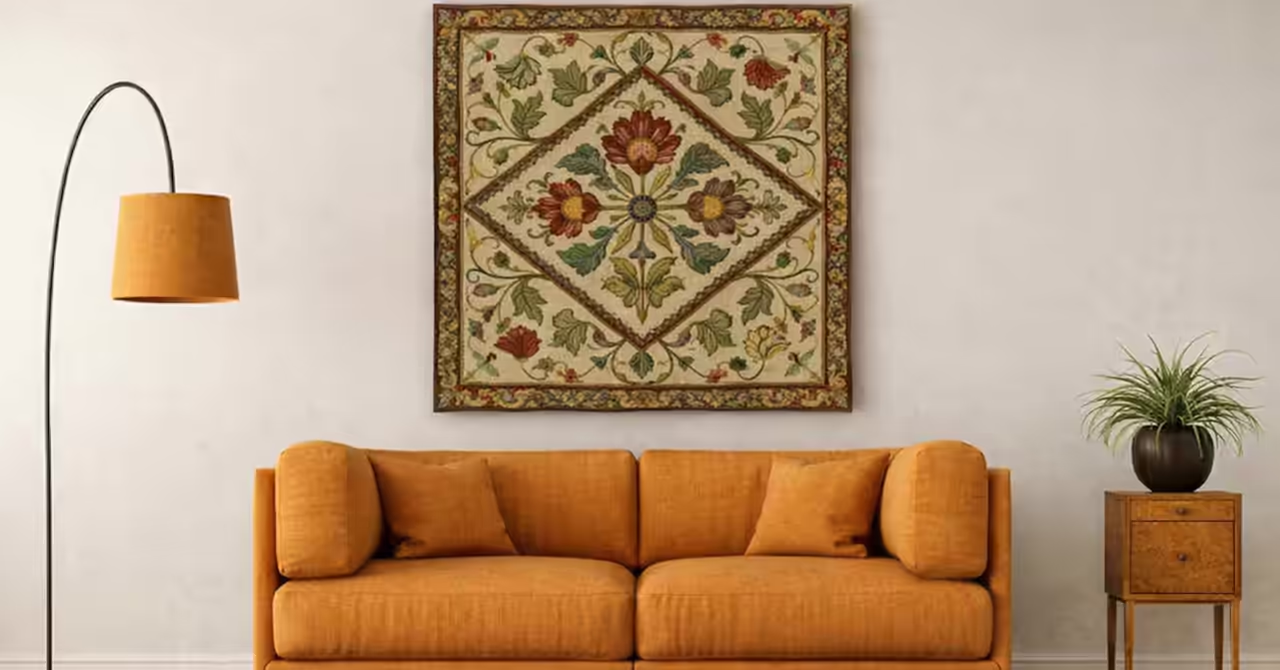
Embroidery within the Arts and Crafts movement reflects a deliberate return to handwork, where design, material, and execution were treated as a unified artistic practice. Needle and thread became more than tools of ornament. They offered a means through which ideas of craftsmanship, authorship, and design could be expressed with clarity and intent.
Drawing on references from 1902, this article examines how embroidery was understood during this period. Techniques such as needlework tapestry, broderie peinte, and miniature framed embroidery reveal a discipline in transition, moving beyond surface decoration toward considered composition within the decorative arts.
The surviving works and journal accounts offer more than instruction. They record a shift in attitude toward making itself. Through them, embroidery can be read not simply as craft, but as an artefact of a movement seeking to restore meaning to the act of creation.
This meaning becomes clearer when embroidery is returned to its setting. Stitched panels, hangings, and covers were not isolated works but part of a wider textile scheme that shaped the interior as a whole. Seen in this way, embroidery belongs within a broader domestic context, explored further in Textiles in the Arts and Crafts Home.
Historical Placement
Embroidery and the Arts and Crafts Revival
The Arts and Crafts movement emerged in Britain in the late nineteenth century as a reaction against industrial production. Embroidery, long associated with domestic practice, was re-evaluated within this context as a legitimate artistic discipline.
Journal Context, 1902
Contemporary journals from 1902 demonstrate how embroidery was presented not merely as instruction, but as cultural commentary. Articles positioned needlework alongside architecture, furniture, and decorative arts, reflecting its elevated status. These observations, drawn from period journals of 1902, document embroidery not as ornament alone, but as a disciplined craft embedded within the wider decorative arts.
Embroidery Techniques in Practice
The journal accounts of 1902 move from commentary to application, outlining specific embroidery techniques as both craft and composition. These methods demonstrate how practitioners translated design principles into material form, each offering a distinct approach to texture, colour, and surface.
Needlework tapestry
Needlework tapestry, also known as canvas work, is a type of embroidery where stitches are made on a sturdy, open-weave canvas or fabric. The canvas creates a grid that guides the placement of stitches, resulting in a structured, geometric design. This style of embroidery was popularized during the Arts and Crafts movement in the late 19th and early 20th centuries. I write more about needlework tapestry in our Home Arts & Crafts journal.
The technique of needlework tapestry has a long history, with examples of similar stitching techniques found in ancient Egypt, Greece, and Rome. During the Middle Ages, tapestry was a popular medium for depicting biblical scenes and heroic tales. However, it wasn't until the Arts and Crafts movement that needlework tapestry became popular for domestic use.
In needlework tapestry, various stitches are used to create texture and depth, including tent stitch, cross stitch, and long stitch. The canvas is typically worked in wool, silk, or cotton threads, and the colors used are often bright and bold. The final product can be used for wall hangings, cushions, or other decorative items.
During the Arts and Crafts movement, needlework tapestry was used extensively in home decor, with designs ranging from traditional to modern. Notable examples include the intricate designs by William Morris, a prominent figure in the movement, and the bold, graphic designs of Charles Rennie Mackintosh.
Today, needlework tapestry remains a popular form of embroidery, with modern crafters using the technique to create unique home decor items, such as throw pillows and wall art. The structured grid of the canvas lends itself well to modern, geometric designs, and the variety of stitches available allows for endless creative possibilities. Whether creating a traditional tapestry or a modern interpretation, needlework tapestry continues to inspire crafters of all levels.
Broderie peinte
Broderie peinte, also known as painted embroidery, is a style of embroidery that involves painting on fabric before embroidering on top of the painted design. This technique creates a unique look that is both colorful and textured. A 1902 issue of The House: The Journal of Home Arts and Crafts includes an intriguing example of Broderie peinte.
Broderie peinte originated in France in the late 19th century, during the Arts and Crafts movement. It was popularized by the painter and embroiderer Émile Bernard, who used the technique to create vibrant, textured designs. The technique quickly spread throughout Europe and became popular among artists and craftspersons.
To create broderie peinte, a design is first painted onto the fabric using fabric paints or dyes. Once the design is dry, embroidery is added on top of the painted areas. The embroidery thread is typically chosen to match or complement the colors used in the painted design. The embroidery can be done using a variety of stitches, such as satin stitch, chain stitch, or French knots.
Broderie peinte was used extensively in the Arts and Crafts movement, particularly in France and England. The technique was often used to create decorative items such as table linens, wall hangings, and clothing. The embroidered designs were often inspired by nature, with motifs such as flowers, leaves, and animals.
Broderie peinte persisted beyond its initial popularity, retaining a distinct position within embroidery practice. Its combination of painted groundwork and stitched surface produces a layered effect, where colour and thread interact to create depth and emphasis. Examples range from decorative textiles to framed works, each demonstrating how the technique extends embroidery beyond purely stitched composition.
By combining painted groundwork with stitched detail, broderie peinte introduces a layered surface where colour establishes form and embroidery refines it. The result is a hybrid technique that extends embroidery beyond structure into composition.
Miniature framed embroidery
Miniature framed embroidery is a beautiful and intricate form of embroidery that has been used for centuries to adorn homes with delicate and detailed artwork. This type of embroidery typically involves creating small pieces of embroidery and framing them in equally small frames. The result is a charming and delicate piece of art that can be displayed in any room of the house. I dive into this fascinating artform in my crafting miniature embroideries article.
Miniature framed embroidery was particularly popular during the Arts and Crafts movement, when handcrafted items were celebrated for their beauty and unique character. It was during this time that the technique of miniature embroidery really took off, as artisans sought to create small but detailed works of art that would fit seamlessly into the cozy, warm interiors of the day.
The technique of miniature embroidery requires a steady hand and a great deal of patience. Artists use fine threads and tiny needles to create intricate patterns and designs on small pieces of fabric. Because the pieces are so small, the stitching must be extremely precise and careful, with no room for error.
Examples of miniature framed embroidery from the Arts and Crafts movement include small floral designs, depictions of nature scenes, and miniature portraits. Many of these pieces were made to be given as gifts or to be displayed in homes as treasured heirlooms.
Today, miniature framed embroidery is still a popular craft, with many modern artisans using the same techniques and materials to create their own unique pieces. Whether you're looking to create a charming and delicate piece of art for your home or to give as a gift, miniature framed embroidery is a beautiful and timeless craft that is sure to delight and impress.
Embroidery as a hobby
Embroidery as a hobby has a rich history in the arts and crafts movement. During this period, embroidery was widely popular among hobbyists who sought to express their creativity and artistic vision through this craft. Embroidery as a hobby provided a creative outlet for individuals of all ages and backgrounds, and it was a popular pastime for both men and women.
The techniques and materials used in hobby embroidery were diverse, and they varied based on the individual's skill level and preference. Many hobbyists used traditional embroidery stitches such as the chain stitch, blanket stitch, and cross-stitch, while others experimented with new and innovative techniques.
Examples of hobby embroidery in the arts and crafts movement included embroidered household items such as table runners, napkins, and handkerchiefs, as well as clothing and accessories like blouses, jackets, and bags. These items were often decorated with intricate and detailed designs, showcasing the hobbyist's skill and creativity.
Embroidery continues as a popular hobby, and many modern hobbyists continue to explore and experiment with new techniques and materials. Whether creating traditional designs or pushing the boundaries of this ancient craft, hobby embroidery provides a fulfilling and satisfying creative outlet for those seeking to express their artistic vision.
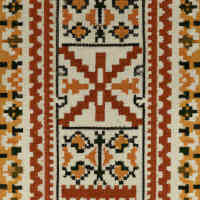
Patterns and colors in arts and crafts era embroidery
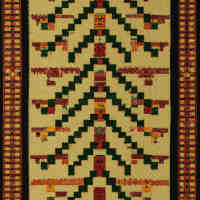
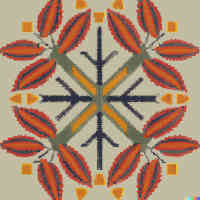
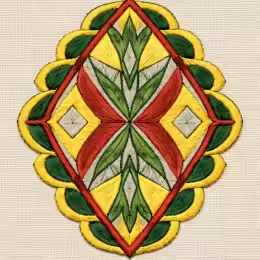
Arts and crafts era embroidery is known for its intricate patterns and bold use of color. Floral and nature-inspired motifs were popular, as were geometric shapes and patterns. The designs often incorporated a combination of these elements, resulting in a unique and visually striking finished product. The color palette used in arts and crafts embroidery was typically earthy and muted, featuring shades of green, brown, blue, and rust. These colors were often complemented by brighter accents, such as red or gold, to add interest and depth to the design. Examples of patterns and colors in arts and crafts era embroidery can be found in the work of William Morris, who was a leading figure in the movement. To incorporate this style into modern embroidery projects, consider using natural color palettes and incorporating floral or geometric patterns.
These patterns were not isolated inventions but part of a shared decorative language that moved freely between embroidery, printed cloth, wallpaper, and woodwork. The same stylised leaves, stems, and geometric repeats can be followed across multiple media, as examined in Decorative Motifs in Arts and Crafts Design.
Conclusion
Embroidery within the Arts and Crafts movement represents more than a revival of technique. It reflects a broader redefinition of craft as a form of authorship. Through needlework tapestry, broderie peinte, and miniature framing, embroidery was repositioned alongside other decorative arts as a medium of considered design.
Read in isolation, embroidery reveals technique and intention. Read alongside the textiles of the home and the wider language of motif, it becomes clear that needlework was one part of a larger system of design, binding material, pattern, and interior into a coherent whole.
Seen through the lens of the Arts and Crafts movement, embroidery emerges not as a peripheral pastime, but as a considered component of interior design. Its continued relevance lies in this integration of craft, material, and environment.
Author's Notes
Notes & Memoranda
Frequently asked questions
What defined embroidery within the Arts and Crafts movement?
Within the Arts and Crafts movement, embroidery was valued as a form of skilled handwork that combined craftsmanship, design, and decorative purpose. It reflected the movement’s preference for handmade objects over industrial production.
How did embroidery transition from domestic craft to art form?
Embroidery moved beyond its domestic role as it came to be appreciated for its design quality, technical skill, and artistic intent. In the Arts and Crafts period, it was increasingly presented alongside other decorative arts as a serious creative discipline.
What is needlework tapestry and how was it used?
Needlework tapestry is a form of embroidery worked on a canvas ground, often using wool, silk, or cotton threads to create structured decorative designs. During the Arts and Crafts era, it was used for items such as wall hangings, cushions, and other domestic furnishings.
What distinguishes broderie peinte from other embroidery styles?
Broderie peinte combines painted groundwork with stitched embroidery, creating a layered surface where colour and thread interact. This distinguishes it from purely stitched forms of embroidery by adding painterly depth and emphasis.
Mentions & Echoes
This article has been noted in external archival and design contexts, reflecting ongoing interest in Arts and Crafts textile traditions:
Further Reading…

References
- Arts and Crafts Movement , TheArtStory.org (retrieved 10 April 2026).
- Embroidery , Encyclopaedia Britannica (retrieved 10 April 2026).
Disclosure
This article presents an interpretive reading of embroidery practices within the Arts and Crafts movement, drawing on journal references from 1902. It reflects editorial analysis rather than a definitive account of historical craft. Readers seeking primary context should consult original publications and archival sources.