Textiles in the Arts and Crafts Home
·Revised
Textile Order in the Arts and Crafts Interior
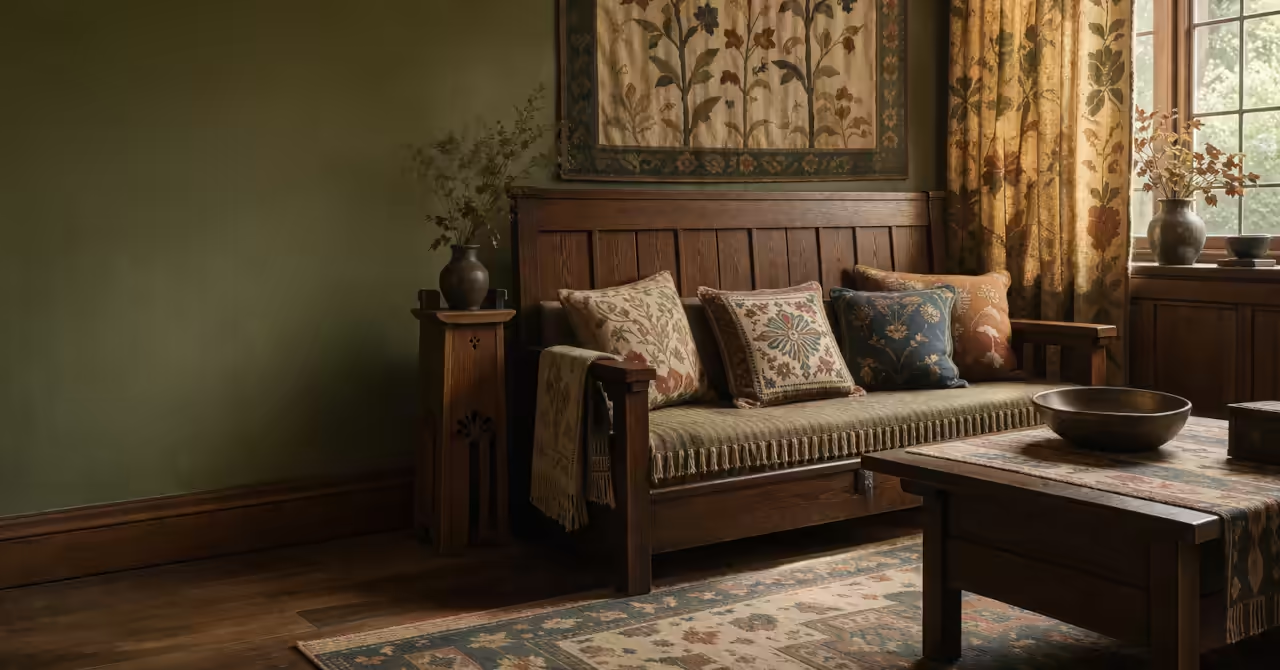
In the Arts and Crafts home, textiles and interior design were not separate concerns. They were conceived together. Fabric did not arrive at the end as a softening layer placed over a finished room. It helped determine the character of the room from the beginning. This close relationship between textile work and domestic design reveals an important truth about the movement. The Arts and Crafts interior depended upon cloth, stitch, and weave to complete its visual logic and to express its moral preference for honest workmanship.
Around 1900, writers, decorators, and makers regularly treated embroidered hangings, woven covers, curtains, and cushions as part of a unified interior composition. Furniture provided structure, yet textiles carried pattern, colour, and tactility across the room. They linked wall to window, chair to hearth, and private labour to public appearance. To study embroidery on its own is useful, but it gives only a partial view. Within the Arts and Crafts home, embroidery belonged to a wider textile world that shaped the atmosphere of domestic life.
Among these textile forms, embroidery held a particular position. It allowed individual makers to introduce pattern, colour, and meaning directly into the room through hand process. A closer study of these techniques and their artistic development can be found in Embroidery in the Arts and Crafts Movement.
How Textiles Bound the Room into One Design
The relationship is direct. Arts and Crafts principles valued the handmade object, and textiles gave those principles a practical and visible place within the home. A chair, a settle, or a sideboard could establish form, but textiles joined those forms into a lived interior. Woven and stitched pieces introduced repetition of motif, restraint of colour, and evidence of hand process. They also moderated hard surfaces. Wood, plaster, brick, and metal gained warmth through fabric, yet the aim was not mere comfort. It was coherence.
This coherence rested on shared treatment. A room might carry related floral forms through a curtain border, a firescreen panel, and the cover of a cushion. Natural fibres such as linen, wool, and silk allowed the material itself to remain legible. Their surfaces absorbed dye and stitch in ways that supported quiet richness rather than slick display. Visible seams, hand embroidery, block-printed repeats, and robust weaving all signalled that construction mattered. The textile was not there to disguise making. It was there to show that making had taken place.
In this sense, textiles acted as structural elements within the decorative scheme. They guided the eye, controlled emphasis, and balanced mass. A hanging panel could relieve a broad wall. A curtain could frame light without dissolving the architecture of the window. A table cover could gather loose objects into an intentional arrangement. These were soft materials, yet they performed disciplined work.
Textile Work as the Mechanism of Unity
The mechanism by which textiles unified an Arts and Crafts interior was simple and effective. They repeated decisions already present elsewhere in the room. Colour was one part of this. Many interiors favoured subdued greens, soft golds, russet tones, blues, and the natural shades of undyed fibre. These hues sat comfortably beside stained timber, painted plaster, and beaten metalwork. Textiles could carry those colours across larger surfaces than most small decorative objects allowed.
Pattern was equally important. Embroidered stems, stylised flowers, birds, fruit, and simple geometric borders often echoed the decorative language found in wallpapers, carved panels, and printed books of the period. This did not produce sameness. It produced relation. One motif might appear in simplified form on a hanging and then again, more sparely, on a cushion or upholstered seat. Through such repetition, the room read as a whole rather than as a collection of separate purchases.
The repetition of floral forms, stems, and geometric borders across curtains, cushions, and hangings was not incidental. These elements belonged to a shared system of decorative thinking that extended beyond textiles alone, connecting to wallpaper, woodwork, and printed design, as explored in Decorative Motifs in Arts and Crafts Design.
Technique also mattered. Hand processes slowed production and left evidence of labour in the finished piece. A slightly irregular line of stitch, a firm selvedge, or the weight of a handwoven surface contributed to the effect. These qualities anchored the room in human effort. The interior became less anonymous. It felt made, not assembled.
From Surface Ornament to Moral Material Presence
This understanding of textiles differs sharply from a purely decorative view. In many late Victorian and commercial interiors, fabrics could be chosen for display, novelty, or richness of effect alone. The Arts and Crafts movement did not reject beauty, but it sought beauty with moral weight. Textile work was valued not only for what it looked like, but for what it represented. It stood for patience, skill, domestic intelligence, and respect for material.
That difference carries an important implication. When textiles are treated only as embellishment, they remain interchangeable. One may be replaced by another with little consequence beyond appearance. In an Arts and Crafts room, replacement was not so simple. A hanging, cover, or embroidered panel often belonged to the room by design and by sentiment. It might have been worked by hand in the household, commissioned from a known maker, or chosen because its materials and motifs suited the whole interior. It had a place.
This also helps explain why embroidery held such a prominent position in Arts and Crafts writing and practice. It was not merely a genteel pastime. It was a form capable of contributing real artistic labour to the home. Needlework could participate in architecture at a domestic scale. It turned private craft into visible order.
Reading the Home Through Its Fabric Relations
Once textiles are understood in this wider way, the Arts and Crafts interior becomes easier to read. The question is no longer whether a room contains embroidered or woven items. The question is how those items work with furniture, wall treatment, and light. A simple linen curtain may matter more than a large decorative screen if it establishes the room’s colour discipline. A seat cover may carry more design force than a framed picture if it binds together timber tone and wall surface.
This approach also broadens the study of domestic craft. It encourages attention to the whole textile ecosystem of the house. Embroidery belongs beside weaving, dyeing, upholstery, printed cotton, and household sewing. Each contributes to the final effect. Together they show how the Arts and Crafts home was built through accumulation of fitted relationships rather than through isolated masterpieces.
For modern readers and curators, this offers a useful way forward. Period interiors should be examined not only through major furniture forms or famous names, but through the quieter labour of cloth. Curtains, covers, hangings, and stitched panels often preserve the practical ideals of the movement with unusual clarity. They show how art entered daily life by means of use, touch, and repetition.
Textile Motifs Across the Decorative Field
Textiles in the Arts and Crafts home were more than ornaments laid over a finished setting. They helped organise the interior and gave visible form to the movement’s belief in honest making. Through fibre, pattern, and hand process, they bound the room into a coherent composition, carrying the domestic and artistic values that made such interiors distinctive.
From this point, attention naturally turns to the motifs these textiles carried. Floral repeats, birds, leaves, and simplified natural forms did not appear by accident. They belonged to a wider decorative language that moved across wallpaper, woodwork, book design, and stitched fabric alike. To follow these forms more closely is to see how design thinking travelled between materials, shaping the interior as a unified whole.
To understand these interiors fully, it is useful to move between levels of detail. The structure of the room establishes order. Textile systems bind that order together. Motifs give those textiles their visual language. Read in sequence, each layer reveals a different aspect of the same design intention.
Market snapshot: A browse through current listings reveals a varied market of Victorian and early 20th century settles, from compact hall benches to substantial high-backed oak pieces with carved panels and storage seats. Many examples reflect Arts and Crafts influence, with solid timber construction and restrained ornament, while others retain more decorative Victorian detailing. Condition ranges from fully restored showpieces to worn but characterful originals. Prices typically span from around $150–$300 for smaller or unrestored examples, through $400–$900 for well-presented antique pieces, and exceeding $1,000 for larger, finely crafted or professionally restored settles. Differences in timber, craftsmanship, and condition strongly influence value.

Author's Notes
Notes & Memoranda
Glossary
- Arts and Crafts movement
- A late 19th and early 20th century design movement that valued craftsmanship, simple forms, and the use of natural materials in response to industrial production.
- Embroidery
- Decorative stitching worked by hand onto fabric, often used to add pattern and texture within Arts and Crafts interiors.
- Natural fibres
- Materials such as wool, linen, and silk derived from plants or animals, favoured for their texture, durability, and ability to accept dye and stitch.
- Decorative motif
- A repeated design element, often drawn from nature, used across textiles and surfaces to create visual unity within a room.
- Handcrafted construction
- The visible making of an object by hand, where techniques such as weaving or stitching remain evident in the finished work.
- Settle
- A long wooden bench with a high back and often enclosed sides or arms, used as a sturdy seat for two or more people, especially in traditional and early 20th century interiors.
Frequently asked questions
Why were textiles so important in an Arts and Crafts home?
Textiles helped unify the interior by carrying colour, pattern, and texture across the room. They were not treated as minor decoration. Embroidered panels, woven fabrics, curtains, and cushions worked with furniture and wall surfaces to create a coherent domestic design.
What kinds of textiles were commonly used in Arts and Crafts interiors?
Common textiles included embroidered hangings, woven curtains, cushion covers, upholstery fabrics, table covers, and decorative panels. These were often made from natural fibres such as wool, linen, and silk, with visible handwork valued as part of their appeal.
How did Arts and Crafts textiles differ from purely decorative furnishings?
Arts and Crafts textiles were chosen for more than visual effect. They reflected craftsmanship, material honesty, and a close relationship between making and use. Rather than acting as interchangeable ornament, they were intended to belong to the room’s wider decorative scheme.
Why does embroidery matter when studying Arts and Crafts interiors?
Embroidery matters because it shows how domestic craft contributed to the artistic identity of the home. It connected private labour with visible design and helped carry recurring motifs, colour restraint, and handworked character through the interior.
Further Reading…

Disclosure
This article presents an interpretive reading of Arts and Crafts interiors, with particular attention to the role of textiles around 1900. It reflects editorial analysis rather than a definitive account of historical practice. Readers seeking primary context should consult period sources and surviving examples.