The House
Magazine Listing


Your Journal of Arts & Crafts
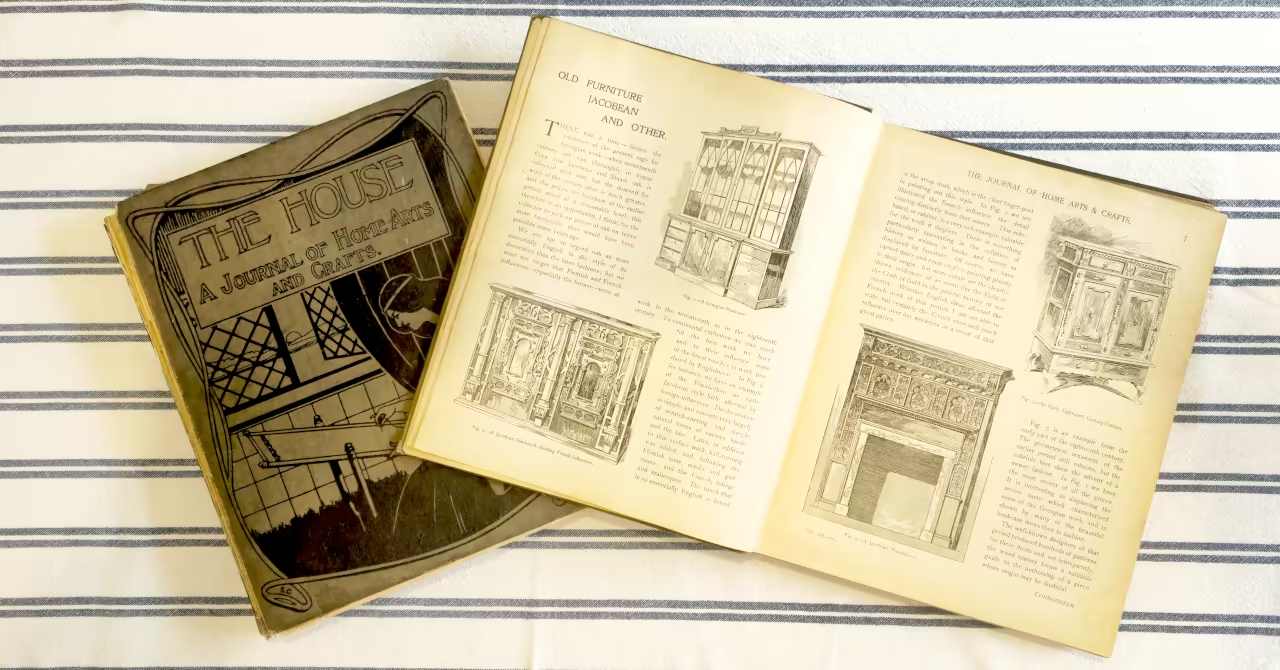
I found an arts and crafts magazine from 1902 that I really liked the images in. I also found the articles interesting. Do you think that other people around the world would be interested in heritage arts and crafts magazines? I certainly hope you do!
Interest in heritage arts and crafts can vary greatly depending on the location and cultural background of the audience. In general, people who are interested in history, traditional crafts, and preserving cultural heritage may be interested in heritage arts and crafts magazines.
It is also possible that people who are interested in crafts and DIY projects, in general, may find heritage arts and crafts magazines interesting. The articles and images featured in these magazines can provide inspiration and ideas for new projects, and the historical context can give readers a deeper understanding of the craft traditions.
Collectors and enthusiasts of antique and vintage items may also be interested in heritage arts and crafts magazines as a way to learn more about the history and background of specific crafts and art forms. Additionally, heritage arts and crafts can also be a way for people to connect with their own cultural heritage, and for others to learn about different cultures and traditions.
Decorative Arts in the Victorian Era
The Victorian era, which lasted from 1837 to 1901, was a time of great creativity and experimentation in the decorative arts. Many different styles and designs were popular during this period, and a wide variety of decorative work was produced.
One of the most popular styles of decorative work during the Victorian era was the Gothic Revival style. This style was characterized by its use of pointed arches, ribbed vaults, and other elements borrowed from medieval Gothic architecture. Decorative items such as furniture, ceramics, and metalwork were often designed in this style, and many of the drawings and plans for these items still survive today.
Another popular style of decorative work during the Victorian era was the Aesthetic Movement, which was characterized by a focus on beauty and ornamentation. This style was heavily influenced by Japanese design and often featured asymmetrical compositions, bold colors, and natural forms. Many decorative items such as furniture, textiles, and ceramics were produced in this style, and many of the original drawings and photographs of these items still survive today.
The Arts and Crafts movement, which emerged in the late Victorian era, was also a significant influence on decorative design of the time. This movement emphasized traditional craftsmanship and rejected the mass-produced, machine-made items that were becoming increasingly popular. The movement produced many decorative items, including furniture, textiles, and ceramics, which featured simple forms and natural materials. Drawings and photographs of many of these items still survive today, and they are valued for their beauty and historical significance.
The Victorian era also saw the rise of photography, and many photographers of that time produced photographs of decorative works of art and architecture. These photographs were often used as reference material for artists and designers, and they also served as a way for people to see and appreciate decorative works that they might not have been able to see in person. Period photographs provide a valuable record of the decorative arts of the Victorian era.
It is worth noting that many of the decorative works from the Victorian era were made to be functional, but also to be beautiful and express personal taste, and the influence of the Victorian era can still be seen in many decorative items produced today.
5 reasons to read this journal on arts & crafts
- Inspiration—Arts and crafts magazines are a great source of inspiration for those interested in creating new projects or exploring new techniques. They often showcase beautiful and unique works created by talented artisans, providing a wealth of ideas and inspiration for readers.
- Instruction—Many arts and crafts magazines include articles and tutorials that provide step-by-step instructions for creating various projects. These articles can be especially useful for those new to a particular craft or technique, as they provide clear and concise guidance.
- Trends—Magazines about arts and crafts can help you stay up-to-date with the latest trends in the field. This is especially true for those who are passionate about crafting, as new materials, tools, and techniques are constantly being developed and introduced.
- Community—Many arts and crafts magazines have a strong community of readers who are passionate about the same things you are. These magazines often provide a platform for readers to share their projects and connect with others who share their interests.
- Personal Development—Engaging in arts and crafts can have a positive impact on your overall wellbeing, helping to reduce stress and boost your creativity. By reading a magazine about arts and crafts, you can learn new skills and techniques, and challenge yourself to try new things, which can help to promote personal growth and development.