The Great Debate: What Should We Steal From the Victorians?
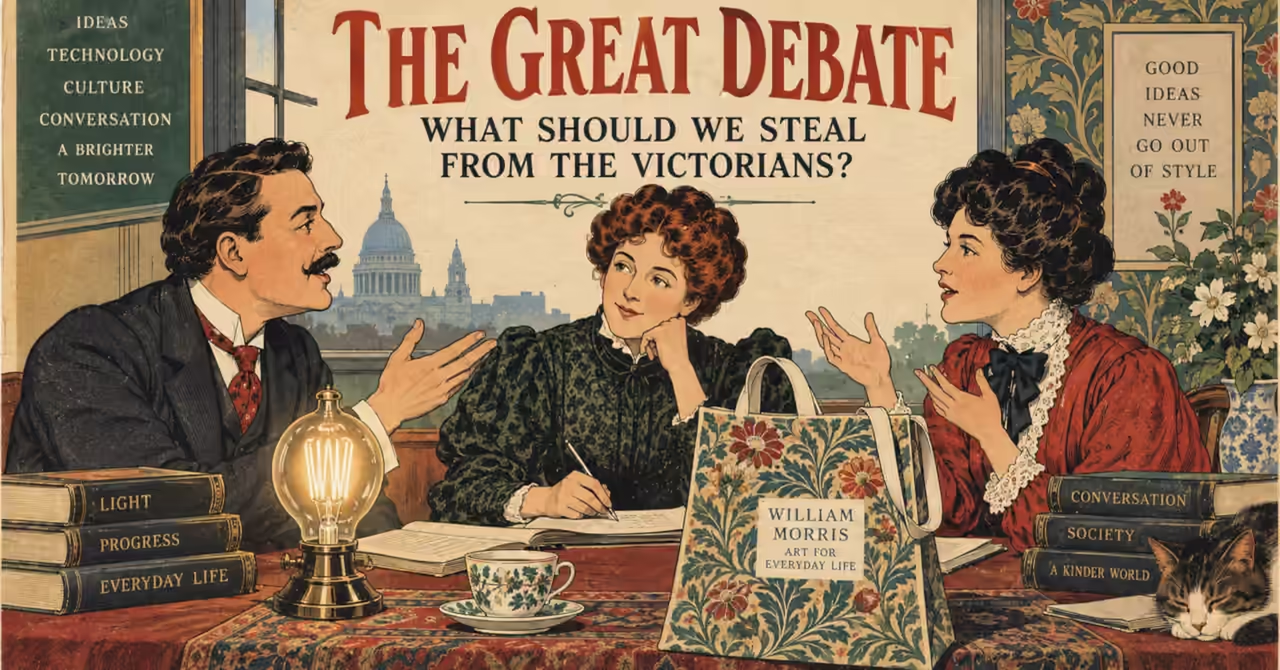
Welcome to The Great Debate
Deborah Upshaw — Debate Facilitator
I’m Deborah Upshaw, Phillaneum’s Arts & Crafts Editor, and today I have the rather enjoyable task of supervising a little historical theft.
Our question is simple: What should we steal from the Victorians?
Not their silverware or paintings. We’re after their ideas: technologies, customs and ways of doing things that might still have something to offer us.
Joining me are Maxwell P. Lee, our Technology Editor, and Brenda Pearce, our Culture Editor. Each may steal one thing. They must defend it, attack the other person’s choice and survive whatever unreasonable changes to the rules I invent.
I’ll decide the winner.
I have even brought a William Morris tote bag for the stolen goods, although judging by Maxwell’s expression, I suspect he has chosen something requiring mains electricity.
Maxwell, you have first access to the nineteenth century. What are you stealing?
Round One: Choose Your Theft
Maxwell P. Lee
The incandescent light bulb.
Deborah Upshaw
You’re stealing something I can still buy?
Maxwell P. Lee
Absolutely.
And Brenda is looking at me as though I’ve proposed reopening every coal-fired power station in Britain.
But hear me out.
We explored the incandescent lamp in Incandescent Lightbulbs — 5 Facts That Will Surprise You. I think we have been far too quick to congratulate ourselves for replacing it.
The Victorians spent much of the nineteenth century trying to conquer darkness. Gaslight transformed their streets. Electric arcs turned night theatrically bright. Then came the incandescent lamp: a tiny artificial fire sealed inside glass.
Electricity enters a wire and the wire becomes white-hot — deliberately — while you sit beneath it reading the newspaper.
By Jove, that’s engineering. And I want it back.
Brenda Pearce
The heat as well?
Maxwell P. Lee
Yes, Brenda. The heat as well.
If the only thing you value is lumens per watt, the incandescent lamp loses spectacularly.
But that’s my complaint. We decided that domestic lighting should produce the greatest quantity of illumination for the smallest quantity of electricity.
The Victorians were trying to defeat darkness. We are trying to achieve a favourable number on the side of a cardboard box.
Incandescent light gave us warmth, excellent colour rendering, effortless dimming and magnificent simplicity.
And yes, it wastes energy as heat. So does a fireplace. So does a candle. So does practically every enjoyable dinner ever cooked.
Deborah Upshaw
So you’re proposing that we steal inefficiency?
Maxwell P. Lee
Selective inefficiency.
Brenda Pearce
Luxury inefficiency.
Maxwell P. Lee
Civilised inefficiency.
Deborah Upshaw
Careful. You’re one adjective away from founding a movement.
Maxwell P. Lee
Then put my name on the manifesto.
I don’t want incandescent bulbs lighting factories and motorways. I want the inefficient light back in the home.
Over a dining table. Beside an armchair. In a reading room. Somewhere the quality of the experience matters.
We spend energy heating rooms, cooling wine and running televisions the size of Victorian paintings. Yet a 60-watt globe glowing beautifully for two hours has become an engineering sin.
So that’s my theft, and my proposition:
Not everything worthwhile has to be efficient.
If that costs me the debate, at least I’ll lose it in flattering light.
Brenda Pearce
Of course you will.
Maxwell has been given the nineteenth century and stolen a light bulb.
I’m stealing something cheaper.
Conversation.
Maxwell P. Lee
We still have that.
Brenda Pearce
Do we?
I mean conversation as an activity — something people deliberately gather together to do.
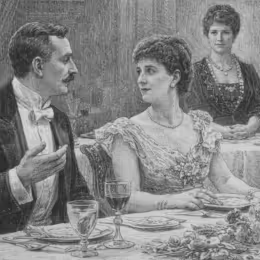
We explored this in The Art of Conversation at Dinner Parties (1897). The Victorians took conversation seriously enough to cultivate it.
You listened. You observed. You introduced a subject worth discussing. You drew quieter guests in. And, perhaps most importantly, you knew when you had spoken enough.
Deborah Upshaw
Maxwell, don’t.
Maxwell P. Lee
I said nothing.
Brenda Pearce
And very becoming it was too.
Today we arrive at dinner carrying modern contrivances specifically designed to interrupt us. We sit together while looking elsewhere. We communicate constantly, yet increasingly in messages, reactions and little pictures of faces.
I’m not romanticising the Victorian drawing room. Etiquette was rigid, class mattered and some dinners must have been interminable.
But they understood something we risk forgetting: giving another person your sustained attention is a social skill.
So I’m stealing the dinner-table conversation. Not the hierarchy. Not the etiquette manuals. Certainly not the corsets.
Just the expectation that when people gather around a table, the people themselves are sufficient entertainment.
Maxwell may keep his glowing wire.
I’d rather see the faces around the table.
Your Turn
Choose your theft.
Maxwell: beautiful, inefficient incandescent light.
Brenda: deliberate, attentive dinner-table conversation.
No hybrids. No LED masquerading as incandescent. No dinner where everyone politely checks a telephone beneath the table.
Chosen?
Excellent. Deborah is about to make you regret it.
Round Two: Welcome to 2076
Deborah Upshaw
Right. No more comfortable arguments.
It’s 2076. You both got your way — catastrophically.
Maxwell, incandescent light is everywhere. Brenda, cultivated conversation has conquered our social lives.
Your idea won too much.
Now choose: live with the worst version of your own idea, or abandon it and accept your opponent’s world.
No compromise. No improving the rules. And Maxwell may not invent a more efficient filament.
Maxwell P. Lee
I hadn’t said anything.
Deborah Upshaw
I’m learning. Maxwell?
Maxwell P. Lee
Fine. I’ll take the heat.
Literally.
By 2076 we have become absurd about incandescent light. Restaurants advertise their filament counts. Architects specify four-hundred-bulb chandeliers and describe the electricity bill as “atmosphere”.
Somewhere, inevitably, an influencer has installed incandescent lighting inside a refrigerator.
Wasteful? Appallingly.
And I still choose it.
Deborah Upshaw
Good heavens. Why?
Maxwell P. Lee
Because Brenda’s victory frightens me more.
She wanted conversation cultivated. Splendid. Now give that idea fifty years to become an obligation.
By 2076, silence is rude. Looking away is inattentive. Every quiet guest must be “drawn into the conversation”. Dinner becomes an examination in whether you are sufficiently interested, interesting and engaged.
Brenda has accidentally reinvented Victorian etiquette.
Drawing-room tyranny with better plumbing.
I can switch off my ridiculous light bulb.
I cannot switch off a table full of people who have decided my silence requires intervention.
I would rather be free to waste sixty watts than be required to perform conversation over dinner.
I’m keeping the bulb.
Deborah Upshaw
That is annoyingly persuasive.
You’ve turned wasting electricity into a defence of personal liberty.
Brenda, Maxwell would rather sit alone beneath sixty watts of unnecessary heat than endure your drawing-room tyranny.
Are you prepared to make him talk?
Brenda Pearce
No.
Maxwell P. Lee
Capital.
Brenda Pearce
Don’t celebrate yet.
I don’t want to make him talk. I want him to have someone worth talking to when he chooses to.
And yes, my idea goes wrong too. By 2076 we’ve over-organised conversation. Etiquette courses are back. Dinner invitations carry expectations. Some dreadful app scores your eye contact.
Ghastly.
But Maxwell’s private sixty-watt eccentricity became millions upon millions of sixty-watt eccentricities.
His indulgence became everybody’s electricity bill.
Maxwell P. Lee
My refrigerator looks magnificent.
Brenda Pearce
Your refrigerator is fighting the air conditioner.
And here is the difference. If conversation becomes too formal, we can loosen the rules. Sit quietly. Invite fewer people. Tell an overenthusiastic host to mind his own business.
Maxwell cannot negotiate with a watt.
Every incandescent bulb consumes what it consumes, whether the conversation beneath it is magnificent or dreadful.
So I’ll take the awkward dinners. I’ll even take Maxwell sulking at the end of the table.
Because at least we’ll be sitting around the same table.
And if Maxwell insists on lighting it, I’ll bring an LED.
Before the Verdict…
Did you change sides?
Maxwell voters: is the glowing refrigerator a price worth paying?
Brenda voters: how do you feel about compulsory conviviality now?
Keep your theft or change it. Deborah has the casting vote.
The Verdict
Deborah Upshaw
I asked what we should steal from the Victorians and ended up deciding between compulsory conversation and deliberately inefficient lighting.
A very satisfactory evening.
Maxwell wasn’t really defending a light bulb. He was arguing that efficiency should not be the only measure of good design. Warmth, simplicity, atmosphere and pleasure count too.
Brenda was arguing for deliberate human attention — treating another person as worthy of our uninterrupted time.
Both survived rather better than they had any right to.
But I promised a winner.
Brenda wins.
Maxwell P. Lee
Outrageous.
Deborah Upshaw
Oh, do behave.
Maxwell made the more provocative argument. But Brenda chose something whose value increases when it is shared.
Conversation needs no factory, electricity or new technology. At its best, it gives us something increasingly precious: another person’s undivided attention.
So Maxwell’s incandescent bulb goes back to the Victorian storeroom.
Brenda may steal the conversation.
Brenda Pearce
And the tote bag?
Deborah Upshaw
You may have that too. At least we’ve finally stolen something that fits inside it.
Maxwell P. Lee
Conversation doesn’t fit inside a tote bag.
Deborah Upshaw
Maxwell, must you have the last word?
Maxwell P. Lee
Apparently Brenda considers it a social skill.
Deborah Upshaw
Touché.
Very well. You may keep one thing too.
One incandescent bulb above the dinner table.
From the Curator's Workshop
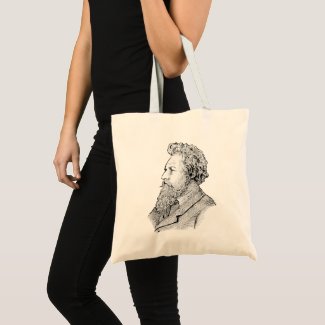
Deborah came prepared for The Great Debate with a William Morris tote bag for anything worth stealing from the Victorians. Maxwell's incandescent light bulb might fit; Brenda's conversation certainly won't. But Morris himself might have appreciated the principle: take something practical and make it worth looking at. If you'd like to commit one small and entirely legal act of Victorian appropriation, take a little Arts and Crafts design with you — and support Phillaneum while you're at it.
Author's Notes
Notes & Memoranda
As is often the case, the subject extends beyond the bounds of a single article. The notes and memoranda below gather together useful definitions, related observations, references, and occasional curiosities discovered along the way.
Further Reading…
Disclosure
This Great Debate is an editorial thought experiment. This article also contains an affiliate link to a William Morris tote bag; Phillaneum may receive a small commission if you purchase through that link, at no additional cost to you.