Why Decorative Panels Feel Like Fragments of Lost Civilisations

The Allure of Decorative Panels: Fragments of Lost Civilizations
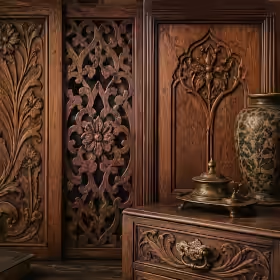
As late afternoon light spills through dusty window panes, the room takes on a hush tinged with history and intimacy. Shadows nestle into the intricate carvings of an old dresser, hinting at a past both rich and velvety. Among the decorative panels, adorned with signs of wear, we perceive not only nostalgia but a longing for lost worlds. These artifacts offer a dialogue of ornament and emotion, compelling us to explore their stories. What secrets do they hold? What transformations can they unveil in our homes and hearts?
Salvaged Artistry: The Narrative of Decorative Panels
Decorative panels serve as more than mere embellishments; they encapsulate the essence of homes once alive with laughter and conversation. Often salvaged from forgotten or demolished interiors, these fragments evoke an archaeological wonder, inviting collectors to engage with relics of bygone eras. Each carved surface tells a unique narrative, whispered through subtle oak grain and delicate carvings that invite closer inspection.
Consider a vine-carved panel resting in a dimly lit parlour, its patina a testament to the years it has witnessed. Once vibrant decor, now softened by layers of dust, it exemplifies the psychology of collecting, deeply woven into our desire for wholeness. Each salvaged ornament becomes a portal, connecting us to the broader picture of domestic life. For many collectors, fragments represent not just beauty but complex layers of memory, resonating with both loss and discovery.
The Textured Atmosphere of Salvaged Interiors
As we immerse ourselves in this world, the atmosphere created by decorative panels takes shape. Every notch and curve invites reflection on the craftsmanship of artisans long gone, their labor forever embedded in the wood. Picture yourself leaning over a sideboard, light dancing across its richly polished surface, tracing contours that once cradled drinks during evening gatherings. You can almost hear the echoes of those convivial moments, their warmth permeating through the timber.
The beauty of these objects lies in their wear. Scuffs and nicks tell of hands that have touched them, perhaps a child pulling a toy along the finely carved edge or a grandmother’s fingers gliding over the surface, imbued with tales shared in the dim light of the reading room. This connection to past lives breathes vitality into our modern spaces, transforming them into personal museums where every item is steeped in rich narratives.
Attuning to the Details: What Collectors Should Notice
As you explore decorative panels, take a moment to appreciate the intricate details: the smoothness of aged timber, floral motifs etched into the grain, and the gentle shadows that linger. Each fragment invites curiosity about its origin and the lives it has touched. Look closely, and you may notice the subtle sheen of old polish, the patina hinting at generations of craftsmanship.
When navigating antique shops or estate sales, remember that collecting transcends mere acquisition. It’s a participation in a historical dialogue, an immersion into the eras that preceded us. These salvaged pieces of ornamentation serve as conduits to rediscover, and even reimagine, the lost interiors of our collective past. They become threads woven into a richer tapestry of human experience, remnants of the stories told in homes that once thrummed with life. For deeper insights into how such richness emerges from surfaces, you might explore The Secret Life of Furniture Surfaces.
Reconstructing Domestic Narratives
The panels strikingly demonstrate how decorative arts frame emotional landscapes within a home. Imagine the textured pages of these surfaces, each bearing signs of familial interactions, morning coffee shared, secrets exchanged in hushed whispers, or the delightful chaos of festive gatherings. In witnessing this interplay of ornamentation and sentiment, we discern how they sculpt not only homes but identities tied to ancestral stories.
By integrating these intricate panels into your living space, you're engaging in a profound act of resurrection. Each panel recovers a fragment of emotional legacy, surfacing the essence of lives lived within their grace. These salvaged ornaments become vessels, heavy with history yet bright with possibility, reawakening the past in contemporary settings.
A Journey Through Time: Enhancing Your Home
As you consider your own spaces adorned with these panels, ponder their origins and implications. Perhaps they once framed the laughter of a Victorian soirée or cradled quiet moments on sun-drenched afternoons. Tracing their edges and absorbing their weight, you expand your role from collector to storyteller, enabling you to pass along the intricate narratives of those long gone.
In this continuous dance of history and domesticity, the vitality of your environment flourishes. The decorative panels you choose whisper secrets of resilience and memory, crafting an atmosphere that resonates throughout your home. Each piece serves as a bridge, transforming fragmented histories into unified narratives that enrich both your living spaces and your life.
Integrating these salvaged ornaments is more than historical recovery; it’s a vibrant, ongoing conversation. As the narratives unfold around you, decorative panels evolve from mere fragments into treasures alive with stories. Consider delving deeper into this enchanting journey with Forgotten Victorian Panels Hidden Inside Old Furniture, reflecting on the emotional intelligence of spaces that linger with traces of the past, just as your own story continues to evolve through the artifacts you cherish.
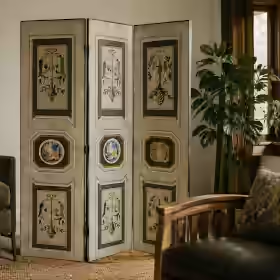
Browse surviving decorative panels, carved cabinets, and vintage room dividers currently circulating through the collector market.
Author's Notes
Notes & Memoranda
As is often the case, the subject extends beyond the bounds of a single article. The notes and memoranda below gather together useful definitions, related observations, references, and occasional curiosities discovered along the way.
Further Reading…
Disclosure
This article explores decorative furniture panel styles commonly associated with Victorian and Edwardian interiors, including carved oak, fretwork, embossed ornament, inlaid surfaces, and decorative veneers. The feature is presented in the curatorial style of Phillaneum.com and combines decorative commentary, historical interpretation, and atmosphere-focused interior observations. It is intended as an introductory editorial guide rather than a formal restoration manual, valuation guide, or conservation reference.