The Victorian Washstand: Beauty in the Bedroom
Beauty That Had to Work
If you want to understand Victorian domestic beauty at its most persuasive, don’t begin with the showpiece in the drawing room. Begin with the jug and basin in the bedroom or dressing room.
Before the separate bathroom became routine, washing often depended on water being carried to where it was needed. A jug had to be filled, lifted and poured. A basin had to receive the water without being awkward to handle. Soap, sponge, towel and other small necessities needed somewhere to sit. Afterwards came the less picturesque part: the water had to be emptied, the vessels cleaned, the surface wiped and everything put back into place.
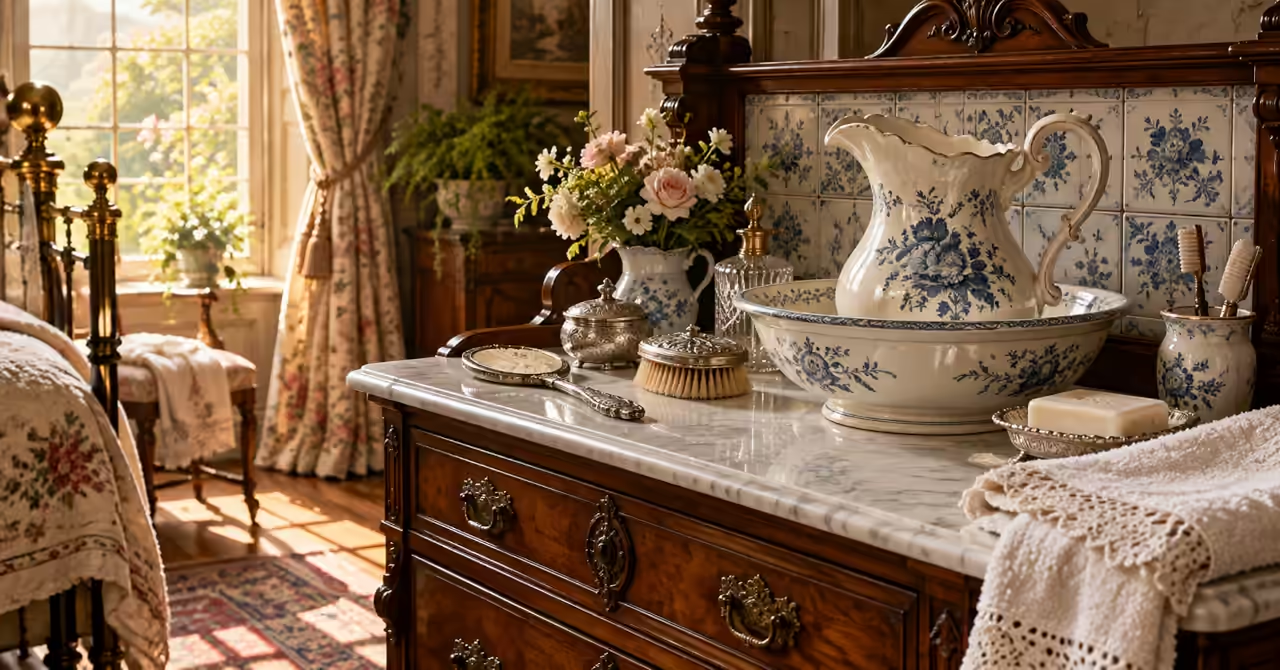
Yet this ordinary equipment could be remarkably considered. The jug might have a swelling body and an elegant handle; the basin a broad decorated rim. A washstand might be topped with marble or protected by tiles, while a more elaborate ceramic set could include soap dishes, sponge dishes and toothbrush holders. What looks to us like a decorative arrangement was also a working system.
That is what makes the Victorian washstand so interesting. Its beauty was not achieved by escaping function. It had to survive function.
A Room, a Jug and a Morning Routine
The location matters. The washstand belonged to the bedroom or dressing room, placing an intensely practical activity among the furniture, textiles and decoration of domestic life. Washing was bodily and private, but the equipment used for it remained visible. The jug and basin therefore occupied an unusual position: intimate enough to participate in personal care, yet formal enough to be judged as part of the room.
This helps explain why so much attention could be given to materials that also solved practical problems. Marble tolerated splashes better than an unprotected wooden surface. Tile offered another washable barrier. Glazed ceramic could be cleaned repeatedly while also carrying colour and pattern. The decorative and practical qualities were not separate decisions pasted together afterwards; they frequently reinforced one another.
Even the shape of the ceramic pieces was dictated partly by use. A water jug needed a handle that could carry its weight comfortably and a spout that directed the pour. The basin had to be broad enough to work in while remaining manageable on the stand. From those requirements came many of the forms we now admire: the broad lip, the curved handle, the generous bowl and the rounded body of the ewer.
The shape reads as graceful because it is answering a job.
Surviving examples make that relationship particularly clear. A National Trust washbowl from a T. C. Brown-Westhead, Moore & Co. washstand set carries a transfer-printed “Hereford” apples pattern in puce, while practical fittings for soap and a toothbrush are incorporated into the rim. Here ornament is not competing with usefulness. The same object is doing both things at once.
When Industry Learned to Decorate the Everyday
The ceramic washstand also belongs to a much larger nineteenth-century story. Transfer printing had earlier origins, but industrial pottery production greatly expanded the ability to reproduce decoration across domestic wares. Staffordshire manufacturers could apply repeated patterns to large numbers of objects without relying on each piece being individually painted by hand.
That mattered because it changed the relationship between manufacture and ornament. A factory-made basin did not have to be visually anonymous. Flowers, borders, landscapes and other designs could become part of ordinary household ceramics, giving manufacturers a way to differentiate wares and households a way to choose between them.
The washstand therefore complicates the familiar opposition between industry and craftsmanship. It was unquestionably part of an industrial world: moulds, printed decoration, kilns, distribution networks and repeatable forms all mattered. But mass production did not automatically require the disappearance of visual pleasure. In this case, industry became one of the mechanisms by which decoration travelled.
Respectability in a Private Corner
There was another kind of work being done by the washstand. Cleanliness and order carried social meaning, and the bedroom was not exempt from the expectations placed upon the rest of the house. A complete and carefully maintained washing arrangement could make those values visible in a particularly personal setting.
This does not mean every washstand was grand. The surviving record includes both restrained and highly decorated examples, and differences in material, finish and ornament reflected different markets and circumstances. What remained remarkably consistent was the underlying arrangement: furniture, water vessel, basin and the smaller objects required to make washing possible.
And keeping it attractive demanded labour.
The basin had to be emptied. Water marks had to be wiped away. Towels needed changing. Ceramic pieces could chip or stain. Polished timber and metal fittings required attention. The object was not made precious so that nobody would touch it; its appearance depended upon people touching, using, cleaning and resetting it over and over again.
That distinction is easy to miss when a wash jug is encountered today on a museum shelf or in an antique listing. Removed from the bedroom, separated from its stand and emptied of water, it can appear to be simply decorative pottery. In use, it was something much more animated.
What the Surviving Objects Forget
Collections often preserve the ceramic pieces more readily than the complete arrangement in which they once operated. A jug and basin can survive as identifiable objects long after the daily choreography around them has vanished. We see the pattern, glaze and shape immediately; we have to reconstruct the carried water, wet hands, folded towels and emptied basin ourselves.
That reconstruction changes the object. The washstand stops being merely an antique furnishing and becomes a piece of domestic infrastructure—a small system designed around one of the most repetitive acts of everyday life.
It is also why the washstand makes such a persuasive emblem of Victorian domestic beauty. It brings together categories that are often separated when we look backwards: manufacture and decoration, cleanliness and design, labour and refinement, utility and elegance. The mould-maker, printer, kiln worker, furniture maker and householder all contributed something to the finished effect.
The achievement was not that the Victorians found a way to make an impractical object beautiful. They found ways to give beauty to something that had to work every morning.
And in doing so, they turned the ordinary act of washing into a small and repeatable act of grace.
For the Collectors

Author's Notes
When I look at an old washstand, I’m often more interested in the evidence of use than in perfect condition. Water marks in the timber, a repaired ceramic handle, worn marble or a basin that no longer quite matches its jug can tell us that these objects were worked hard rather than simply admired. For a maker, that wear is part of the design story. It shows which materials endured, where hands repeatedly touched the object, and how something intended for ordinary domestic work acquired character through use.
Notes & Memoranda
As is often the case, the subject extends beyond the bounds of a single article. The notes and memoranda below gather together useful definitions, related observations, references, and occasional curiosities discovered along the way.
Glossary
Some of the terms used in this article have specialised, historical or technical meanings. This glossary provides additional context for selected terms and ideas.
- washstand
- A small piece of bedroom furniture designed to hold a jug, basin and related items so that people could wash at their bedside before indoor bathrooms were common; typically a wooden stand with a water-resistant top (marble or tile), rails or recesses for basins and accessories, and arranged as an integrated, routinely used domestic system rather than a mere display object.
- transfer printing
- A ceramic decoration technique in which an image engraved on a metal plate is printed onto tissue paper and then transferred to a clay body before glazing and firing; developed from eighteenth‑century experiments, it allowed crisp, repeatable patterns to be applied quickly and cheaply at factory scale while still permitting subtle variations in the finished surface.
- Staffordshire
- An English county that became the principal centre of mass ceramic manufacture in the eighteenth and nineteenth centuries, home to potteries (such as Minton and Spode) that specialised in factory production of tableware and decorative domestic wares using techniques like transfer printing to serve both domestic and export markets.
- earthenware
- A category of pottery fired at relatively low temperatures so it remains somewhat porous unless glazed; earthenware was cheaper and easier to produce than stoneware or porcelain, commonly used for everyday jugs and basins and well suited to glazed surfaces and transfer‑printed decoration.
- puce
- A muted reddish‑brown or purplish‑brown colour popular in nineteenth‑century decorative arts; used in transfer‑printed ceramics to give patterns a restrained, slightly sombre tone that read as tasteful rather than showy in Victorian interiors.
Frequently asked questions
Curious about something you’ve just read? These frequently asked questions explore some of the key ideas, details and questions surrounding the topic.
Why is the Victorian washstand often regarded as especially beautiful?
Its beauty comes from being designed for everyday use: form follows practical needs like pouring and catching water, yet makers added careful proportions, materials and ornament so routine acts felt civilised rather than merely functional.
How was a washstand used in the typical Victorian morning ritual?
Water was brought in by hand and the wash happened at the bedside or dressing table with a compact system of jug, basin, soap, sponge, towel and fittings gathered on the stand, locating cleanliness in a room that was both private and presentable.
What role did transfer printing play in decorating washstand pottery?
Transfer printing allowed Staffordshire firms to apply crisp, repeatable patterns to factory-made jugs and basins without hand-painting, spreading ornament to ordinary homes and making decoration affordable at scale.
Why are jug-and-basin sets often found separated from their stands in collections?
Jug-and-basin sets are often encountered separately from their original stands, so collections and antique markets may present the ceramics as independent decorative objects rather than as parts of a working washing arrangement.
Further Reading…

References and Further Reading
- Victoria and Albert Museum, Victorian children: homes.
- Object Lessons, Ewer & Washbasin, Victorian, Original.
- National Trust Collections, Wash bowl 783639.1.
- Victorian Society, Victorian Transfer-printed Ceramics.
- Victorian London, Homes and Habits.
- Colonial Williamsburg, Basin stand.
Disclosure
This article may contain affiliate links to antique washstands and related items on eBay. If you make a purchase through one of these links, Phillaneum may receive a small commission at no additional cost to you. Listings, prices, condition and availability are controlled by individual sellers and may change at any time.